Gastric juice

Definition and stakes

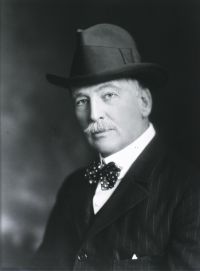
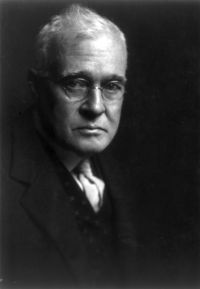
Portrait of Horace Fletcher Horace Fletcher,  The A.B.-Z. of our own nutrition

“ I refer to the production of gastric juice in the empty stomach, as a result merely of the swallowing of food in the so-called sham feeding of an œsophagotomised dog. When one takes into consideration the absolute independence of this factor, and the intensity of the effect, which makes itself evident in the secretion of a large quantity of juice of high digestive power, the exciting agency which brings about such secretion must be recognised as one of the most important and effective processes in gastric digestion. ”

Source: Gutenberg

1911 Encyclopædia Britannica (1911)

“ When the juice is examined as regards its digestive activity, it is found that with meat the most active juice is secreted within the first hour, with bread in the second and third hours, and with milk in the sixth hour. According to the nature of the food, the stomach seems to be stimulated to form a secretion which will best serve its purpose and give the minimum of waste. It thus works economically. The principal ferment found in the gastric juice is pepsin, a ferment which acts only in the presence of a mineral acid. ”
Source: Wikisource

Portrait of Andrew Combe Andrew Combe,  The physiology of digestion considered with relation to the principles of dietetics… (1836)

“ Man, the dog, and some other creatures, possess the power of digesting all sorts of aliment, whether vegetable or animal, and are hence called omnivorous or all-eating; but even in them, the relation which the properties of the gastric juice bear to the qualities of the food chiefly or exclusively used is so close, that, when a widely different kind is suddenly resorted to, indigestion is the almost inevitable consequence,—because then the gastric juice has not had time to acquire its requisite adaptation to the new materials on which it has to act. ”
Source: Gutenberg

Get perspective with Kwize: daily news enlightened by great literature