Harmonic series

Definition and stakes

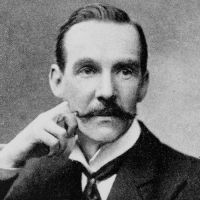
Portrait of Daniel Gregory Mason Daniel Gregory Mason,  The Appreciation of Music - Vol…

“ Harmonic design, on the other hand—the setting of one key or series of keys against another—is often only dimly recognized, if at all, although it is of the greatest importance in all modern music. In sonata-form the harmonic plan (described above by the terms Duality, Plurality and Unity) adds an important element since it unifies the last section by stating both first and second theme in the same key. And in the middle, or development section, the freedom of harmonic progression—the multitude of keys—gives great variety and enables the composer freely to indulge his fancy. ”
Source: Gutenberg

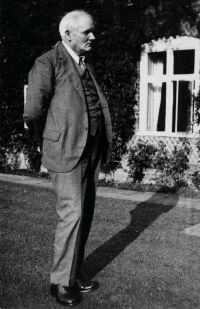
Portrait of Donald Francis Tovey Donald Francis Tovey,  1911 Encyclopædia Britannica (1911)

“ Some modern theorists have, however, gone too far in denying the existence of harmonic roots altogether, and certainly it is neither scientific nor artistic to regard the coincidence of the major triad with the first five notes of the harmonic series as merely accidental. It is not likely that the dominant 7th owes all its naturalness to a resemblance to the flat 7th of the harmonic series, which is too far out of tune even to pass for an augmented 6th. ”
Source: Wikisource

1911 Encyclopædia Britannica, Volume 12… (1911)

“ HARMONIC. In acoustics, a harmonic is a secondary tone which accompanies the fundamental or primary tone of a vibrating string, reed, &c.; the more important are the 3rd, 5th, 7th, and octave (see Sound; Harmony) . A harmonic proportion in arithmetic and algebra is such that the reciprocals of the proportionals are in arithmetical proportion; thus, if a, b, c be in harmonic proportion then 1/a, 1/b, 1/c are in arithmetical proportion; this leads to the relation 2/b=ac/ (a+c) . A harmonic progression or series consists of terms whose reciprocals form an arithmetical progression ”
Source: Wikisource

Get perspective with Kwize: daily news enlightened by great literature