 Immanuel Kant,
Critique of Pure Reason
(1791)
Immanuel Kant,
Critique of Pure Reason
(1791)
“ Thus all human cognition begins with intuitions, proceeds from thence to conceptions, and ends with ideas. ”
Immanuel Kant,
Critique of Pure Reason
(1791)
“ Thus all human cognition begins with intuitions, proceeds from thence to conceptions, and ends with ideas. ”
 Henry Osborn Taylor,
The Mediaeval Mind (Volume 2 of 2…
Henry Osborn Taylor,
The Mediaeval Mind (Volume 2 of 2…
“ Likewise, impelled by the desire to know, the faculties of cognition and reason realize themselves in expression; and in expression each part of rational knowledge is clarified, completed, rendered accordant with the data of observation and the laws or necessities of the mind.Human faculties form a correlated whole; and this composite human nature seeks to act, to function. Thus the whole man strives to realize the fullest actuality of his being, and satisfy or express the whole of him, and not alone his reason, nor yet his emotions, or his appetites. ”
 Karl Rosenkranz,
Pedagogics as a System
Karl Rosenkranz,
Pedagogics as a System
“ Let us consider now the psychology of thinking, or reflection, and at first in its most inadequate forms. As a human process, the knowing is always a knowing by universals—a re-cognition, and not simple apprehension, such as the animals, or such as beings have that do not use language. The process of development of stages of thought begins with sensuous ideas, which perceive mere individual, concrete, real objects, as it supposes. ”
George John Romanes, Mental Evolution in Man: Origin of Human Faculty
“ For, a priori, the more unformed the powers of perception, the less able must they be to take cognizance of particulars. The development of these powers consists in the ever-increasing efficiency of their analysis, or cognition of smaller and smaller differences of detail ”
 James Frederick Ferrier,
Blackwood's Magazine
(1838)
James Frederick Ferrier,
Blackwood's Magazine
(1838)
“ If, then, we would establish a true science of man, there is no other course open to us than this, to abandon, in the first instance, every consideration of "the human mind," whether it be an hypothesis and a reality, together with all its phenomena, and then to confine our attention closely and devoutly to the examination of the great and anomalous fact of human consciousness. ”
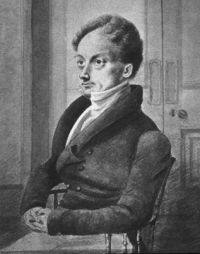 James Mill,
Analysis of the Phenomena of the Human Mind
James Mill,
Analysis of the Phenomena of the Human Mind
“ THE Phenomena of Thought have long appeared to be divisible into two great classes; which were distinguished by the names, the one of the Intellectual, the other of the Active, Powers of the Human Mind. In the phenomena which compose the first of those classes, and which we have now pretty completely surveyed, the sensations and ideas are considered merely as existing. ”
James Frederick Ferrier,
An Introduction to the Philosophy of Consciousness
(1883)
“ But, inasmuch as our observation must not be put forth vaguely or at random, but must be directed by some principle of method, the question comes to be, In what way are the true facts of man's being to be sought for and obtained? There is a science called the "science of the human mind," the object of which is to collect and systematise the phenomena of man's moral and intellectual nature. ”
James Mill,
Analysis of the Phenomena of the Human Mind
“ The phenomena of the Mind include multitudes of facts, of an extraordinary degree of complexity. By observing them one at a time with sufficient care, it is possible in the mental, as it is in the material world, to obtain empirical generalizations of limited compass, but of great value for practice. ”
“ The mind of every rational person may be considered as an elaboratory, wherein he may conduct psychological experiments:—he is enabled to analyze his own acquirement,—and if he be sufficiently attentive, he may note its formation and progress in his children:—and thus trace the accumulation of knowledge, from the dawn of infancy to the meridian of manhood. The prosecution of these means, according to my own views, will qualify the diligent observer, to become the Natural Historian and Physiologist of the Human Mind. ”
Thomas Brown, Lectures on the Philosophy of the Human Mind…
“ Yet, wonderful, or even absurd, as it may seem, notwithstanding the absolute simplicity of the mind itself, and consequently of all its feelings or momentary states,—the Science of Mind is, in its most important respects, a source of analysis, or of a process which I have said to be virtually the same as analysis ”
William James, The Principles of Psychology, Volume 1…
“ Between all their substantive elements there is 'transitive' consciousness, and the words and images are 'fringed,' and not as discrete as to a careless view they seem. Let us advance now to the next head in our description of Thought's stream.4. Human thought appears to deal with objects independent of itself; that is, it is cognitive, or possesses the function of knowing.For Absolute Idealism, the infinite Thought and its objects are one. The Objects are, through being thought; the eternal Mind is, through thinking them. ”
Thomas Brown, Lectures on the Philosophy of the Human Mind…
“ To have a clear view of the phenomena of the mind, as mere affections or states of it, existing successively, and in a certain series, which we are able, therefore, to predict, in consequence of our knowledge of the past, is, I conceive, to have made the most important acquisition which the intellectual inquirer can make. ”
Jaime Luciano Balmes, Fundamental Philosophy, Vol. 1…
“ Consciousness, evidence, and intellectual instinct or common sense, are the three means; to which correspond truths of consciousness, necessary truths, and common-sense truths. These are distinct, different, and in many cases unconnected with each other; and he, who seeks to acquire complete and accurate ideas upon matters relating to the first principle of human knowledge, must mark out their limits with great care. ”
Thomas Brown, Lectures on the Philosophy of the Human Mind…
“ The consideration of the mind, as one substance, capable of existing in a variety of states, according as it is variously affected, and constituting, in these different states, all the complex phenomena of thought and feeling, necessarily involves the consideration of consciousness, and of personal identity. ”
 Jean-Jacques Rousseau,
Emile, or On Education
(1762)
Jean-Jacques Rousseau,
Emile, or On Education
(1762)
“ The number of these ideas is the measure of our knowledge; exactness of thought depends on their clearness and precision; the art of comparing them one with another is called human reason. Thus what I call the reasoning of the senses, or the reasoning of the child, consists in the formation of simple ideas through the associated experience of several sensations; what I call the reasoning of the intellect, consists in the formation, of complex ideas through the association of several simple ideas. ”
 John Stuart Mill,
A System of Logic, Ratiocinative and Inductive
(1881)
John Stuart Mill,
A System of Logic, Ratiocinative and Inductive
(1881)
“ And since it is by these laws, combined with the facts of each particular case, that the whole of the phenomena of human action and feeling are produced, it is on these that every rational attempt to construct the science of human nature in the concrete, and for practical purposes, must proceed. ”
George John Romanes, Mental Evolution in Man: Origin of Human Faculty
“ Now it is evident that in all these cases the tendency which is shown by the human mind, in every stage of its development, to regard external phenomena ejectively, arises from man’s intuitive knowledge—or the knowledge which is given in the logic of recepts—of his own existence as twofold, bodily and mental. ”
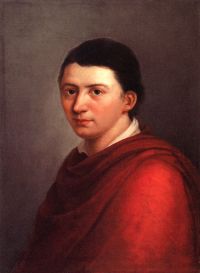 Friedrich von Schlegel,
The philosophy of life, and philosophy of language…
Friedrich von Schlegel,
The philosophy of life, and philosophy of language…
“ Now, to render in any degree complete that characteristic of the human mind which it has been our object or endeavor in the previous Lectures to sketch in detail, we were obliged to take in also those higher elements which by many are called in question, and by some positively denied to exist. And herein lay the natural ground and the occasion for our introducing the mention of them, at least as facts of consciousness generally acknowledged by the common-sense of mankind. ”
 Josiah Royce,
The World and the Individual, First Series
(1899)
Josiah Royce,
The World and the Individual, First Series
(1899)
“ If we regard the human subject, in the ordinary psychological way, as a being whose conscious life runs parallel with the highest physical processes of his organism, we get a view of the relation between the intellect and the will which is far more just, at once to the natural history of the mind, and to the deeper meaning of the inner life of our consciousness. View man as a natural being, and you find him adjusting himself to his environment, acting, as they say, in response to stimuli. ”
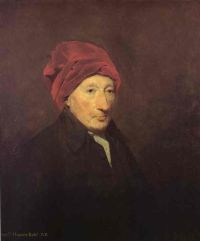 Thomas Reid,
An Inquiry into the Human Mind…
Thomas Reid,
An Inquiry into the Human Mind…
“ Upon the foundation of conscious thought, with ideas for his materials, he builds his system of the human understanding, and attempts to account for all its phenomena; and having, as he imagined, from his consciousness, proved the existence of matter, and of a certain quantity of motion originally impressed upon it, he builds his system of the material world, and attempts to account for all its phenomena. ”
John Stuart Mill,
A System of Logic, Ratiocinative and Inductive
“ The subject to be studied is, the origin and sources of all those qualities in human beings which are interesting to us, either as facts to be produced, to be avoided, or merely to be understood; and the object is, to determine, from the general laws of mind, combined with the general position of our species in the universe, what actual or possible combinations of circumstances are capable of promoting or of preventing the production of those qualities. ”
Sir Joshua Reynolds, Fifteen Discourses
“ A knowledge of the disposition and character of the human mind can be acquired only by experience: a great deal will be learned, I admit, by a habit of examining what passes in our bosoms, what are our own motives of action, and of what kind of sentiments we are conscious on any occasion. We may suppose a uniformity, and conclude that the same effect will be produced by the same cause in the minds of others. ”
John Stuart Mill,
A System of Logic, Ratiocinative and Inductive
(1881)
“ Of Ethology, Or The Science Of The Formation Of Character. § 1. The laws of mind as characterized in the preceding chapter, compose the universal or abstract portion of the philosophy of human nature; and all the truths of common experience, constituting a practical knowledge of mankind, must, to the extent to which they are truths, be results or consequences of these. ”
“ No doubt it seemed to simplify the problem to suppose that the functioning of the intellect could be studied as a thing apart, and unrelated to the general context of the vital functions. Again, it was to simplify to assume that thought could be considered apart from the personality of the human thinker. ”
George Gore, The Scientific Basis of National Progress… (1882)
“ And the great mental value of these comprehensive ideas to mankind, consists largely in relieving the memory and diminishing mental confusion, by co-ordinating a large number of different facts and apparently inconsistent phenomena by means of a general conception which embraces the whole of them. ”
Thomas Brown, Lectures on the Philosophy of the Human Mind…
“ The aggregates of matter we analyze by the use of other matter, adding substance after substance, and varying manipulation after manipulation;—the complex mental phenomena we analyze virtually by mere reflection; the same individual mind being the subject of analysis, the instrument of analysis, and the analysing inquirer. ”
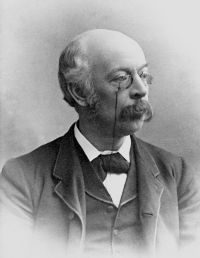 Robert Adamson,
Fichte — Chapter VIII. Concluding Remarks
(1881)
Robert Adamson,
Fichte — Chapter VIII. Concluding Remarks
(1881)
“ How knowledge becomes possible for any intelligence, is in fact the problem how are we to think, under one of its aspects, the relation between individual consciousness and the wider sphere of reality? ”
Thomas Brown, Lectures on the Philosophy of the Human Mind…
“ In the course of our analysis of the intellectual phenomena, we shall have frequent opportunities of remarking the influence, which errors with respect to these mere phenomena of mind must have had, on the contemporary systems of general physics, and on the spirit of the prevailing plans of inquiry. ”
Robert Adamson,
Fichte — Chapter VIII. Concluding Remarks
(1881)
“ The question how the human mind, regarded as a thing of definite or indefinite characteristics, comes to have the filling-in which we call experience, opens out, when duly considered, into the much wider problem as to the relation of any individual consciousness to the sum total of things, a relation which may be either cognitive, or practical, or religious. ”
John Stuart Mill,
A System of Logic, Ratiocinative and Inductive
“ The instances of new theories agreeing with and explaining old empiricisms, are innumerable. All the just remarks made by experienced persons on human character and conduct, are so many special laws, which the general laws of the human mind explain and resolve. ”
Josiah Royce,
The World and the Individual, Second Series
(1901)
“ Every concrete act of knowledge, in our conscious life, includes, then, a more or less deliberate abstraction from the background of recognized reality which we conceive as the world, for the sake of a clearer attention to certain special objects of our present acknowledgment. ”
Th. Ribot, Essay on the Creative Imagination
“ If we consider the human mind principally under its intellectual aspect—i.e., insofar as it knows and thinks, deducting its emotions and voluntary activity—the observation of individuals distinguishes some very clear varieties of mentality. ”
Josiah Royce,
The World and the Individual, First Series
(1899)
“ On the other hand, a traditional doctrine, which has won for itself no small hearing in psychology, regards the volitional, or active, side of our consciousness, not merely as a fact in itself, but as a cause of other facts, both physical and mental. From this point of view, the distinction between intellect and will acquires a fresh importance, and declines to be reduced to that mere distinction of aspects which we have emphasized in the foregoing account. ”
William James, The Principles of Psychology, Volume 2…
“ Let us now test our principles by turning to human instincts in more detail. We cannot pretend in these pages to be minute or exhaustive. But we can say enough to set all the above generalities in a more favorable light. ”
Friedrich von Schlegel,
The philosophy of life, and philosophy of language…
“ Thus this ground-scheme of human consciousness, which formed the first result of the psychological investigation of our own selves, meets us here also on a grander scale as a part of the world’s history, and in the large dimensions of successive ages and centuries, as the first striking result in the history of man’s civilization during the twenty-five centuries which, as lying nearest to our own times, we are best acquainted with. ”
James Mill,
Analysis of the Phenomena of the Human Mind
“ The difference between different people in the ability to represent to themselves the phenomenon under either aspect, depends rather on the degree of exercise which they have given to their imagination in trying to frame mental pictures conformable to the two hypotheses, than upon those considerations of reason and evidence which yet may determine their belief. ”
Josiah Royce,
The World and the Individual, First Series
(1899)
“ It follows that when, for general purposes, we study, not the psychology, but, as at present, the total significance of our conscious life, we are much less interested in the separation between knowledge and will than in that unity which psychology already recognizes, and which philosophy finds of still more organic importance. ”
 Alfred H. Lloyd,
The will to doubt
Alfred H. Lloyd,
The will to doubt
“ But, further, it presumes upon the peculiar forms and conditions of its subjective, looking consciousness, the activities of the mind, being mediative or instrumental to the presentation of the external objective world, and it uses also the activities of life at large, both the bread-and-butter activities and the mechanical inventions, both the political and the industrial organizations, as supplementary aids to its observations; for just science, the looking consciousness, is the end, and this end is presumed to justify every available means. ”
William James, The Varieties of Religious Experience (1902)
“ It is as if there were in the human consciousness a sense of reality, a feeling of objective presence, a perception of what we may call 'something there,' more deep and more general than any of the special and particular 'senses' by which the current psychology supposes existent realities to be originally revealed. If this were so, we might suppose the senses to waken our attitudes and conduct as they so habitually do, by first exciting this sense of reality; ”
 Thomson Jay Hudson,
The Law of Psychic Phenomena
Thomson Jay Hudson,
The Law of Psychic Phenomena
“ The phenomena of purely subjective mental action, are, however, of little practical importance to mankind when compared with the action of the subjective mind modified by the co-ordinate power of the objective intelligence. ”
M. Valentine, Theoretical Ethics
“ Our systems of science, our conclusions in philosophy, our intuitions into first truths and laws, and all the confidence with which we accept truth in all these great realms of mental life, rest back on the observations, reasonings and conclusions for whose reality and order consciousness is our most fundamental voucher. To its tests and verifications all the processes of knowing must submit. No truth is even visible except in the light in which consciousness holds all our acts and forms of intelligence. ”
James Frederick FerrierImmanuel KantRobert Adamson Alexander PhilipJohn Stuart Mill
 Maurice MaeterlinckWilliam JamesFriedrich von SchlegelGeorge John Romanes
 David Hume
 John HaslamJaime Luciano BalmesJosiah RoyceThomas ReidSir Joshua ReynoldsJean-Jacques RousseauJames MillKarl RosenkranzHenry Osborn TaylorHans Gross