“ What is true for the lesser faculties is eminently true for our most important faculty, the intellect. We all know how intellectual training enables us to accomplish without difficulty what at first seemed almost impossible. Not only that, but we acquire the power to devote ourselves to a subject that was at first irksome, if not actually forbidding. There are educators who insist that this discipline of mind, by which the power to devote ourselves to what we do not care for is gained, is the principal fruit of genuine education. ”
Intellectual training
Definition and stakes
The theme of “intellectual training” has been addressed by authors such as Charles H. Ham, Frank Pierrepont Graves, William Robert Cornish, G. Stanley Hall and Johann Friedrich Herbart. It is often associated with terms like education, knowledge, mind, science and literature.
Quotes about “intellectual training”
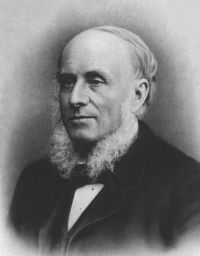 Alexander Bain,
Popular Science Monthly
(1877)
Alexander Bain,
Popular Science Monthly
(1877)
“ I thus propose to remove from the science of education matters belonging to much wider departments of human conduct, and to concentrate the view upon what exclusively pertains to education—the means of building up the acquired powers of human beings. The communication of knowledge is the ready type of the process, but the training operation enters into parts of the mind not intellectual—the activities, and the emotions; the same forces, however, being at work. Education does not embrace the employment of all our intellectual functions. ”
“ And now, if I may take for granted that the true and adequate end of intellectual training and of a university is not learning or acquirement, but rather, is thought or reason exercised upon knowledge, or what may be called philosophy, I shall be in a position to explain the various mistakes which at the present day beset the subject of university education.I say then, if we would improve the intellect, first of all, we must ascend; we cannot gain real knowledge on a level ”
“ But the chief value of such interests lies rather in their influence on other work, and on the general development of character. In giving scope for many kinds of skill, they are helping the intellectual training; and however ready we may be to pay lip-service to the principle of learning by doing, and to admit the educational importance of the hand in brain-development, in most of our school work we still ignore these things, so far as any practical application of them is concerned. ”
 Thomas Henry Huxley,
Science and Culture, and Other Essays
Thomas Henry Huxley,
Science and Culture, and Other Essays
“ Nevertheless, I am the last person to question the importance of genuine literary education, or to suppose that intellectual culture can be complete without it. An exclusively scientific training will bring about a mental twist as surely as an exclusively literary training. ”
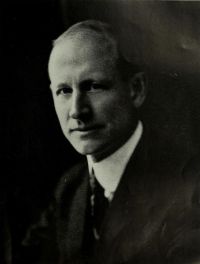 Frank Pierrepont Graves,
A student's history of education
Frank Pierrepont Graves,
A student's history of education
“ The stimulus he gave to the training of defectives has been epoch-making, and his ‘physiological’ methods have remained the chief means of education. Although there has grown up a Attempts to introduce intellectual elements. tendency to introduce intellectual elements into the training of the feeble-minded, the advantages of such a procedure are doubtful. ”
 Will Levington Comfort,
Child and Country: A Book of the Younger Generation
Will Levington Comfort,
Child and Country: A Book of the Younger Generation
“ If I have seemed at any time to make light of intellectual development, subserving it to intuitional expression, it is only because nineteen-twentieths of the effort of current educational systems is toward mental training to the neglect of those individual potencies which are the first value of each life, and the expression of which is the first purpose of life itself. ”
Charles H. Ham, Mind and Hand: Manual Training the Chief Factor in Education (1900)
“ THE INTELLECTUAL EFFECT OF MANUAL TRAINING.Intelligence is the Basis of Character. — The more Practical the Intelligence the Higher the Development of Character. — The use of Tools quickens the Intellect. — Making Things rouses the Attention, sharpens the Observation, and steadies the Judgment. — History of Inventions in England, 1740-1840. — Poor, Ignorant Apprentices become learned Men. — Cort, Huntsman, Mushet, Neilson, Stephenson, and Watt. ”
Charlotte M. Mason, An Essay Towards a Philosophy of Education…
“ Teachers are looking out for the support of a sound theory, and such a theory must recognize with conviction the part mind plays in education and the conditions under which this prime agent acts. We want a philosophy of education which, admitting that thought alone appeals to mind, that thought begets thought, shall relegate to their proper subsidiary places all those sensory and muscular activities which are supposed to afford intellectual as well as physical training. ”
Graham Wallas, Human Nature in Politics
“ But most school children, if they are to learn the facts on which the conception of intellectual conduct depends, must learn them even more directly. I myself believe that a very simple course on the well-ascertained facts of psychology would, if patiently taught, be quite intelligible to any children of thirteen or fourteen who had received some small preliminary training in scientific method. ”
Charles H. Ham, Mind and Hand: Manual Training the Chief Factor in Education (1900)
“ Let us then, in the new school, unite mind and hand in a crusade after the truths that are hidden in things. For Manual Training, educationally, is the blending of [379] thought and action. The thought that does not lead to an act is both mentally and materially barren. For as it confers no benefit upon the human race, neither does it profit the mind that conceives it. ”
Charles H. Ham, Mind and Hand: Manual Training the Chief Factor in Education (1900)
“ This is the very essence of education, its informing spirit. The student no longer thinks merely of becoming an expert turner; he thinks of becoming a man! All the powers of his mind are roused to vigorous action; imagination illumes the path, and reason, following with firm but cautious step, drives straight to the mark. Rapid development results from the combination of practice with theory—rapid because orderly, or natural. ”
 Hamilton Wright Mabie,
Essays on Work and Culture
Hamilton Wright Mabie,
Essays on Work and Culture
“ No kind of knowledge comes amiss in this larger training. History, literature, art, and science have their different kinds of nurture to impart, and their different kinds of material to supply; and the wise man will open his mind to their teaching and his nature to their ripening touch. ”
 George Birkbeck Norman Hill,
The Life of Sir Rowland Hill and the History of Penny Postage…
George Birkbeck Norman Hill,
The Life of Sir Rowland Hill and the History of Penny Postage…
“ And as he aspires to exhibit models of education, possessing higher excellencies than mechanical dexterity or mere intellectual acuteness; his anxious aim will be to make instruction in art and science, the culture of the understanding, and of the physical powers, subservient to the nobler intention of fostering and maturing the virtues of the heart. ”
Henry K. Rowe, Society: Its Origin and Development
“ An appreciation of literature, of the meaning and value of history, of the importance of science in the modern world, of the life of nations and races outside of our own country, of right thinking and right conduct with reference to all our individual relations, constitutes for all persons a mental training that is almost indispensable. To acquire this cultural education requires time and the elimination of the less valuable from the accepted course of study. ”
Thomas Henry Huxley,
Science & Education: Essays
“ I take it that the whole object of education is, in the first place, to train the faculties of the young in such a manner as to give their possessors the best chance of being happy and useful in their generation; and, in the second place, to furnish them with the most important portions of that immense capitalised experience of the human race which we call knowledge of various kinds. I am using the term knowledge in its widest possible sense; and the question is, what subjects to select by training and discipline, in which the object I have just defined may be best attained. ”
 Bertrand Russell,
Education and the good life
(1926)
Bertrand Russell,
Education and the good life
(1926)
“ But I do not believe that it is possible to train intelligence without imparting information, or at any rate causing knowledge to be acquired. And without intelligence our complex modern world cannot subsist; still less can it make progress. I regard the cultivation of intelligence, therefore, as one of the major purposes of education. This might seem a commonplace, but in fact it is not. The desire to instil what are regarded as correct beliefs has made educationists too often indifferent to the training of intelligence. ”
Bertrand Russell,
Why Men Fight
(1917)
“ The examination system, and the fact that instruction is treated mainly as training for a livelihood, leads the young to regard knowledge from a purely utilitarian point of view, as the road to money, not as the gateway to wisdom. ”
William Mathews, Words; Their Use and Abuse
“ The school lesson would feed the mind, while the thorough, patient and conscientious acquisition of it would gymnaze the intellect and strengthen the moral force. Why have one class of studies for discipline only, and another class for nourishment only, when there are studies which at once fill the mind with the materials of thinking, and develop the power of thought,—which, at the same time, impart useful knowledge, and afford an intellectual gymnastic? ”
Charles H. Ham, Mind and Hand: Manual Training the Chief Factor in Education (1900)
“ Education, then, is the development of all the powers of man to the culminating point of action. What kind of action? Action in art. What is art? “The power of doing something not taught by nature or instinct; power or skill in the use of knowledge; the practical application of the rules or principles of science.” Again we have the last analysis of education—“skill in the use of knowledge; the application of the rules or principles of science.” And this is tool practice. ”
William Henry Pyle, The Science of Human Nature: A Psychology for Beginners
“ Just as in habit-formation we should by exercise and practice acquire those kinds of skill that will serve us best in the future, so in getting knowledge we should by repetition strengthen the connections between those ideas that we shall need to have connected in the future. All education looks forward and is preparatory. As a result of training in the organization of ideas, a pupil can learn how to organize his experience, in a measure, independent of the teacher. He learns to know, himself, what ideas are significant, and what connections of ideas will be most helpful. ”
Various, Popular Science Monthly (1915)
“ It remains to touch upon the collateral streams of interest which in modern times maintained the study in one or another aspect, thus bridging the gap between the old and the new learning. Among these is the attempt, never wholly absent in practical ages, to guide training, to indicate on the basis of an analysis of character the promise of youth, and the direction of vocation—all in the spirit of a worldly wisdom. ”
Thomas Henry Huxley,
Lay Sermons, Addresses and Reviews
“ The great peculiarity of scientific training, that in virtue of which it cannot be replaced by any other discipline whatsoever, is this bringing of the mind directly into contact with fact, and practising the intellect in the completest form of induction ”
 H. G. Wells,
Mankind in the Making
H. G. Wells,
Mankind in the Making
“ The schoolman’s science came after the training in language and expression, late in the educational scheme, and it aimed, it pretended—whatever its final effect was—to strengthen and enlarge the mind by a noble and spacious sort of knowledge. ”
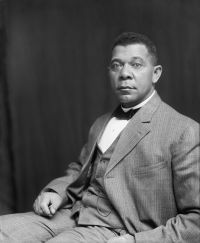 Booker T. Washington,
Character Building
Booker T. Washington,
Character Building
“ That is the highest kind of training.But, after all, this kind of thing is not the end of education. What, then, do we mean by education? I would say that education is meant to give us an idea of truth. Whatever we get out of text books, whatever we get out of industry, whatever we get here and there from any sources, if we do not get the idea of truth at the end, we do not get education. ”
Household Administration, Its Place in the Higher Education of Women
“ It must be remembered that courses of education should be framed for the training of unmethodical and unpractical minds, which may and often do accompany the highest forms of intellect, as well as for those of a naturally orderly and practical bent. ”
Charles H. Ham, Mind and Hand: Manual Training the Chief Factor in Education (1900)
“ At the very threshold of practical mechanics a thirst for wisdom is engendered, and the student is irresistibly impelled to investigate the mysteries of philosophy. Thus the training of the eye and the hand reacts upon the brain, stimulating it to excursions into the realm of scientific discovery in search of facts to be applied in practical forms at the bench and the anvil. ”
Charles H. Ham, Mind and Hand: Manual Training the Chief Factor in Education (1900)
“ It would be difficult to find a better exemplification of scientific education than a course of training which exercises simultaneously the powers of both body and mind, a course which with every fresh burden put upon the mind puts new vitality into the body. ”
James Gall, A Practical Enquiry into the Philosophy of Education
“ Regular training in this way, leads directly to habits of reflection and observation, which are of themselves of great value; but which, when found acting in connection with the desire and ability to turn every truth observed into a practical channel, become doubly estimable, and a public blessing. ”
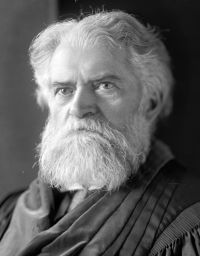 Simon Newcomb,
Side-Lights on Astronomy and Kindred Fields of Popular Science
Simon Newcomb,
Side-Lights on Astronomy and Kindred Fields of Popular Science
“ It seems to me that the true educational want is ignored both by those who advocate a classical and those who advocate a scientific education. What is really wanted is to train the intellectual powers, and the question ought to be, what is the best method of doing this? ”
 G. Stanley Hall,
Youth: Its Education, Regimen, and Hygiene
G. Stanley Hall,
Youth: Its Education, Regimen, and Hygiene
“ Indeed, it is a question not of schools but of civilization, whether mental training, from the three R's to science and philosophy, shall really make men better, as the theory of popular education assumes, and whether the genius and talent of the few who can receive and bear it can be brought to the full maturity of a knowledge fully facultized—a question paramount, even in a republic, to the general education of the many.The illusion is that beginnings are hard. They are easy. Almost any mind can advance a little way into almost any subject. ”
Various, Popular Science Monthly (1895)
“ And this, bear in mind once and always, not alone because the development of these senses means a large addition to the practical art of living, but still more because such a development means increased brain power, and the consequent generation of men and women of greater worth. We hold manual training, then, not as the last word in education, but rather as a mere preliminary word—a preface which is to lead to that fuller unfolding of human faculty which will eventually be the meaning and purpose of education. We are engaged in a process, the unfolding and perfecting of the human spirit. ”
Mary Putnam-Jacobi, Popular Science Monthly (1885)
“ Of this, literature and other art is one and only one portion. The work of the professions, of the upper regions of industry, commerce, and finance, the work of scientific and of political life, is the work appropriate to the intelligences which have proved themselves equal to a course of training at once complex and severe. A person destined to receive a superior education is expected to develop more vigorous mental force, to have a larger mental horizon, to handle more complex masses of ideas, than another. ”
H. G. Wells,
The New Teaching of History
“ The material may be the same, the science of physics, biology or history as the case may be, but the method of treatment may be widely different in the two cases.Education is really one of the newest of the arts and sciences. The idea of particular, exceptional people pursuing learning has been familiar to the world for scores of centuries, but the idea of preparing the minds of whole classes or whole communities for co-operations and common actions by a training in common ideas is comparatively a new one. ”
Charles H. Ham, Mind and Hand: Manual Training the Chief Factor in Education (1900)
“ The men and women who do the world’s work are better educated than the schoolmen who vainly tell them how to do it; and they are better educated because they are in closer relationship with things, through the supreme sense of touch, which refines and spiritualizes the hand—that wonderful member which differentiates man from the other animals, and makes him their master.Manual Training educationally, then, relates to all the arts whose sum is the art of living. ”
 Charlotte Perkins Gilman,
Herland
Charlotte Perkins Gilman,
Herland
“ Their idea of education was the special training they took, when half grown up, under experts. Then the eager young minds fairly flung themselves on their chosen subjects, and acquired with an ease, a breadth, a grasp, at which I never ceased to wonder. ”
Various, Lippincott's Magazine of Popular Literature and Science…
“ But here we arrive at a field of detail that would lead us far beyond the limit of these articles. We pass naturally from the subject of education to what is, in the narrower but most generally accepted sense of the word—mental training—- its leading object of pursuit. ”
Related terms
Authors who wrote about “intellectual training”
Charles H. HamFrank Pierrepont Graves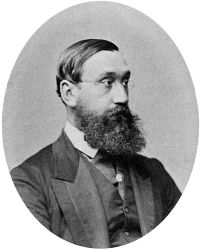 William Robert CornishG. Stanley Hall
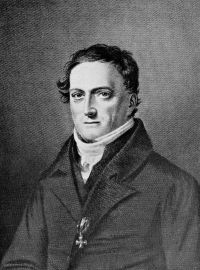 Johann Friedrich HerbartCharles Hubbard JuddPaul KlapperWilliam Henry PyleMary Putnam-JacobiWilliam C. BagleyCharlotte M. Mason
 James Hutchins BakerHenry K. RoweThomas Henry Huxley
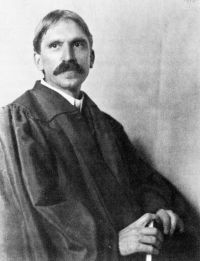 John DeweyVariousBertrand RussellAlexander Bain
 Alfred North Whitehead
 Arthur Schopenhauer
Frank Pierrepont GravesWilliam Robert CornishG. Stanley HallJohann Friedrich HerbartCharles Hubbard JuddPaul KlapperWilliam Henry PyleMary Putnam-JacobiWilliam C. BagleyCharlotte M. MasonJames Hutchins BakerHenry K. RoweThomas Henry HuxleyJohn DeweyVariousBertrand RussellAlexander BainAlfred North WhiteheadArthur Schopenhauer