Labor (economics)

Definition and stakes

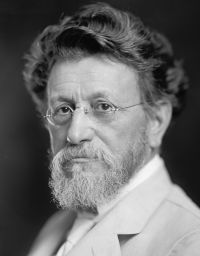
Mary Edna Tobias Marcy,  Shop Talks on Economics — What You Sell to the Boss (1911)

“ What happens when there are ten men competing to sell their labor-power? Who gets the job?
What happens when there are several jobs and only one worker? Will he receive higher or lower wages? Will he get a good price for his labor-power?
When workingmen are scarce and manufacturers are forced to pay a high price for labor-power (high wages) in a certain locality, does the scarcity of workers last long?
”
Source: Wikisource

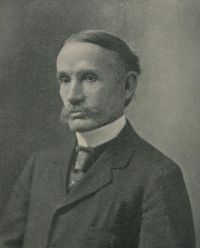
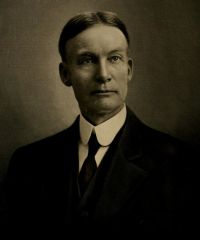
Portrait of Frank W. Blackmar Frank W. Blackmar,  History of Human Society

“ The Economics of Labor.—In complex society there are many divisions or groups of laborers—laborers of body and laborers of mind. Every one who is performing a legitimate service, which is sought for and remunerative to the laborer and serviceable to the public, is a laborer. At the base of all industry and social activity are the industrial wage-earners, who by their toil work the mines, the factories, the great steel and iron industries, the railroads, the electric-power plants and other industries. ”
Source: Gutenberg

Mary Edna Tobias Marcy,  Shop Talks on Economics — The Value of a Commodity (1911)

“ Working men and women spent labor producing you and me. Somebody made bread, sewed shoes, built houses and made clothes for us. All the things we ate and drank and wore and used were made by the labor of working men and women. Their labor was necessary labor. Without it we should never have grown old enough or strong enough to have labor-power to sell. Labor-power was spent in raising us to the point where we would be able to work.
The value of a commodity is determined by the social labor-time necessary to produce it.
”
Source: Wikisource

Get perspective with Kwize: daily news enlightened by great literature