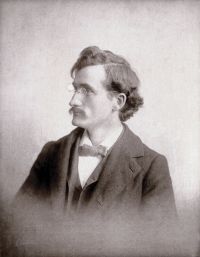
“ The gang-spirit of labor runs into the politics of the group and constitutes the norm. If we are to have self-acting men they must be removed from close control, in labor as well as elsewhere. If it is necessary that any great proportion of the laboring men shall be controlled, then is it equally important that other men in sufficient numbers shall constitute the requisite counterbalance and corrective. ”
Labor gang
Definition and stakes
The theme of “labor gang” has been addressed by authors such as Eugene V. Debs, Henry George, Joseph James Ettor, Karl Marx and William Dodd. It is often associated with terms like employer, worker, Union, wage and class.
Quotes about “labor gang”
William James, Talks To Teachers On Psychology…
“ And being what we are, the dregs of the labor-market, and having no certainty of permanent employment, and no organization among ourselves, we must expect to work under the watchful eye of a gang-boss, and be driven, like the wage-slaves that we are, through our tasks. ”
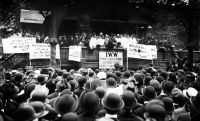 Joseph James Ettor,
Industrial Unionism: the Road to Freedom
(c/1913)
“ From the standpoint of accepted law, morals, religion, etc., the capitalists are considered right and justified in their control and ownership of industries and exploitation of labor because they have the means to hire, and have organized a gang that skulks under the name of "Law, Order and Authority," that is well paid and well kept to interpret and execute laws in favor of the paymasters of course. ”
William Dodd, The Laboring Classes of England (1847)
“ As in the counties already noticed, we find the people engaged in field labor occasionally suffering from bad colds and severe rheumatism. The employment of married women is much lamented, as it takes them away from their domestic duties, and leaves their cottages and children in a neglected state. But the crowning evil in these counties is "the gang system." ”
 Eugene V. Debs,
Labor and Freedom: The Voice and Pen of Eugene V. Debs
“ Unless the workers unite in support of these two leaders they may be sent to the electric chair. Should we suffer these brave comrades to fall victims to such a monstrous crime, it would be a foul and indelible blot upon the whole labor movement. Let us arouse the workers of the nation in their behalf and prove to them when their trial takes place that we are as true to them as they were to the wage-slaves in the industrial battle at Lawrence. ”
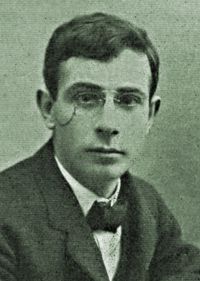 Gustavus Myers,
Great Fortunes from Railroads
“ In varying degrees, now in outright abuse and again in sneering and ridicule, the working class was held up as an ignorant, discontented, violent aggregation, led by dangerous agitators, and arrogantly seeking to upset all business by seeking to dictate to employers what wages and hours of labor should be.And, after all, little it mattered to the capitalists what the workers thought or said, so long as the machinery of government was not in their hands. ”
 Margaret Sanger,
Woman and the New Race
“ When all is said and done, the workers who produce large families have themselves to blame for the hundreds of thousands of unemployed grasping for jobs, for the strike breakers, for the policemen who beat up and arrest strikers and for the soldiers who shoot strikers down. All these come from the families of workingmen. Their fathers and mothers are workers for wages. Out of the loins of labor they come into the world and compel surplus labor to betray labor that is employed. ”
 Antonio Labriola,
Essays on the Materialistic Conception of History
“ The proletariat has arisen; and wherever the struggle of the laborers has taken definite form, the bourgeois codes have been convicted of falsehood. Written judgment has shown itself powerless to save the wage-workers from the oscillations of the market, to guarantee women and children against the oppressive hours of the factories, or to find an expedient to solve the problem of forced idleness. The partial limitation of the hours of labor has, itself alone, been the subject and the occasion of a gigantic struggle. ”
Harrison George, Shall Freedom Die?: 166 Union Men In Jail For Labor (c/1917)
“ Despite the controlled local press, police powers and courts, outside opinion, un-suppressed, took side with Labor. LESSONS TAUGHT CAPITAL VIOLENCE, in labor disputes, is a sign of weakness. The weakest side uses it when defeat threatens. It may here be noted that I. W. W. strikes withdraw, not only one or two crafts, but all crafts, all workers in the shop or industry. That is Industrial Unionism and it places the employer on the weakest side industrially. That is why violence in I. W. W. strikes begins with the employer. ”
 William Bennett Munro,
Social Civics
(1922)
“ It is becoming the general practice of organized labor to buy no goods which do not bear the “union label”, which is a sticker or tag certifying that the merchandise was made by members of a union.How the employer strikes back. Lockouts and Blacklists.—But if the worker has his weapons, so has the employer. When the employer believes the demands of his workmen to be excessive he can shut down the establishment and lock the workers out. Then, if he can find men and women to work for him on more favorable terms, he takes them into his employ and starts up again. ”
Albert Richard Parsons, The Chicago Martyrs (1899)
“ The whole force of the organized power of the government is thrown against the workers, whom the so-called better class denominates a mob. Now, when the workers of America refuse to starve according to law and order, and when they begin to think and act, why, the street drill begins. The enslavers of labor see the coming storm. They are determined, cost what it may, to drill these people and make them their slaves by holding in their possession the means of life as their property, and thus enslave the producers. Workingmen—we mean women, too,—arise! ”
Robert Hunter, Violence and the Labor Movement
“ The workers [336] crave its protection, seek its guidance, and possess a sense of security only when supported by its solidarity. Only something as intuitively impelling as the desire for life could have called forth the labor and love and sacrifice that have been lavishly expended in the disheartening and incredibly tedious work of labor organization. The upbuilding of the labor movement has seemed at times like constructing a house of cards: often it was hardly begun before some ill wind cast it down. It has cost many of its creators exile, imprisonment, starvation, and death. ”
A. M. Brooks, Petals Plucked from Sunny Climes
“ If labor has to compete with crime, the hand of industry with the bloody hand, where is the hope on which honesty is to hinge and work its way through the world? The whole can be told in a few words: While these sixty savages are here being employed in every department of manual labor, thus taking the bread from the mouths of dependent women and children, it is productive of suffering in our midst, whilst those advanced in life look in vain for a support to their sons, whose hands are tied by these savage oppressors. ”
 Upton Sinclair,
The Goslings: A Study of the American Schools
“ Ours is an “open shop” city; that is, the business men and merchants are forbidden to employ union workers, 5and if they disregard this rule they are blacklisted, their credit is cut off, and they are driven into bankruptcy. When a new man comes into town and sets up in business he is politely interviewed and invited to join the gang; at the same time he is given his orders, and if he disobeys, he moves on to some other part of the world, or down into the ranks of the wage-slaves. ”
 Emma Goldman,
Anarchism and Other Essays
(1910)
“ It is almost ridiculous to hope much from present society when we consider that workingmen, wage slaves themselves, object to convict labor. I shall not go into the cruelty of this objection, but merely consider the impracticability of it. To begin with, the opposition so far raised by organized labor has been directed against windmills. Prisoners have always worked; only the State has been their exploiter, even as the individual employer has been the robber of organized labor. ”
Joseph James Ettor,
Industrial Unionism: the Road to Freedom
(c/1913)
“ That is more and more forcibly and eloquently being brought home to our class. Whatever failure the agitator may make in impressing the toilers of the conflict of interests between employers and employees, is most eloquently and convincingly impressed now as in the past, by the policemen's clubs, the whip and the mace of State troopers, militiamen's bayonets, soldiers' machine guns, jails, bull pens and scaffold, and such other "civilized weapons and methods" that capitalism needs to impress on the slaves the sanctity of property rights and "freedom to labor." ”
 Alexander Berkman,
Now and After: The ABC of Communist Anarchism…
(1929)
“ It took the wage earners a long time to fight out their right of association; and, mind you, they had to fight for it. Which shows you that the bosses have never granted anything to the workers except when the latter fought for it and compelled them to yield. Even to-day many employers oppose the organization of their employees; they prevent it wherever they can: they get labor organizers arrested and driven out of the city, and the law is always on their side and helps them do it. ”
John Spargo, Socialism: A Summary and Interpretation of Socialist Principles
“ I, too, am in an organization." Then it became a battle betwixt organized capital and organized labor. When the workers went out on strike in one shop or factory, depending upon their brother unionists employed in other shops or factories, the employers of these latter locked them out, thus cutting off the financial support of the strikers. In other cases, when the workers in one place went out on strike, the employer got his work done through other employers, by the very fellow-members upon whom the strikers were depending for support. ”
Helen Campbell, Prisoners of Poverty: Women Wage-Workers…
“ In every one of these competition keeps wages at the lowest possible figure. Outside of the army here employed come the washers and ironers who laundry shirts and underwear, whose work is of the most exhausting order, [Pg 219] who “lean hard” on the iron, and in time become the victims of diseases resulting from ten hours a day of this “leaning hard,” and who complain bitterly that prisons and reformatories underbid them and keep wages down. It is quite true. Convict labor here as elsewhere is the foe of the honest worker, and complicates a problem already sufficiently complicated. ”
 Jack London,
War of the Classes
(1905)
“ These men, the discouraged worker and the discouraged criminal, voluntarily withdraw themselves from the struggle for work. Industry does not need them. There are no factories shut down through lack of labor, no projected railroads unbuilt for want of pick-and-shovel men. Women are still glad to toil for a dollar a week, and men and boys to clamor and fight for work at the factory gates. ”
Harrison George, Shall Freedom Die?: 166 Union Men In Jail For Labor (c/1917)
“ AS a background of the present, widely separated struggles with groups of workers have driven the individual capitalist, or corporation, into the present great combination to crush all organized labor. Without assistance by other wealthy interests in influencing authority and muzzling the press, the isolated employer stood chances of losing out in a strike. ”
Richard Heath, The English Peasant (1893)
“ And even supposing that by strict and careful supervision the grosser forms of evil are kept down, the private gang system does not afford any alleviation in the labour-slavery which has been the lot of these poor fen women and children for two generations. ”
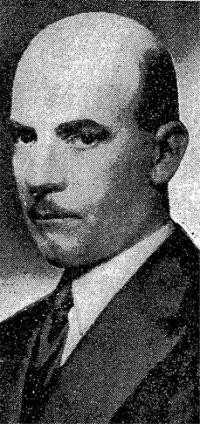 Courtney Ryley Cooper,
The Eagle's eye
(1919)
“ It was the outbreak of the Industrial Workers of the World, an organization which is more readily recognized by its initials—I.W.W., formed originally by a cracked-brain, illogical theorist to agitate the doctrine that a worker is entitled to the gross proceeds of his labor and it attracted to its membership radicals from all over the world. It always proceeded on the lines of anarchism—destruction to anything which impeded its progress. The cry of higher and better wages attracted a great many workingmen when it was first introduced into this country, but they soon dropped away. ”
Eugene V. Debs,
Labor and Freedom: The Voice and Pen of Eugene V. Debs
“ I am of those who believe that an organization of workingmen, to be efficient, to meet the demands of this hour, must be organized upon a revolutionary basis; must have for its definite object not only the betterment of the condition of workingmen in the wage system, but the absolute overthrow of wage slavery that the workingman may be emancipated and stand forth clothed with the dignity and all other attributes of true manhood. ”
Upton Sinclair,
Letters to Judd, an American Workingman
“ We have seen the poor struggling to protect themselves against the rich in the field of politics, and meeting with no great success. There is another place where they struggle—in the labor market. Let us see what happens to them there.Seeing the employers combining into larger and larger organizations, it naturally occurred to the workers to combine, and sell their labor as a unit. At first the employers made this action a crime, and a great many working men went to jail, before the right of labor combination was granted. ”
“ There were plenty of them indeed who had heard the defendant say that in his opinion the wage system was all wrong, that wealth obtained from the product of labor should be fairly divided between the capitalist and the workman, and that his sympathies in the present industrial conflict were entirely with the men, all of whom should be permitted to resume their old places on their own terms. ”
Robert Hunter, Violence and the Labor Movement
“ It rises up in every country from time to time. The anarchist, the anarchist-communist, the Lokalisten, the anarcho-socialist, the young socialist, and the syndicalist have all in their time solemnly come to warn the working class of this insidious enemy. But the workers refuse to be frightened, and in every country, including even Russia, Italy, and France, they have less fear of State ownership of industry than they have of that crushing exploitation which they know to-day. ”
Walter Renton Ingalls, Current Economic Affairs (1918)
“ In capturing a greater share of the produce of industry town labor does not get it only from what are technically called property and management, but it robs the farmers, and shopkeepers who theoretically are capitalists. Moreover, the stronger classes of town labor prey upon the weaker of the proletariat. This upheaval of what used to be a delicate economic organization is in itself of ominous portent. But the people who capture an increased share of the produce of industry and proceed to make merry with it commit other crimes. ”
 Sidney Lewis Gulick,
Working Women of Japan
“ Labor unions are strictly forbidden, and any person advocating socialism is under strict police surveillance. Strikes are illegal and their promoters are liable to criminal punishment. Anomalous as it may be, the government seems to be seeking to destroy that enlightened popular opinion on which it must rely for the efficient enforcement of its own plans for social betterment of the working classes.I have dwelt at considerable length on the conditions of factory workers, for later on I shall describe a sociological experiment among this class. ”
Robert Hunter, Violence and the Labor Movement
“ He must be fought [239] and destroyed. There is no form of mediation or conciliation possible between the worker and his employer. Conditions must, therefore, be made intolerable for the capitalist. Work must be done badly. ”
Eugene V. Debs,
Debs: His Life, Writings and Speeches…
“ The pernicious effect of prison contract labor upon “free labor,” so called, when brought into competition with it in the open market, is universally conceded, but it should not be overlooked that prison labor is itself an effect and not a cause, and that convict labor is recruited almost wholly from the propertyless, wage-working class and that the inhuman system which has reduced a comparative few from enforced idleness to crime, has sunk the whole mass of labor to the dead level of industrial servitude. ”
Joseph James Ettor,
Industrial Unionism: the Road to Freedom
(c/1913)
“ They gather presumably to "discuss and help to solve the labor problems" but in fact to partake of the flesh pots they have stripped from labor, to pull the wool over the eyes of the wage workers so that the chains of wage labor may be linked ever more secure on the limbs of our class, that our hopes and ideals may be dragged in the mire and capitalists given assurance of a long day more of safe and contented slavery on the part of the wealth producers. ”
Robert Hunter, Violence and the Labor Movement
“ It rises and falls in direct relation to the lawlessness, the repression, and the tyranny of the governments. Furthermore, where labor organizations are weakest and the masses most ignorant and desperate, the very helplessness of the workers leads them into that violence. This is made clear enough by the historic fact that in the early days of the modern industrial system nearly every strike of the unorganized [126] laborers was accompanied by riots, machine-breaking, and assaults upon men and property. ”
Related terms
Authors who wrote about “labor gang”
Eugene V. Debs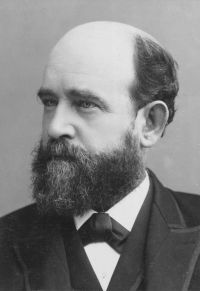 Henry GeorgeJoseph James Ettor
 Karl MarxWilliam DoddAlbert Richard ParsonsUpton SinclairRobert HunterJack London
 William Z. FosterWalter Renton IngallsEmma Goldman
 Samuel Peter Orth
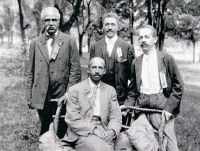 Lafayette M. Hershaw
 Frédéric BastiatAlexander BerkmanWilhelm LiebknechtHarrison GeorgeHelen CampbellJohn Spargo
