Labor-saving device

Definition and stakes

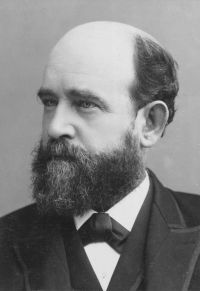
Portrait of John Bates Clark John Bates Clark,  Essentials of Economic Theory

“ How Improvements which call Labor to a Particular Establishment may displace Labor from a Group.—Another typical case is afforded when some one employer has for a time the exclusive use of a labor-saving device, and pushes his production to the utmost in order to get the full benefit from it. Here are seen the more characteristic effects of such an improvement. It draws labor to the employer who for the time being monopolizes the new instrument of production, but it turns labor from the subgroup of which this employer is a member. ”
Source: Gutenberg

Henry A. Atkinson,  Men and Things

“ The United States Bureau of Labor tells the story in figures. Five hundred yards of checked gingham can be made by a machine in 73 hours; by hand labor it would take 5,844 hours. One hundred pounds of sewing cotton can be made by a machine in 39 hours; by hand labor it would take 2,895 hours. The labor costs are proportionate. The increased effectiveness of a man’s labor aided by the use of machinery, according to these reports, varies from 150 per cent. all the way up to 2,000 per cent. Hence, we see that the machine is not so much a labor-saving device as it is a production-making device. ”
Source: Gutenberg

Mildred Maddocks Bentley,  The Consumer Viewpoint

“ Household equipment of every type must be made so that it will prove adaptable to different service conditions, with regard to both homes and actual users. An even more important consideration is intermittent use that must be met successfully by all home devices. It is the unusual home in which washing is done more than once or twice a week. The balance of the time the machine must stand idle. And this is true of practically every other type of labor saving device. It represents the most difficult of conditions a factory product has to face. ”
Source: Gutenberg

Get perspective with Kwize: daily news enlightened by great literature