 Jean-Jacques Rousseau,
The Social Contract
(1762)
“ SINCE no man has a natural authority over his fellow, and force creates no right, we must conclude that conventions form the basis of all legitimate authority among men. ”
Jean-Jacques Rousseau,
The Social Contract
(1762)
“ SINCE no man has a natural authority over his fellow, and force creates no right, we must conclude that conventions form the basis of all legitimate authority among men. ”
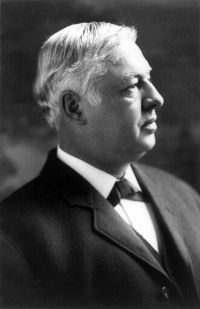 Joseph Rucker Lamar,
United States v. Midwest Oil Company…
“ The grant of authority to the Executive, as to other departments of the government, ought not to be amplified by judicial decisions. The Constitution is the legitimate source of authority of all who exercise power under its sanction, and its provisions are equally binding upon every officer of the government, from the highest to the lowest. ”
Robert H. Milligan, The fetish folk of West Africa (1912)
“ The second is that the authority thus legitimately constituted should respect the legitimate liberties of those whom it is called to govern. A good system for the formation and organization of authority, a good system of securities for liberty, are the two conditions in which the goodness of government resides, whether civil or religious. ”
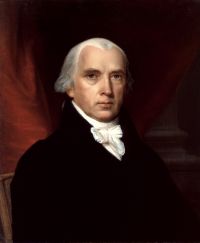 James Madison,
The Federalist
(1863, Dawson edition)
“ As the People are the only legitimate fountain of power, and it is from them that the constitutional charter, under which the several branches of Government hold their power, is derived, it seems strictly consonant to the republican theory, to recur to the same original authority, not only whenever it may be necessary to enlarge, diminish, or new-model the powers of the Government; ”
John Quincy Adams, The Jubilee of the Constitution
“ Upon the principles of the Declaration of Independence, the dissolution of the ties of allegiance, the assumption of sovereign power, and the institution of civil government, are all acts of transcendent authority, which the people alone are competent to perform ”
A. H. J. Greenidge, Roman Public Life
“ The people, therefore, possessed certain sovereign rights, but each right was limited by the vast authority of their personal representative, who wielded the whole of the executive, and so much of the legislative power as is implied in the sole right of initiative. ”
 Mathilde Blind,
Madame Roland
(1886)
“ All citizens, without distinction, are eligible for public offices. The natural, civil, and religious liberty of men, and their absolute independence of all authority save that of the law, forbid any inquiries into their opinions, speeches, and writings, as long as they do not disturb order, or interfere with the rights of others. ”
 Hippolyte Taine,
History of English Literature Volume 2…
“ As to the share of power, authority, direction, which each individual ought to have in the management of the state, that I must deny to be amongst the direct original rights of man in civil society."—Ibid. ”
 John Taylor,
Journal of Discourses — Volume 26…
“ And if the people have given up to governors, legislatures, the judiciary and to the officers of the law certain powers, rights and privileges, this authority coming of or from the people, it is expected that they shall act for and in the interests of the people ”
 Thomas Hill Green,
Lectures on the Principles of Political Obligation
“ For these various reasons there have been occasions in the history of all modern states at which men, or bodies of men, without the conscious assertion of any right not founded upon law, might naturally deem themselves entitled to resist an authority which on its part claimed a right—a legally established power—to enforce obedience, and turned out actually to possess the power of doing so. ”
 Lydia Hoyt Farmer,
The Life of La Fayette, the Knight of Liberty in Two Worlds and Two Centuries
“ The principle of all sovereignty rests in the people. 142No body or individual can possess any authority which does not expressly emanate from the nation.“The sole end of all government is the public good. That good demands that the legislative, executive, and judicial powers should be distinct and defined, and that their organization should secure the free representation of the citizens, the responsibility of their deputies, and the impartiality of the judges. ”
 Woodrow Wilson,
An old master, and other political essays
(1893)
“ Every law is a command, not only, but the command of a supreme authority; and it would be a singular contradiction in terms to speak of this supreme power as limited by law. How can the supreme author of law within a state himself be subject to law: how can the creature bind the creator? How can one refrain from smiling at the logical incapacity of those who speak of limitations to sovereignty, or, more absurdly still, of divisions of sovereignty?65 Is there a hierarchy of supremacies: can there be a co-ordination of creators? ”
Various, The Southern Literary Messenger…
“ But how would they be answered if the representative and constituent bodies were both thoroughly instructed in the sacred character and paramount authority and importance of the duties which belong to the high function of sovereignty? We justly deny and deride the divine right of kings; and we assert and maintain the divine right of the people to self government. ”
 Alexander Shields,
A Hind Let Loose
“ For, to speak properly, if we own his authority in any respect, we own it to be lawful: for every authority, that is owned to be authority indeed, is lawful; authority always importing authorization, and consisting in a right or call to rule, and is formally and essentially contradistinct to usurpation: where ever the place of power is merely usurped, there is no authority but according to his word ”
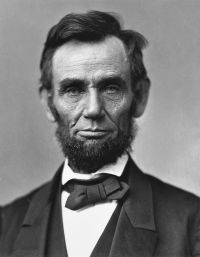 Abraham Lincoln,
The Papers and Writings of Abraham Lincoln…
“ Now it is perceived from the reading of this that there is nothing express upon the subject, but that the authority is sought to be implied merely for the general provision of "all rightful subjects of legislation." ”
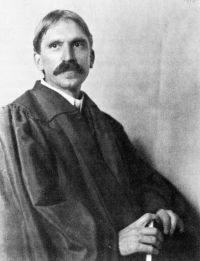 John Dewey,
Outlines of a Critical Theory of Ethics
“ Every institution, then, has its sovereignty, or authority, and its laws and rights. It is only a false abstraction which makes us conceive of sovereignty, or authority, and of law and of rights as inhering only in some supreme organization, as the national state. ”
George Ticknor Curtis, History of the Origin, Formation…
“ The advocates of a national government, besides and beyond the intrusting of a particular jurisdiction to that government, wished to make it certain that its legislative power, in each act of legislation, should rest on the direct authority of the people. ”
Adam Ferguson, An Essay on the History of Civil Society…
“ He whose office it is to govern a supine or an abject people, cannot, for a moment, cease to extend his powers. Every execution of law, every movement of the state, every civil and military operation, in which his power is exerted, must serve to confirm his authority, and present him to the view of the public as the sole object of consideration, fear, and respect. ”
 Thomas Henry Huxley,
Critiques and Addresses
“ If, on the other hand, the authority of the State is legitimately employed in regulating these matters, then it is an open question, to be decided entirely by evidence as to what tends to the highest good of the people, whether we keep our present laws, or whether we modify them. ”
“ Every authority that claimed man’s homage was weighed in the scales of the understanding, and, so weighed, every such authority was found wanting. The State had come to be regarded as only a collection of individuals who had agreed to live together under a ruler deriving all his claims from their consent, and invested with no divine right to their allegiance. ”
 David Hume,
The History of England in Three Volumes…
“ All government is founded on opinion and a sense of duty; and wherever the supreme magistrate, by any law or positive prescription, shocks an opinion regarded as fundamental, and established with a firmness equal to that of his own authority, he subverts the principle by which he himself is established, and can no longer hope for obedience. ”
 John Taylor of Caroline,
An Inquiry into the Principles and Policy of the Government of the United States
(1814)
“ All the truth in the opinion that knowledge is the best security for liberty," lies within its capacity to detect the fraud of authority, and to retain the contrary principle, self government. Our policy draws the liberty we enjoy from one principle; authority is the source of the present state of other countries. ”
 Robert Green Ingersoll,
The Works of Robert G. Ingersoll…
“ All political authority is vested in the people themselves, They have the right to select their officers and agents, and these officers and agents are responsible to the people. Political authority does not come from the clouds. ”
 Joseph Dietzgen,
The Positive Outcome of Philosophy
“ And even though the citizens delegate rights to the state which they deny to themselves, also our opponents cannot but admit that in so doing the citizens are simply delegating their own rights to the superior authority of the state. ”
by John Marshall Harlan, Baldy v. Hunter — Opinion of the Court
“ They were the fundamental principles for which civil society is organized into government in all countries, and must be respected in their administration under whatever temporary dominant authority they may be exercised. ”
J. N. Larned, History for ready reference, Volume 6 (1895)
“ We hold that the constitution follows the flag and denounce the doctrine that an executive or congress, deriving their existence and their powers from the constitution, can exercise lawful authority beyond it, or in violation of it. ”
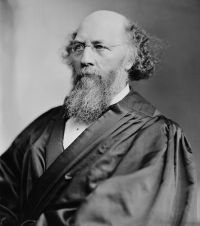 Stephen Johnson Field,
Ex Parte Clarke — Dissent
“ No one will deny that in the powers granted to it the general government is supreme, and that, upon all subjects within their scope, it can make its authority respected and obeyed throughout the limits of the Republic ”
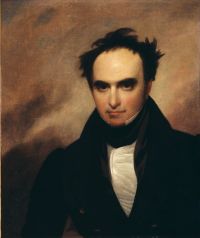 Daniel Webster,
The Great Speeches and Orations of Daniel Webster
(1879)
“ It is observable enough, that the doctrine for which the honorable gentleman contends leads him to the necessity of maintaining, not only that this general government is the creature of the States, but that it is the creature of each of the States severally, so that each may assert the power for itself of determining whether it acts within the limits of its authority. ”
George Ticknor Curtis, History of the Origin, Formation…
“ All that is necessary is, to see that these departments do not encroach upon the rights and duties of each other. There is, at least, no other power, claiming the obedience of the same people, whose just authority it is necessary to regard, and on whose proper domain no intrusion is to be permitted. ”
Victoria C. Woodhull, The Origin, Tendencies and Principles of Government (1871)
“ Thus at the very outset we find a professed equal government proscribing one-half the people over whom its authority is exercised; and, be it ever remembered, is fully maintained. While they are made responsible for all infringement of law, they have no voice in determining what that law shall be. ”
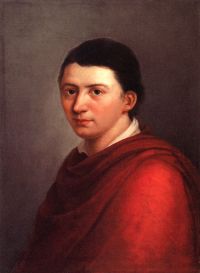 Friedrich von Schlegel,
The philosophy of life, and philosophy of language…
“ If, however, we should any where meet, either in the present times or the history of the past, with a state in which, by the principle of its constitutions, the nominal possessor of supreme authority and the executive is responsible to another body, then is the latter in fact the sovereign power, and not the former, which really is subordinate to the other. ”
 Herbert Spencer,
Popular Science Monthly
(1884)
“ To get justification for positive law, he takes us back to the absolute sovereignty of the power imposing it—a monarch, an aristocracy, or that larger body of men who have votes in a democracy; which body he also styles the sovereign, in contrast with the remaining portion of the community, which, from incapacity or other cause, remains subject. And having affirmed, or rather taken for granted, the unlimited authority of the body, simple or compound, small or large, which he styles sovereign, he, of course, has no difficulty in deducing the validity of its edicts, which he calls positive law. ”
Jonathan Elliot, Debates in the Several State Conventions on the Adoption of the Federal Constitution (1907)
“ But is it consistent with any principle of prudence or good policy to grant unlimited, unbounded authority, which is so totally unnecessary that gentlemen say it will never be exercised? But gentlemen say that we must make experiments. ”
Francis X. Hennessy, Citizen or Subject? (1923)
“ Why then, in an Article with naught but procedural provisions and two limitations on power to make Articles, do he and all his associates seek to find, and assert that they do find, grant of authority to the inferior governments of state citizens to give away every liberty which the citizens of America hold most dear? ”
 Lajos Kossuth,
Select Speeches of Kossuth
“ In every society there are political and civil concerns on one side, and on the other social concerns; for the first, civil authority must be established—in political and civil respects every one has to acknowledge the power of its jurisdiction. ”
 George S. Boutwell,
Reminiscences of Sixty Years in Public Affairs…
“ We will hold them subject to our will until they accept our authority and recognize our right to rule over them, and beyond that we will hold them until, in our opinion, they are qualified to govern themselves. ”
 Carl Schurz,
State Rights and Byron Paine
(1859)
“ The allurments of power are among the strongest temptations for the human soul, and there are but few men who, in the exercise of delegated authority, will never lose sight of the original rights of those that delegated it. ”
Sheldon Amos, Popular Science Monthly (1874)
“ It is sufficient to establish that there are certain definite limits which circumscribe the free action of every governing authority, and that these limitations admit of being formulated into more or less precisely articulated propositions. Such propositions, capable as they are of being handled, interpreted, and enforced, in courts of justice, have all the essential qualities that belong to the general rules framed by the governing authority itself, for the guidance of the conduct of all persons submitted to its dominion. ”
The State (Ryan) v Lennon (1936)
“ It follows that every act, whether legislative, executive or judicial, in order to be lawful under the Constitution, must be capable of being justified under the authority thereby declared to be derived from God. ”
Junius, Letters of Junius (1772)
“ The government of a weak, irresolute monarch, may be wise, moderate, and firm;—that of an obstinate, capricious prince, on the contrary, may be feeble, undetermined, and relaxed. The reputation of public measures depends upon the minister, who is responsible, not upon the king, whose private opinions are not supposed to have any weight against the advice of his counsel, whose personal authority should therefore never be interposed in public affairs.—This, I believe, is true constitutional doctrine. ”
A Compilation of the Messages and Papers of the Presidents…
“ Finally, acting always within the authority and limitations of the Constitution, invading neither the rights of the States nor the reserved rights of the people, it will be the purpose of my Administration to maintain the authority of the nation in all places within its jurisdiction; to enforce obedience to all the laws of the Union in the interests of the people ”
J. N. Larned, History for ready reference, Volume 5… (1895)
“ Respect for its authority, compliance with its laws, acquiescence in its measures, are duties enjoined by the fundamental maxims of true Liberty. The basis of our political systems is the right of the people to make and to alter their Constitutions of Government. But the Constitution which at any time exists, till changed by an explicit and authentic act of the whole people, is sacredly obligatory upon all. The very idea of the power and the right of the people to establish Government presupposes the duty of every individual to obey the established Government. ”
Jean-Jacques Rousseau,
The Social Contract
(1913)
“ I mean to inquire if, in the civil order, there can be any sure and legitimate rule of administration, men being taken as they are and laws as they might be. In this inquiry I shall endeavour always to unite what right sanctions with what is prescribed by interest, in order that justice and utility may in no case be divided. ”
 Samuel Johnson,
Political Tracts
(1776)
“ This claim, wild as it may seem, this claim, which supposes dominion without authority, and subjects without subordination, has found among the libertines of policy many clamorous and hardy vindicators. The laws of Nature, the rights of humanity, the faith of charters, the danger of liberty, the encroachments of usurpation, have been thundered in our ears, sometimes by interested faction, and sometimes by honest stupidity. ”
 Lysander Spooner,
No Treason, Vol. VI.: The Constitution of No Authority
“ If the people of this country wish to maintain such a government as the Constitution describes, there is no reason in the world why they should not sign the instrument itself, and thus make known their wishes in an open, authentic manner ”
Alexander Shields,
A Hind Let Loose
“ Wherefore it is altogether impertinent to use such a distinction, with application to tyrants or usurpers, as many do in their pleading for the owning of our oppressors; for they have no power, but what is the abuse of power.3. As that authority which is God's ordinance must have his institution; so it must have his divine constitution from himself and by the people. Wherever then there is authority to be owned of men, there must be these two, constitution from God and constitution from the people. ”


