Long bone

Definition and stakes

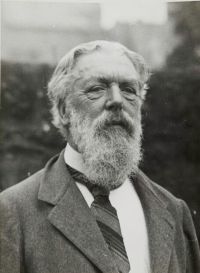
Portrait of John Harvey Kellogg John Harvey Kellogg,  First Book in Physiology and Hygiene

“ The joint contains a fluid to oil it, so that the ends of the bones move upon each other very easily. If the joints were dry, every movement of the body would be very difficult and painful.
16. The bones are held together at the joints by means of strong bands called ligaments.
17. How the Bones are Made.—The bones [Pg 98] are not so solid as they seem to be. The outside of most bones is much harder and firmer than the inside. Long bones, like those of the arms and the legs, are hollow. The hollow space is filled with marrow, in which are the blood-vessels which nourish the bone.
”
Source: Gutenberg

Helen M. Johnson,  Canadian Wild Flowers: Selections from the Writings of Miss Helen M. Johnson

“ His body has long since mouldered away and mingled with the parent earth,—this skull alone remains; and yet the time will surely come, and cannot be far distant, when "the bones shall come together—bone to his bone"; when the sinews and the flesh shall come upon them, the skin cover them, and the breath entering the body the dead shall live! ”
Source: Gutenberg

Portrait of Maria Montessori Maria Montessori,  Pedagogical Anthropology

“ The Growth of the Limbs.—Recent studies, conducted principally by Godin in France, author of the classic work upon growth, have demonstrated that the long bones of the limbs obey certain special laws of biologic growth.
While a long bone is growing in length it does not grow in width or thickness, and while it is increasing in thickness it does not gain in length; hence the lengthening of the bones takes place in alternate periods; during the period of repose relative to growth in length, the bone gains in thickness.
”
Source: Gutenberg

Get perspective with Kwize: daily news enlightened by great literature