Manorialism

Definition and stakes

Portrait of Frederic William Maitland Frederic William Maitland,  Domesday Book and Beyond: Three Essays in the Early History of England

“ Even if we introduce a more characteristically medieval element and demand that the tillers shall be neither menial servants nor labourers hired for money, but men who make their living by cultivating for their own behoof small plots which the proprietor allows them to occupy, still we shall have the utmost difficulty if we would go behind manorialism. ”
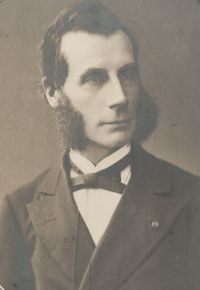
Source: Gutenberg

Portrait of Frederic William Maitland Frederic William Maitland,  Domesday Book and Beyond: Three Essays in the Early History of England

“ Possibly Northampton, Derby and parts of Lincoln really are ‘over-teamed’: that is to say, were the land of these counties to come to the hands of lords who held large and compact estates, the number of plough-teams would be reduced. Where there is freedom there will be some waste. The tenements split into fractions, and the owner of a small piece must keep oxen enough to draw a plough or trust to the friendliness and reciprocal needs of his neighbours. Manorialism has this advantage: it can make the most of the ox. ”
Source: Gutenberg

Charles George Crump,  1911 Encyclopædia Britannica, Volume 17… (1911)

“ We shall only speak of the course of manorial evolution in France and Germany, because this presents the clearest expression of the fundamental principles of manorial life and the best material for comparison with English facts.
One problem common to the entire European world has to be considered from the very beginning. Does the manor date from the Roman Empire, or not? Can its chief features be traced in Roman institutions? There can be no doubt that at the end of the Roman period certain traits are noticeable which might, under favourable conditions, develop into a manorial combination.
”
Source: Wikisource

Get perspective with Kwize: daily news enlightened by great literature