Mastic

Definition and stakes

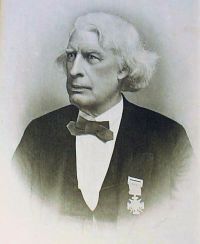
Portrait of Adolf Cluss Adolf Cluss,  Popular Science Monthly (1875)

“ In place of the mastic, which attains consistency, by the congelation of the melted mass, without application of pressure, this "merely compressed body, in which the molecules of bitumen and limestone are soldered together by heat and ramming," obviates all tendency toward brittleness, without in the least interfering with the advantages of perfect homogeneity or water-proof qualities. It stands to reason that the mastic, which, notwithstanding its mixture with grit, is more or less pitchy, would be surpassed in elasticity and pliability by a merely kneaded mass. ”
Source: Wikisource

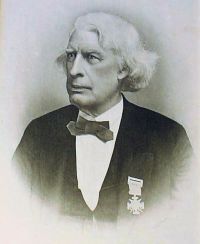
Portrait of Adolf Cluss Adolf Cluss,  Popular Science Monthly (1875)

“ The success of this bituminous rock pavement is by no means due to the lucky hit of one individual; it is the legitimate result of the persistent efforts of some of the best engineers of the age, by which all obstacles have been gradually overcome. The first trials were made with mastic, consisting of the powdered rock melted with mineral tar as a flux, and mixed with sea-grit which was laid upon an ordinary concrete foundation; they were followed by experiments with mastic, cast into blocks at the workshops, and laid with wide joints, which were filled in again with heated mastic. ”
Source: Wikisource

Portrait of Adolf Cluss Adolf Cluss,  Popular Science Monthly (1875)

“ These, with steady march, have conquered the markets of the world. The deposits known as Neufchâtel rock contain, with a constancy not found anywhere else, from 11 to 12 per cent, of bitumen—a most favorable proportion. Besides, they have absolutely greater toughness as a result of their degree of oxidation. They were formerly extensively used as a mastic for sidewalks, and form an excellent material for carriage-ways. ”
Source: Wikisource

Get perspective with Kwize: daily news enlightened by great literature