Mathematical law

Definition and stakes

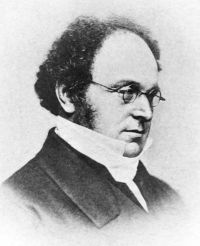
Portrait of Auguste Comte Auguste Comte,  The philosophy of mathematics

“ There is a second reason why we cannot bring complicated phenomena under the dominion of mathematical analysis. Even if we could ascertain the mathematical law which governs each agent, taken by itself, the combination of so great a number of conditions would render the corresponding mathematical problem so far above our [Pg 39] feeble means, that the question would remain in most cases incapable of solution. ”
Source: Gutenberg

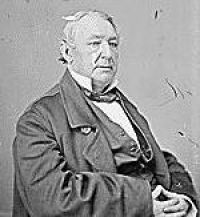
Portrait of Auguste Comte Auguste Comte,  The philosophy of mathematics

“ Considering the infinite diversity which must necessarily exist in this respect in the external world, we easily understand how far below the true difficulty our conceptions must frequently be found, especially if we add that as these elements of our analysis have been in the first place furnished to us by the mathematical consideration of the simplest phenomena, we have, à priori, no rational guarantee of their necessary suitableness to represent the mathematical law of every other class of phenomena. ”
Source: Gutenberg

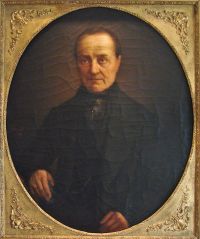
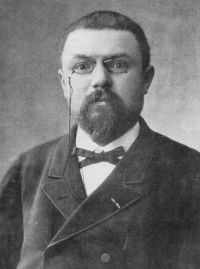
Portrait of Henri Poincaré Henri Poincaré,  The Foundations of Science: Science and Hypothesis…

“ It may be asked why, in physical sciences, generalization so readily takes the mathematical form. The reason is now easy to see. It is not only because we have numerical laws to express; it is because the observable phenomenon is due to the superposition of a great number of elementary phenomena all alike. Thus quite naturally are introduced differential equations.
It is not enough that each elementary phenomenon obeys simple laws; all those to be combined must obey the same law. Then only can the intervention of mathematics be of use; mathematics teaches us in fact to combine like with like.
”
Source: Gutenberg

Get perspective with Kwize: daily news enlightened by great literature