Meadow pipit

Definition and stakes

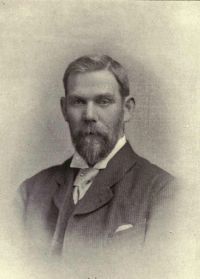
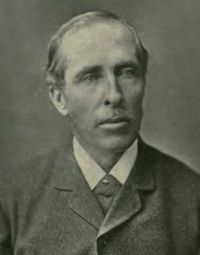
Portrait of William Henry Hudson William Henry Hudson,  British birds (1921)

“ The meadow-pipit seeks his food on the ground, and moves nimbly about in search of minute beetles, caterpillars, and seeds, pausing at intervals to stand motionless for a few seconds, with head raised and tail slowly moving up and down. When approached he displays a curious mixture of timidity and tameness, and eyes the intruder with suspicion, but flies with reluctance. The flight is a succession of jerky movements, the bird rising and falling in a somewhat wild, erratic manner. ”
Source: Gutenberg

Oliver Vernon Aplin,  The Zoologist (1900)

“ The Meadow Pipit is very common—among sand-hills on the coast, on the headlands, moorlands, and mountains. When alarmed for the safety of its nest or young, the note is a very sharp quick "chittick," somewhat like the sound made by a House-Cricket. Its rapid song always sounds to me very monotonous, there being usually only one change in it ”
Source: Wikisource

Alfred Newton,  1911 Encyclopædia Britannica (1911)

“ Pipits, of which over fifty species have been described, occur in almost all parts of the world, but in North America are represented by only two species—Neocorys spraguii, the prairie-lark of the north-western plains, and Anthus ludovicianus, the American titlark, which last is very nearly allied to the so-called water-pipit of Europe, A. spipoletta. To most English readers the best known species of pipit is the titlark or meadow-pipit, A. pratensis, a bird too common to need description, and abundant on pastures, moors, and uncultivated districts generally ”
Source: Wikisource

Get perspective with Kwize: daily news enlightened by great literature