Mental experience

Definition and stakes

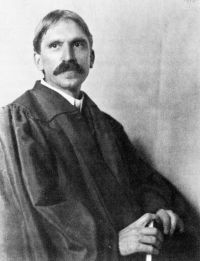
Portrait of George Edward Moore George Edward Moore,  Mind (1903)

“ If, on the other hand, we clearly recognise the nature of that peculiar relation which I have called ‘awareness of anything’; if we see that this is involved equally in the analysis of every experience—from the merest sensation to the most developed perception or reflexion, and that this is in fact the only essential element in an experience—the only thing that is both common and peculiar to all experiences—the only thing which gives us reason to call any fact mental ”
Source: Wikisource

Various,  British Quarterly Review, American Edition…

“ Our experience as given us in the senses is made up 'of sensations, ideas, or phenomena,—facts of which there is a perception or consciousness.' These sensations, and nothing else, make the material of the sensible universe which we see and know and live in,—they are the material out of which the shifting scenes in this wonderful panorama of sense-life are formed,—they are the exciting causes of all the various forms of our mental life, of our joy and sorrow, laughter and tears, hopes and despairings. ”
Source: Gutenberg

Wendell T. Bush,  Avenarius and the Standpoint of Pure Experience… (1905)

“ Now that cognitive experience which for itself is rational and full of insight, yet which a later judgment of the same mind, or a judgment of another mind, characterizes as whimsical, is what the criticizing mind can not get hold of and make its own. It remains the private experience of another, a mental state, a state of consciousness. ”
Source: Wikisource

Get perspective with Kwize: daily news enlightened by great literature