National property

Definition and stakes

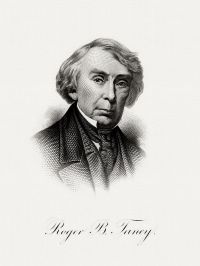
Portrait of Pierre-Joseph Proudhon Pierre-Joseph Proudhon,  What is Property? (1876)

“ If the reader thinks it is pushing logic too far to question a nation’s right of property in the territory which it possesses, I will simply remind him of the fact that at all ages the results of the fictitious right of national property have been pretensions to suzerainty, tributes, monarchical privileges, statute-labor, quotas of men and money, supplies of merchandise, &c. ”
Source: Wikisource

P.-J. Proudhon,  What is Property? An Inquiry into the Principle of Right and of Government

“ The whole laboring class is agitated: it has its journals, organs, and representatives. To guarantee labor to the workingman, to balance production with sale, to harmonize industrial proprietors, it advocates to-day—as a sovereign remedy—one sole head, one national wardenship, one huge manufacturing company. For, sir, all this is included in the idea of national workshops. On this subject I wish to quote, as proof, the views of an illustrious economist, a brilliant mind, a progressive intellect, an enthusiastic soul, a true patriot, and yet an official defender of the right of property. ”
Source: Gutenberg

Portrait of Charles Henry Pearson Charles Henry Pearson,  National Life and Character (1893)

“ The proprietorship of land by communities, as distinct from private property, has existed, to quote M. de Laveleye, "in Germany and ancient Italy, in Peru and China, in Mexico and India, among the Scandinavians and the Arabs, with precisely similar characteristics." [26] A change in the practice of the Western nations has accustomed us to regard this stage in a nation's life as a rude and ephemeral one. It is difficult even to assume a modern State deriving rent from all the land in the country, and running all the factories. ”
Source: Wikisource

Get perspective with Kwize: daily news enlightened by great literature