Natural fact
Definition and stakes
Quotes about “natural fact”
Leon H. Vincent, American literary masters (1906)
“ Nature is the source of language, words being the signs of natural facts. But ‘every natural fact is a symbol of some spiritual fact.’ In brief, ‘the world is emblematic.’ Nature is a discipline of the understanding, devoting herself to forming the common-sense. ”
W. C. Scully, By Veldt and Kopje
“ We simply say that in incidents such as this, where what are called ‘natural’ causes are eliminated from the field of consideration by the fact of their absence, it is reasonable to fall back on what is called the ‘supernatural.’ As I have been careful to explain to you more than once, this may be a branch of the natural, and may be recognised some day as a legitimate subject for scientific research by those who now treat us with derision. ”
J. D. Buck, The New Avatar and The Destiny of the Soul
“ Natural Science, as shown in the Great Work, includes scientific knowledge on all planes of being on which the soul of man functions: The physical, moral, psychical, and spiritual; for man is a composite being.The apotheosis of Natural Science, therefore, is Fact, Law, Demonstration, and Knowledge; before theory, conjecture, creed, dogma, superstition, or fear, intuition, inspiration, revelation, and “holy men” or “holy books” that must be accepted without evidence, or “believed” against evidence. ”
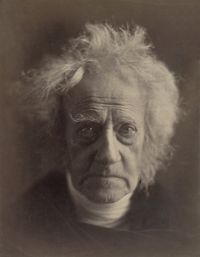 John F. W. Herschel,
Preliminary Discourse on the Study of Natural Philosophy
“ Experience once recognized as the fountain of all our knowledge of nature, it follows that, in the study of nature and its laws, we ought at once to make up our minds to dismiss as idle prejudices, or at least suspend as premature, any preconceived80 notion of what might or what ought to be the order of nature in any proposed case, and content ourselves with observing, as a plain matter of fact, what is. ”
 Josiah Royce,
The World and the Individual, First Series
(1899)
“ Whoever wearies of Platonic or of Scholastic subtleties, must recognize, if he knows how to read the meaning of current science, that the notion of Possible Being, or of Being whose reality lies in its validity, or in its value as making assertions about it true, is, as I said at the last time, the favorite type of reality in the writings of a great number of the recent philosophical expositors of the meaning of natural science. ”
Ethan Allen, Reason, the Only Oracle of Man…
“ The senses are well calculated to make discoveries of external objects and to communicate those notices, or simple images of things to the mind, with all the magnificent simplicity of nature, which opens an extensive field of contemplation to the understanding, enabling the mind to examine into the natural causes and consequences of things, and to investigate the knowledge of moral good and evil, from which, together with the power of agency, results the human conscience. ”
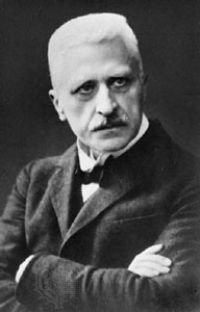 Rudolf Otto,
Naturalism and Religion
“ The fundamental convictions of naturalism, its general tendencies, and the points of view which determine its outlook, are primarily related to that order of facts which forms the subject of the natural sciences, to “Nature.” ”
Duchess of Margaret Cavendish Newcastle, Philosophical Letters: or, modest Reflections upon some Opinions in Natural Philosophy
“ The truth is, by the help of Philosophy our minds are raised above our selves, into the knowledg of the Causes of all natural effects. But leaving the commending of this noble study, you are pleased to desire my opinion of a very difficult and intricate argument in Natural Philosophy, to wit, of Generation, or Natural Production. ”
Josiah Royce,
The World and the Individual, Second Series
(1901)
“ More to the point, at this stage of our inquiry, than a formally precise definition of Nature, is a consideration of the motives which lead us to acknowledge as real the facts that we all call physical, — viz. to acknowledge the existence of matter, the laws of natural processes, and the dependence of our own mental life upon these processes. To this aspect of the problem of Nature we accordingly at once proceed. ”
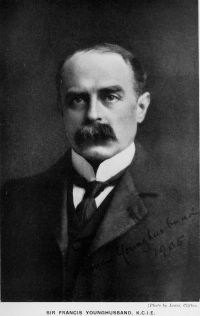 Sir Francis Edward Younghusband,
The Heart of Nature; or, The Quest for Natural Beauty
“ And these experiences of ours in the formulation and working out of our ideal give us the clue to the manner in which Nature on her part works out her ideal. We are the representations and representatives of the whole, and we may assume that the whole works in much the same way as we ourselves work. ”
 Alexander Philip,
Essays Towards a Theory of Knowledge
“ It follows that Thought and Discourse, in furnishing us with Knowledge, must themselves be active, and must in some way or other reproduce the activity of Nature. Thought, in short, is an Activity which reproduces the activity of things, the activity in which the phenomena of Nature arise.But how do we arrive at any apprehension of Natural Action? What informs us that Nature is a potency ever operative? What suggests to us [61] the conception of potency at all? We reply that we arrive at the idea of potent action because we are ourselves active beings. ”
“ We behold the real higher law. To the wise, therefore, a fact is true poetry, and the most beautiful of fables. These wonders are brought to our own door. You also are a man. Man and woman, and their social life, poverty, labor, sleep, fear, fortune, are known to you. Learn that none of these things is superficial, but that each phenomenon has its roots in the faculties and affections of the mind. Whilst the abstract question occupies your intellect, nature brings it in the concrete to be solved by your hands. ”
George T. Ashley, From Bondage to Liberty in Religion…
“ These were facts of Nature, of Man as a part of it, of man's nature, habits, history, thoughts, conduct, and social relations,—in fact, all that pertains to the phenomena of Nature and Human Life and Relations. ”
Duchess of Margaret Cavendish Newcastle, Philosophical Letters: or, modest Reflections upon some Opinions in Natural Philosophy
“ But to conclude, The Rational degree of Matter is the most intelligible, and the wisest part of Nature, and the Sensitive is the most laborious and provident part in Nature, both which are the Creators of all Creatures in Infinite Matter ”
William James, The Will to Believe, and Other Essays in Popular Philosophy
“ Whatever else be certain, this at least is certain,—that the world of our present natural knowledge is enveloped in a larger world of some sort of whose residual properties we at present can frame no positive idea. ”
Alexander Campbell Fraser, Thomas Reid (1898)
“ I can only justify them in reason by showing that human nature responds to them, and forbids me to reject them in my actions, on pain of being judged a lunatic, whatever I may say in my speculative theories. 'Such original and natural judgments,' he says, 'are part of the furniture which nature hath given to the human understanding. ”
comte de Georges Louis Leclerc Buffon, Buffon's Natural History, Volume 02…
“ Are we better acquainted with the effects of Nature, from being told that nothing is made without a reason, or that all is made in view of perfection? What is this sufficient reason? what is this perfection? are they not moral beings created by intellects purely human? ”
William James, A Pluralistic Universe
“ But as they actually come and are given, creation widens to the view of their recipients. They suggest that our natural experience, our strictly moralistic and prudential experience, may be only a fragment of real human experience. They soften nature's outlines and open out the strangest possibilities and perspectives. ”
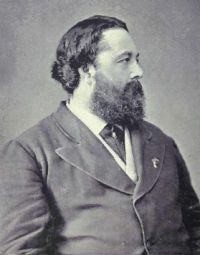 Thomas Sterry Hunt,
Popular Science Monthly
(1883)
“ The second aspect of the study of nature, which we have designated as philosophical, regards the logic of nature, or what the older writers spoke of as General Physiology. This is sometimes appropriately termed Natural Philosophy, a designation which is the correlative of Natural History. ”
Various, The Catholic World, Vol. 01, April to September…
“ Interior light, or reason, teaches us by the processes of thought those intellectual truths which are fixed in the human mind by physics, logic, and ethics, through rational, natural, and moral action on the will, the conduct, and the speech, which are the triple functions of the understanding, and on the three faculties of the reason—apprehension, judgment, and action; this interior light acts on outward things by physics, mathematics, and metaphysics, and perceives God in all things by logic, by physics, and by ethics. ”
 Sidney Hook,
The Hero in History
(1943)
“ The properties of human behaviour are taken to be relatively invariant, of the same general character but of a specifically different subject matter as the properties investigated by any natural science. ”
Josiah Royce,
The World and the Individual, Second Series
(1901)
“ Now what faith accomplishes in the daily practice of the devout, a Theory of Being must also undertake, in so far as it is successful, to provide for us in our efforts to understand Nature and Man. What we men call Nature comes to us as a matter of our extremely finite common experience. In dealing with nature, we feel our way; we pass from fact to fact; we collect fragments. When our special sciences succeed in joining these fragments into some sort of empirical unity, the procedure is distinctly human, and the result is always provisional. ”
Duchess of Margaret Cavendish Newcastle, Grounds of Natural Philosophy: Divided into Thirteen Parts
“ And the proof, that the Sensitive and Rational Parts of Human Creatures, may make Perceptions, or rather Conceptions, without Forrein Objects, is, That many men in this world have had Conceptions, both amongst the Rational and Sensitive, which Man names Visions, or Imaginations ”
Sir Francis Edward Younghusband,
The Heart of Nature; or, The Quest for Natural Beauty
“ What is meant by Nature being a Person, and a Person actuated by a hidden ideal, and being in process of realising that ideal, and what is meant by an ideal perfecting itself, may be best explained with the help of an illustration. ”
“ And, quite apart from the particular event of the discovery, how can we account for the very fact that nature - at least on a certain level of her existence - exhibits rules of action expressible in terms of logical principles immanent in the human mind? ”
“ I use the term, as I explained in Chapter II., in opposition to ‘natural.’ I call those philosophers preeminently ‘metaphysical’ who have recognised most clearly that not everything which is is a ‘natural object.’ ‘Metaphysicians’ have, therefore, the great merit of insisting that our knowledge is not confined to the things which we can touch and see and feel. ”
William James, The Principles of Psychology, Volume 2…
“ We should propose to ourselves nobler views, namely, to recreate and exalt the mind with a prospect of the beauty, order, extent, and variety of natural things: hence, by proper inferences, to enlarge our notions of the grandeur, wisdom, and beneficence of the Creator," etc., etc., etc. ”
Cora May Williams, A Review of the Systems of Ethics Founded on the Theory of Evolution
“ Therefore, in distinguishing between mind and matter, we are still in the realm of the natural, and follow the path of experience, if by experience is understood not alone immediate experience, but also the conclusions which directly or by strict analogy may be drawn from it. ”
Josiah Royce,
The World and the Individual, Second Series
(1901)
“ Upon the basis of the general theory of human knowledge thus broadly sketched, we shall next pass to a study of the questions offered to our scrutiny by Nature, when viewed in its relation to Man. Here our main purpose shall be to apply our general idealistic doctrine, concerning what is meant by Reality in general, to the problem as to the sense in which Nature and Man are real. ”
 Thomas Henry Huxley,
Autobiography and Selected Essays
“ I say that natural knowledge, seeking to satisfy natural wants, has found the ideas which can alone still spiritual cravings. I say that natural knowledge, in desiring to ascertain the laws of comfort, has been driven to discover those of conduct, and to lay the foundations of a new morality. ”
Duchess of Margaret Cavendish Newcastle, Philosophical Letters: or, modest Reflections upon some Opinions in Natural Philosophy
“ The like in Natural Philosophy, although Natural Philosophers cannot find out the absolute truth of Nature, or Natures ground-works, or the hidden causes of natural effects; nevertheless they have found out many necessary and profitable Arts and Sciences, to benefit the life of man ”
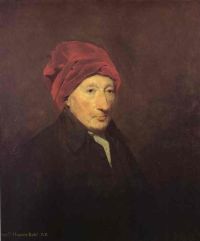 Thomas Reid,
An Inquiry into the Human Mind…
“ What we commonly call natural causes, might, with more propriety, be called natural signs, and what we call effects, the things signified. The causes have no proper efficiency or causality, as far as we know; and all we can certainly affirm, is, that nature hath established a constant conjunction between them and the things called their effects; and hath given to mankind a disposition to observe those connections, to confide in their continuance, and to make use of them for the improvement of our knowledge, and increase of our power. ”
 Isaac Newton,
The Mathematical Principles of Natural Philosophy
(1846)
“ We are to admit no more causes of natural things than such as are both true and sufficient to explain their appearances. ”
“ It is easy to say which of them are natural, and which (if any) are not natural. But when we begin to consider the properties of objects, then I fear the problem is more difficult. Which among the properties of natural objects are natural properties and which are not? ”
Ethan Allen, Reason, the Only Oracle of Man…
“ The author of human nature impressed it with certain sensitive aptitudes and mental powers, so that apprehension, reflection or understanding could no otherwise be exerted or produced in the compound nature of man, but in the order prescribed by the creator. ”
Josiah Royce,
The World and the Individual, Second Series
(1901)
“ Whatever the deeper reality behind Nature may turn out to be, — our Nature, the realm of matter and of laws with which our science and our popular opinions have to do, is a realm which we conceive as known or as knowable to various men, in precisely the same general sense in which we regard it as known or as knowable to our private selves. Take away the social factor in our present view of Nature, and you would alter the most essential of the characters possessed, for us, by that physical realm in which we all believe. ”
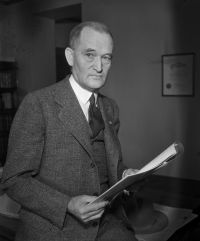 Harold Bell Wright,
Their Yesterdays
“ Is nature then so knowable? Are all her laws revealed; all her secrets known; all her ways understood; all her mysteries made clear? Do the wise men, after all, know more of nature than they do of God? Do they know more of earth than of heaven? Do they know more of a man's mind than they do of his soul? ”
John F. W. Herschel,
Preliminary Discourse on the Study of Natural Philosophy
“ The successful results of our experiments and reasonings in natural philosophy, and the incalculable advantages which experience, systematically consulted and dispassionately reasoned on, has conferred73 in matters purely physical, tend of necessity to impress something of the well weighed and progressive character of science on the more complicated conduct of our social and moral relations. ”
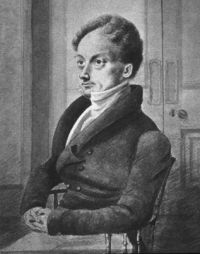 James Mill,
Analysis of the Phenomena of the Human Mind
“ He supposes that the natural state of man is to have his face and vision towards the particular phenomena, and his back towards the universal realities: the great problem is, how to make the man face about, turn his back towards phenomena, and his eyes towards Universals—τὰ ὄντα—τὰ νοητά. ”
Josiah Royce,
The Religious Aspect of Philosophy
(1885)
“ In sum then, either the fundamental moral distinctions are clear apart from the physical fact of evolution, or the physical fact cannot illustrate for us the distinctions that we do not previously know. ”
John Stewart, The Apocalypse of Nature (1790)
“ My mind is filled with amazement when I review the past ages of the world, and find every subject that Thought and Nature present, investigated with zeal, erudition and capacity, and the subject Self, of such infinite importance that its very comparison annihilates every other, almost without mention, and absolutely without investigation. ”
Josiah Royce,
The Sources of Religious Insight
“ The acceptance of our natural sciences, as valid interpretations of connections of experience which our form of consciousness forbids us directly to verify, logically presupposes, at every step, that such superhuman forms and unities of consciousness are real. ”
 Friedrich Schiller,
Aesthetical and philosophical essays
(1899)
“ Nature, in being capricious and defying logic, in pulling down great and little, in crushing the noblest works of man, taking centuries to form—nature, by deviating from intellectual laws, proves that you cannot explain nature by nature’s laws themselves, and this sight drives the mind to the world of ideas, to the absolute. ”
Josiah Royce,
The World and the Individual, First Series
(1899)
“ There is, indeed, a sense, in which, according to our view, any rational idea in the whole universe seeks and in its complete development finds, as the expression of its ultimate meaning, the whole of the universe. ”
 George Edward Moore,
Principia Ethica — Chapter VI
(1903)
“ In short, where there is belief, in the sense in which we do believe in the existence of Nature and horses, and do not believe in the existence of an ideal landscape and unicorns, the truth of what is believed does make a great difference to the value of the organic whole. ”
Related terms
Authors who wrote about “natural fact”
Josiah RoyceWilliam James Ralph Waldo EmersonDuchess of Margaret Cavendish NewcastleJohn F. W. HerschelThomas Henry Huxley
 G. E. MooreJ. D. BuckW. C. ScullyRudolf OttoAlexander PhilipGeorge T. AshleyAlexander Campbell FraserThomas Sterry HuntVariousEthan AllenLeon H. VincentErnst LehrsSidney HookCora May Williams
