“ Under his overcoat he has only a canvas shirt and white linen trousers (when en tenue de campagne d'Afrique) , tucked into leather gaiters. Round his waist, his blue sash--four yards of woollen cloth--acts as an excellent cholera-belt and body-support. The linen neckcloth, or couvre-nuque, buttoned on to the white cover of his képi, protects his neck and ears, and, to some extent, his face, and prevents sunstroke.... ”
Quotes about “neckcloth”
Various, The Atlantic Monthly, Volume 04…
“ Cloathes: 1. Shirt: 3: bands: 8 handkecheirfs: 4 neckcloaths: 7: pa: cuffs: 1. bootes tops: 1 cap: an old towell: a Napkin."The writer was evidently young, poor, and a dandy. His youth is shown by his wearing neckcloths, which were a new and youthful fashion at the date of this memorandum; his dandyism, by the number of his handkerchiefs, (a luxury in those days,) and of his cuffs, which answer to our wristbands, and by his lace boot-tops; his poverty, by his wearing three bands, four neckcloths, and seven pair of cuffs (probably one a day for the week) to one shirt. ”
 Felix Leopold Oswald,
Popular Science Monthly
(1881)
Felix Leopold Oswald,
Popular Science Monthly
(1881)
“ All extremities—toes, fingers, nose, and ears—are especially apt to get frost-bitten, but marching against a cold wind also produces a peculiarly uncomfortable sensation about the neck, and I can not help thinking that there is something wrong about our fashion of cropping our boys like criminals. A good head of hair may be something more than an ornamental appendage, and Nature seems to have taken especial care to protect the nape of the neck in a great number of different animals. ”
Isabel De Nyse Conover, A Complete Course in Dressmaking (1922)
“ Another way of making the neck look trim with a low neck dress is to wear an inch wide piece of black velvet around the neck. Make the ribbon to fit the neck and fasten it with snaps in the back or with small gold pins. Coats of soft velour made with long shawl collar or revers and finished with a narrow belt are usually becoming to the mature woman. The older woman will do well to avoid the extreme fads of fashion, for to be really becoming, her clothes must have a certain dignity. ”
Dorothy Quigley, What Dress Makes of Us
“ Laces, gauzes, mulls, chiffons, net, and gossamer throw the same beautiful glamour over the face and they are fit and charming accompaniments of gray hair, which is a wonderful softener of defective complexions and hard facial lines.Too much cannot be written upon the proper arrangement in the neck-gear of the aged. The disfiguring wrinkles that make many necks unsightly may be kept in obeyance by massaging. No matter what the fashion in neck-gear, the aged must modify it to suit their needs. An old lady with a thin, pipe-stem neck should adopt a full ruche and fluffy, soft collar-bands. ”
 Tudor Jenks,
Imaginotions
(1894)
Tudor Jenks,
Imaginotions
(1894)
“ The headsman handled it with the caressing hand of an artist, poised it lightly in the air, and brought it down with a swish upon my niece's swanlike neck. I had a swanlike neck when younger. "Huzza!" cried the hireling crowd. But they had shouted too soon. As the keen edge neared her golden ringlets, the ax-head left the handle and becoming a garland of flowers encircled her neck in a really effective manner. I could not but admire the esthetic value of the colors against her fair skin. Old men are somewhat forgetful, and I do not distinctly recall whether I have mentioned my niece's beauty. ”
Calvin Cutter, A Treatise on Anatomy, Physiology…
“ The muscles of the neck should not be compressed. If the muscles of the neck and larynx are compressed by a high cravat, or other close dressing, not only will the free and energetic movements of these parts be impeded, but the tones will be feeble and ineffective. Therefore the dress of the neck, particularly of public speakers and singers, should be loose and thin. For a warm dress upon the neck, when the vocal organs are in action, will induce too great a flow of blood to these parts, which will be attended by subsequent debility. ”
 L. Frank Baum,
The Surprising Adventures of the Magical Monarch of Mo and His People
(1903)
L. Frank Baum,
The Surprising Adventures of the Magical Monarch of Mo and His People
(1903)
“ When the necks are thoroughly cured in the sun, turn them right-side-out again and place them on your children's shoulders. Then they will find it does not hurt them to swallow.'"I thanked the great Doctor and returned home, where I did as he had told me. For the last three days the necks of not only my children but of my wife and myself, as well, have been hanging on the bushes to be cured; so we could not possibly have eaten your plum-pudding. Indeed, it was only an hour ago when I finished putting the neck on the last of my children, and at that moment your soldiers came and arrested me." ”
Dorothy Furniss, Drawing For Beginners (1920)
“ A woman's neck is full of entrancing curves; a man's neck very strong, very muscular, and consequently rather thick. As with all other parts of the human body, necks exist in every variety—short necks, long necks, thick, thin, muscular, strong, feeble, and fat; but, and the fact is worth noting, the base of the neck where it joins the body is always its thickest part. With this slight introduction to the general proportion and shape of the head, we can next turn our attention to the face and the features. One hears many curious remarks from young artists ”
Kate Heintz Watson, Textiles and Clothing
“ The neck and arm's eye should be fitted by making slashes in the curve—never cut around the curve. For the collar or neck band have a true bias of thin canvas or crinoline and draw it around the neck and pin with the ends out, towards the worker. (Never lap any edges of waist, belt or collar when fitting.) Mark on the waist where the lower edge of the neck band touches. Draw the sleeve on the arm, pin and mark where it sets right, seeing that the elbow fullness is in the right place and that it does not twist at the hand. ”
 Judith Cladel,
Rodin: The Man and His Art, with Leaves from His Note-book
Judith Cladel,
Rodin: The Man and His Art, with Leaves from His Note-book
“ Because the beautiful shoulder slips tremulously from the heavy mouth, which lies against the smooth, polished flesh; because this shoulder rises again toward the head, slightly bent and inclined, as if to draw toward it some loved one; because the neck swells like that of a dove, and the head is stretched forward to offer a kiss, we seem to catch a glimpse of the whole body and its delicate curves. ”
Anonymous, The Ladies' Work-Table Book
“ The neck is to be slit open, leaving three nails on each side for the shoulders; and a slit is also to be made in front, so as to allow the garment to pass freely over the head of the wearer; the sides are then to be seamed up, leaving proper slits for the arm holes; and the neck and bosom are to be hemmed as neatly as possible. The sleeves are to be made the required length, and gathered into a band at the wrist, after being felled into the arm holes mentioned above. A neat frill round the neck, bosom, and wrists, finishes the whole. ”
Grace Livingston Hill, The Mystery of Mary
“ She sought out a black necktie and pinned it about her waist, and then, with a protesting frown, she deliberately tore a strip from the edge of one of the fine hem-stitched handkerchiefs, and folded it in about her neck in a turn-over collar. ”
 Ada S. Ballin,
Science of Dress
(1885)
Ada S. Ballin,
Science of Dress
(1885)
“ Then came the epoch of the low collar with the throat left free, and this fashion has ever since been maintained by some, although the tendency of late has been to revert to the bad old custom of obstructing the free movement of the muscles of the throat by walls of starched linen, which rasp the skin and spoil the voice. The sooner men take to a better way of clothing their chests and necks than with stiff linen shirt-fronts and collars the better ”
John Simon, Muscles and Regions of the Neck (1843)
“ Their ultimate branching takes a very wide range: the inner filaments obliquely cross the clavicular origin of the sterno-mastoid; the outer, the anterior fibres of the trapezius; the middle ones, the clavicle itself; and are distributed, in their respective regions, to the integuments of the scapula, shoulder, chest, and sternum. The branch from the portio dura, which enters the neck, is the lower division of its cervico-facial part. From near the angle of the jaw, where it traverses the fascia, it passes toward the hyoid bone, and supplies the platysma from its deeper side. ”
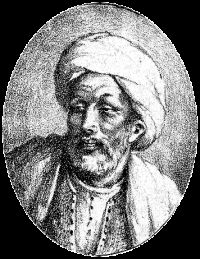 Muhammad al-Nafzawi,
The Perfumed Garden
(1886)
Muhammad al-Nafzawi,
The Perfumed Garden
(1886)
“ And if one or the other lies down on the back, a cushion must be placed under the head and the shoulder, to hold them up, and fill the place which is left vacant. In the case of a man whose malformation is only affecting his neck, so as to press the chin towards his chest, but who is otherwise straight, he can take any position he likes for doing the business, and give himself up to any embraces and caresses, always excepting the kisses on the mouth. ”
Günther F. Hertzer, Garment cutting in the twentieth century (1892)
“ Stretching the side of the neck, as directed in this work, requires that the shoulders at and around the side of the neck must be made up thin, and that all canvas and all padding must be cut away gradually, so that the facing can be stretched also. Holding the collar full, and without stretching the neck, or working the shoulders according to the shape of the body, may result in a fit, but one coatmaker may put life in that fit, while another makes the fit dead, or flat, or stale, or whatever it may be called. ”
Christmas Stories from French and Spanish Writers
“ Have I not made myself beautiful? See! My hair just as you like it, high, and my neck uncovered. But my poor neck is so extremely shy that it never could have displayed itself in the broad light, if I had not encouraged it a little by wearing a low-necked gown. After all, it is only right to be in full-dress uniform at a supper with the authority. ”
Adam Clarke, Commentary and critical notes on the Bible… (1800s)
“ There appears to be here an illusion to the moving and pulling forward the collar or yoke of beasts which have been hard at work, to let in the cool air between it and their neck, so as to refresh them, and prevent that heat, which with the sweat would scald their necks, and take off not only the hair, but the skin. ”
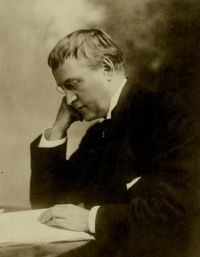 Henry T. Finck,
Romantic Love and Personal Beauty
Henry T. Finck,
Romantic Love and Personal Beauty
“ The neck and the rounded shoulders are connected by gracefully curved lines, whereas a man’s neck is placed more at a right angle to the more straight and angular shoulders.... The hair is softer, the skin more tender and transparent. All the forms are more covered over with adipose tissue, and connected by those gradual transitions which produce the gently rounded outlines; whereas in a man everything—muscles, sinews, blood-vessels, bones—is more conspicuous. ”
by Butterick Pattern Company, The New Dressmaker (1921)
“ INCREASING OR DECREASING THE SIZE OF THE NECKBAND AND COLLAR—If the neckband of a pattern is not the right size for your neck it should be altered at the center back. If it is too small cut it through the center and separate the pieces sufficiently to make it the right size for you. Illustration 36 shows this alteration for neck-band and a turndown collar. If the collar pattern is too large for you lay a plait across the center back. ”
Maud C. Cooke, Social Life; or, The Manners and Customs of Polite Society
“ A glove that ends exactly at the wrist bone, or a boot at the ankle joint, with a straight line, is always ugly; so are dresses when they are cut in a circle close to the juncture of the neck with the shoulder, giving the neck a decapitated appearance. The line of contrast should always be softened with an edge of lace, or a necklace, and only round, pretty throats should dare such a display. ”
Anonymous, Sketches of the Fair Sex, in All Parts of the World
“ A person having a long neck has the neck of the bonnet descending, the neck of the dress rising, [p187] and filling more or less of the intermediate space. One having a short neck has the whole bonnet short and close in the perpendicular direction, and the neck of the dress neither high nor wide.Persons with narrow shoulders have the shoulders or epaulets of the dress formed on the outer edge of the natural shoulder, very full, and both the bosom and back of the dress running in oblique folds, from the point of the shoulder to the middle of the bust. ”
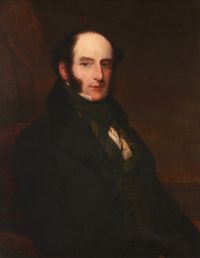 Robert Liston,
Elements of Surgery
Robert Liston,
Elements of Surgery
“ Distortion of the Neck arises from a variety of causes, and is either temporary or permanent. The head is often kept in an unnatural position for weeks by glandular swelling. Enlargement of the superficial glands, at the upper part of the neck, induces the patient to turn his head to the opposite side; swellings lower in the neck, and deep seated, require relaxation of the coverings, and the head is consequently twisted to the same side. Either rigidity, or spasmodic action, or both, of the sterno-mastoid muscles, displaces the head and twists the neck. ”
 G. K. Chesterton,
The Everlasting Man
G. K. Chesterton,
The Everlasting Man
“ We must see for the first time the strangely small head set on a neck not only longer but thicker than itself, as the face of a gargoyle is thrust out upon a gutter-spout, the one disproportionate crest of hair running along the ridge of that heavy neck like a beard in the wrong place ”
Cassell's Natural History, Vol…
“ The adult has the face, front, and sides of the neck, all the under surface, sides, and back, dark or blackish-brown, passing into dark slaty grey on the extremities of the limbs; the hinder half of the crown, the nape and back of the neck, rich deep fawn-colour. ”
William Deskitt Foot Vincent, The Cutters' Practical Guide
“ Sweep by the front shoulder measure less the back neck from F. Add 1 inch to this quantity, and sweep again from 201⁄2, and where these segments cross locate the neck point. Sweep from F by the over-shoulder measure less to C to J of the back, and make G K a trifle lens than the corresponding width of the back. G to X at H 1⁄6, neck. H to J is 1⁄6 neck plus 1⁄4 inch. The average neck for the 36-inch breast is 153⁄4. Square down from 201⁄2, and drop the waist line in front 3⁄4 inch. Reduce the waist by a fish under the arms of 1 inch, and another in the front of 3⁄4 inch. ”
John Simon, Muscles and Regions of the Neck (1843)
“ The skin is fine, thin, and extensible, especially below and in front; becoming coarser and more adherent toward the upper part of the posterior triangle; it frequently presents some transverse wrinkling above the hyoid bone, which seems to depend on the platysma myoides; here, too, the follicles are larger and more abundant than in the other parts of the neck, and, in the male subject, the surface is overgrown by the beard. ”
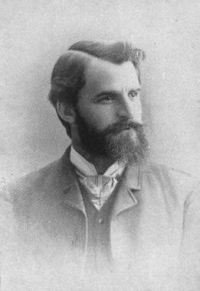 Hamlin Garland,
Money Magic: A Novel
Hamlin Garland,
Money Magic: A Novel
“ I don't like your fad for cutting down the bust. The neck is nothing but a connecting link between the head and the bust. Now here you have a charming and youthful head and face—let the neck at least suggest the woman below. ”
G. Woolliscroft Rhead, Chats on Costume
“ The Romans made use of chin-cloths for the protection of the neck and throat, which were termed "focalia." These were worn by public orators, who from professional considerations were fearful of taking cold, and who,{182} doubtless, contributed in no small degree to render the fashion of chin-cloths general. Some, says a writer on Roman antiquities (the Rev. Father Adam) , made use of a handkerchief (sudarium) for this purpose. This is probably the origin of the cravat, which is in many countries called neck-handkerchief. HENRIETTA, MARQUISE D'ENTRAGUES. Engraved by Wierix. ”
Helen Follett Jameson, The Woman Beautiful; or, The Art of Beauty Culture
“ Don't worry yourself into your grave about too much flesh or a lack of it unless you find yourself taking on the extreme proportions of a skeleton lady, or a museum exhibit of unusual plumpness. A thin neck may be a bad thing—as all girls so afflicted can testify—but if that thin neck is rebellious, and pays absolutely no attention to tonics or massage or other coddling for which it should rightly be grateful, then merely say, "All right, if you insist!" ”
Albert Burton Farnham, Home Taxidermy for Pleasure and Profit
“ Fasten neck board in vise and mark where to saw off, allowing for a piece of 1⁄2 inch board shaped like a cross section of the neck. If an artificial form is used, screw it to the neck board and treat the same otherwise.Make the neck short rather than long with the nose lower than the eyes in most cases. Build up neck and head by winding on tow. Mount and finish the head as directed in rug work.The skin may be fastened at the end of neck by pins or brads driven all around the neck. Trim off any surplus with a knife, cutting from inside the skin to prevent cutting off ends of fur. ”
