
“ Oil can also be extracted from the kernel, and this last, though more difficult to be obtained, is of a superior quality than that taken from the pulp of the rind.Nothing in the vegetable world can be more beautiful than a full-grown specimen of the oil-palm, with its cluster of ripe fruit, their bright-yellow colour contrasting finely with the deep-green of its long curling fronds, that seem intended, as it were, to protect the rich bunches from the too powerful rays of a tropic sun. ”
Oil palm
Definition and stakes
The oil palm, a tropical tree celebrated for its economic and ecological importance, has long been a central subject in literary and scientific discussions, particularly due to its diverse outputs, including palm oil and kernels. Authors such as Gerald C. Dudgeon examined its agricultural role in West Africa, focusing on its cultivation and the laborious methods of harvesting.
Frederick Starr emphasized its historical significance to Liberia's economy, while James P. Boyd highlighted its widespread presence and usefulness throughout African regions. Together, these accounts portray the oil palm not only as a vital resource for local populations but also as a fundamental element of global commerce, its worth linked to environmental adaptability and human innovation.
Quotes about “oil palm”
Gerald C. Dudgeon, The agricultural and forest products of British West Africa (1922)
“ PALM KERNELS.—The West African oil palm, Elæis guineensis, is found commonly in some parts, but the heads produced are small and carry small fruits, containing little oil. This oil is used locally, and the kernels from the nuts alone are shipped. The palm is chiefly valued for the production of palm wine, which is tapped from the base of the fruiting stems into funnelled gourds, hung beneath the holes. The tree is apparently never felled for the purpose, and, by limiting the amount of wine extracted, it survives for a long period. ”
James P. Boyd, Stanley in Africa
“ There is an almost infinite variety of palms, the most useful of which is the oil-palm, whose nut supplies the dark-red palm oil, which has proved such a source of wealth in the Oil-river regions of the Niger country and on the west coast in general. The kernel of these nuts makes an oil-cake which is excellent for fattening and conditioning cattle. This palm towers in every forest grove and beautifies every island in the rivers. In many places it constitutes the entire forest, to the exclusion of trees of harder wood and sturdier growth. ”

Related terms
Authors who wrote about “oil palm”
Gerald C. DudgeonArthur Tappan MarvinP. L. SimmondsWilliam SaundersFriedrich A. FlückigerJohn J. McLaurinAdolphe FlamantH. A. AppletonHenry A. Gardner Andrew UreSarah Josepha Buell Hale
 Pierre Joseph Macquer
 Elizabeth Cabot Cary Agassiz
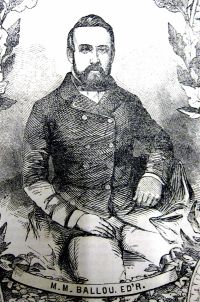 Maturin M. Ballou
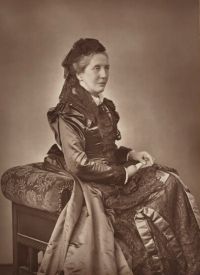 Constance Frederica Gordon Cummingthe Elder PlinyJoachim John MonteiroRamón Páez
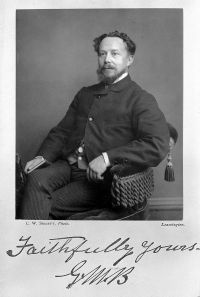 George Matthews BennettElla Rodman Church
Andrew UreSarah Josepha Buell HalePierre Joseph MacquerElizabeth Cabot Cary AgassizMaturin M. BallouConstance Frederica Gordon Cummingthe Elder PlinyJoachim John MonteiroRamón PáezGeorge Matthews BennettElla Rodman Church