Orthopedics

Definition and stakes

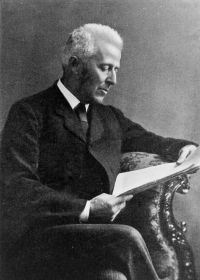
Portrait of Joseph Bell Joseph Bell,  A Manual of the Operations of Surgery

“ An assistant then holds it upwards, while the surgeon, or (if the arm is very muscular) another assistant, brings the arm forwards well across the patient's chest, thus exposing the posterior aspect of the joint. This may have very possibly been already opened during the transfixion; the attachments of muscles must now be divided, the knife passed behind the head of the bone, which is dislocated forwards, and a suitable flap of the tissues in front cut from within outwards. The assistant is to follow the knife with his finger and compress the vessels. ”

Source: Gutenberg

Portrait of Joseph Bell Joseph Bell,  A Manual of the Operations of Surgery

“ A competent knowledge of the anatomy of the part, and of the ordinary methods of checking hæmorrhage, such as ligatures, graduated compresses, and styptics, aided by position, specially flexion of the knee after Mr. Ernest Hart's method, will suffice to enable the surgeon to check any hæmorrhage of the foot or leg, without it being necessary to burden the memory with the three positions in which to tie the peroneal, or the various methods, more or less bloody and tedious, by which the posterior tibial in its upper third may be secured. ”
Source: Gutenberg

Amanda K. Beck,  A reference hand-book for nurses (1919)

“ Treatment.—By the end of three weeks in favorable cases there may be some motion obtained by the patient in the limb which was paralyzed, or there may be evidence of threatened deformity. It is at this time and in the weeks and months to follow that so much depends upon treatment. The muscles of a leg or arm may waste away so as to make them useless if not promptly cared for. If contractions of muscles are not prevented, a club-foot, toe-drop, or some similar deformity may develop. ”
Source: Gutenberg

Get perspective with Kwize: daily news enlightened by great literature