Photographic negative

Definition and stakes

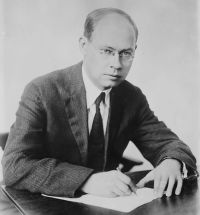
Portrait of Arthur B. Reeve Arthur B. Reeve,  The Poisoned Pen

“ For when everything else fails, a picture made through the photographic lens almost invariably turns the tide. However, such a picture upon which the fate of an important case may rest should be subjected to critical examination for it is an established fact that a photograph may be made as untruthful as it may be reliable. Combination photographs change entirely the character of the initial negative and have been made for the past fifty years. The earliest, simplest, and most harmless photographic deception is the printing of clouds into a bare sky. ”
Source: Gutenberg

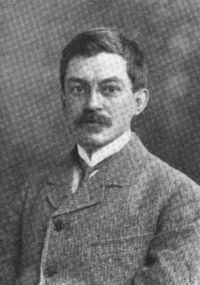
Georg Fritz,  Photo-Lithography

“ The basis for the preparation of a photo-litho is as a rule a photographic negative on glass or gelatine, which, as the word negative implies, when examined by transmitted light, must have all its tones reversed, that is to say, the drawing or the lines, strokes or points which must in the print be black, must look transparent, whilst the other part of the negative which forms the groundwork must be covered or opaque. ”
Source: Gutenberg

Georg Fritz,  Photo-Lithography

“ The use of this process appears specially important for those cases in which an ordinary photographic negative is not sufficient, {25} for example where a printing plate cannot be prepared from the negative. It ought also to be useful when the light could not be controlled in making the negative, and thus incorrect effects appear in the reproduction, which often occurs in negatives from nature and with polished plastic metal objects. The enlargements from the original are then used because the details can be better seen, and the artistic character can be more easily seen. ”
Source: Gutenberg

Get perspective with Kwize: daily news enlightened by great literature