Phrasing

Definition and stakes

Karl Wilson Gehrkens,  Essentials in Conducting

“ Although not so readily understood because of the absence of symbolism, phrasing is quite as important an element in the expressive rendition of music as it is in the case of language. In order to interpret properly the conductor must first of all determine what tones belong together in a group; must make the individuality of these groups evident by slightly separating them, but usually not to the degree of disturbing the basic rhythmic flow; and must so manage the dynamics and tempo of each phrase as to make its content clear to the listener. ”
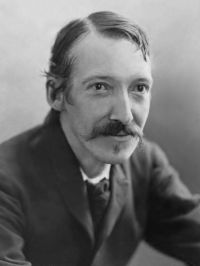
Source: Gutenberg

Brainerd Kellogg,  Graded Lessons in English

“ Let the pupils give similar examples.
+T+.—In the sentence, A man who is wise will be honored, the word who stands for what? +P+.—For the noun man. +T+.—Then what part of speech is it? +P+.—A pronoun.
+T+.—Put the noun man in the place of the pronoun who, and then give me the sentence. +P+.—A man, man is wise, will be honored.
+T+.—I will repeat your sentence, changing the order of the words—A man will be honored. Man is wise. Is the last sentence now joined to the first as a modifier, or are they two separate sentences?
”
Source: Gutenberg

Get perspective with Kwize: daily news enlightened by great literature