Piano organ

Definition and stakes

The Art of Music. Vol. 01 (of 14…

“ No doubt the organ can render the notes of a symphony quite as well as the poor overworked piano, but a rudimentary knowledge of the mechanism of the organ will show us where lies its special capacity—in the sustaining and rolling up of great masses of tone, and not at all in that more intimate expressiveness through swelling and fading and through accent in which the violin is peerless. The organ is magnificent in a Bach fugue, unsatisfactory in a Beethoven symphony, ridiculous in a popular dance. ”
Source: Gutenberg

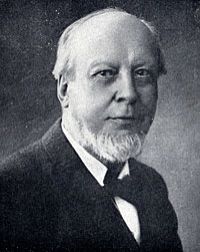
Portrait of Dudley Buck Dudley Buck,  The Influence of the Organ in History

“ The organ was no more disposed to give up its long sway, and be narrowed to its own particular sphere, than any other sovereign, when the limiting influences of modern times first began to make themselves felt. Like them, however, it was obliged to yield. Little by little the piano emancipated itself from the strict contrapuntal chain which bound it to the organ, until, in the sonatas of Mozart and Beethoven, it emerged into a new life. ”
Source: Gutenberg

Portrait of Dudley Buck Dudley Buck,  The Influence of the Organ in History

“ The organ, as a keyed instrument, has all the main points of technique [Pg 38] in common with the piano. All the varied forms of scales, arpeggios, &c., together with the necessary independence of finger requisite to play in the legato style, should first be learned upon the piano, where, by the way, it can be more speedily acquired. Pupils who, having accomplished this, proceed to the study of the organ, can at once begin with the peculiarities and characteristic difficulties of the instrument, and as far as the pedal is concerned, will make far more rapid progress if fair manual players. ”
Source: Gutenberg

Get perspective with Kwize: daily news enlightened by great literature