Pedalboard

Definition and stakes

Ladies in the Field: Sketches of Sport

“ If going up hill be exhausting, why, then it is wise to walk. Going down, if the hill be long, the brake must be used from the start, and to know how to back-pedal is important. To back-pedal is to press on the pedal when it is coming up instead of when it is going down. Nothing could be more dangerous than to lose control of a machine on a down grade. Some of the most serious accidents have been the result of the rider's letting her cycle run away with her in coasting.
I have enumerated the virtues of the bicycle.
”

Source: Gutenberg

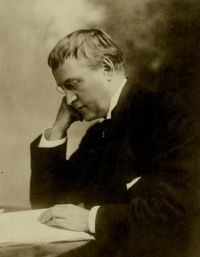
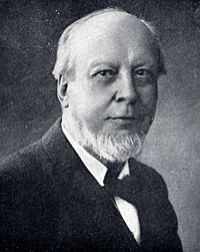
Portrait of Walter Parratt Walter Parratt,  A Dictionary of Music and Musicians (1900)

“ The boom of a pedal Open, or the indistinct murmur of the Bourdon, become very irritating when heard for long. There is no finer effect than the entrance of a weighty pedal at important points in an organ-piece, but there are players who scarcely take their feet from the pedal-board, and so discount the impression. Care should be taken to keep the pedal part fairly near the hands. The upper part of the pedal-board is still too much neglected, and it is common to hear a player extemporising with a humming Bourdon some two octaves away from the hand parts. ”
Source: Wikisource

J. Cree Fischer,  Piano Tuning: A Simple and Accurate Method for Amateurs

“ Broken pedal straps are the most frequent annoyance. In all modern organs there is a panel above the pedals which will come out and admit the mechanic to the bellows, straps, springs, etc.; but in some old instruments the case is made solid, in which case the workman must do his work from the bottom, turning the organ down so as to get at it. Pedal straps are easily put on; generally with screws at either end. If the pedal squeaks examine the springs or oil and change their position slightly. ”
Source: Gutenberg

Get perspective with Kwize: daily news enlightened by great literature