Point (geometry)

Definition and stakes

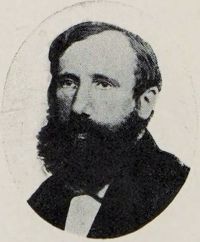
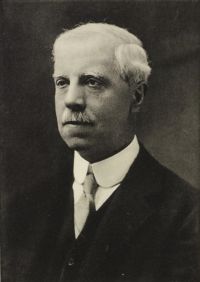
Portrait of Bertrand Russell Bertrand Russell,  Introduction to Mathematical Philosophy

“ If we can, out of empirical material, construct a logical structure, no matter how complicated, which will satisfy our geometrical axioms, that structure may legitimately be called a "point." We must not say that there is nothing else that could legitimately be called a "point"; we must only say: "This object we have constructed is sufficient for the geometer; it may be one of many objects, any of which would be sufficient, but that is no concern of ours, since this object is enough to vindicate the empirical truth of geometry, in so far as geometry is not a matter of definition." ”
Source: Gutenberg

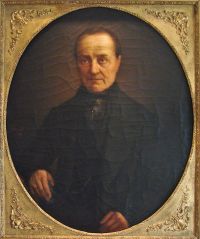
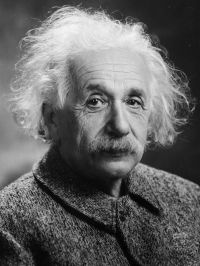
Portrait of Petrus Ramus Petrus Ramus,  The Way To Geometry

“ Neither is the Bound a parte of the bounded magnitude: For the thing bounding is one thing, and the thing bounded is another: For the Bound is one distance, dimension, or degree, inferiour to the thing bounded: A Point is the bound of a line, and it is lesse then a line by one degree, because it cannot bee divided, which a line may. A Line is the bound of a surface, and it is also lesse then a surface by one distance or dimension, because it is only length, wheras a surface hath both length and breadth. ”
Source: Gutenberg

by the United States government,  Chapters (2002)

“ Definition Geometry deals with the properties, relations, and measurement of lines, surfaces, solids, and angles. Plane geometry deals with plane figures, and solid geometry deals with three–dimensional figures.
A point, considered mathematically, is a place having position but no extent. It has no length, breadth, or thickness. A point in motion produces a line, which has length, but neither breadth nor thickness. A straight or right line is the shortest distance between two points in space.
”
Source: Wikisource

Get perspective with Kwize: daily news enlightened by great literature