“ After cutting it up to the required sizes, which should be conveniently smaller than the dish to be used for sensitizing, it should be kept flat under a metal plate.Sensitizing the Tissue is the next operation. This is performed in a solution of potassium dichromate rendered alkaline with ammonia. Tie over the mouth of a two-gallon jug a piece of muslin, to form a kind of bag, into which place fifteen ounces of potassium dichromate, then fill up the jug with water and allow it to stand until the dichromate is dissolved and the solution becomes cold. ”
Potassium dichromate
Definition and stakes
Potassium dichromate (K₂Cr₂O₇), an orange crystalline compound, is a powerful oxidizing agent with a wide range of applications in chemistry, photography, and industry. Its hexavalent chromium structure makes it both reactive and harmful, as highlighted by authors such as Henry R.
Blaney, who used it in photogravure processes, and Dmitry Mendeleyev, who described its role in redox reactions and the creation of chemical compounds. Employed in ethanol testing, wood staining, and photographic printing, it illustrates the dual nature of scientific usefulness and health hazards. Its influence continues in both laboratory procedures and historical methods, emphasizing its lasting importance despite its risks.
Quotes about “potassium dichromate”
Dmitry Ivanovich Mendeleyev, The Principles of Chemistry, Volume II
“ If three parts of potassium dichromate be mixed with four parts of strong hydrochloric acid and a small quantity of water, and gently warmed, it all passes into solution, and no chlorine is evolved; on cooling, the liquid deposits red prismatic crystals, known as Peligot's salt, very stable in air. This has the composition KCl,CrO3, and is formed according to the equation K2Cr2O7 + 2HCl = 2KCl,CrO3 + H2O. It is evident that this is the first chloranhydride of chromic acid, HCrO3Cl, in which the hydrogen is replaced by potassium. ”
Dmitry Ivanovich Mendeleyev, The Principles of Chemistry, Volume II
“ It does not even evolve heat when dissolving in water, but on the contrary produces cold, i.e. it does not form a very stable compound with water. The solution and the salt itself are poisonous, and act as powerful oxidising agents, which is the character of chromic acid in general. When heated with sulphur or organic substances, with sulphurous anhydride, hydrogen sulphide, &c., this salt is deoxidised, yielding chromic compounds. [2 bis] Potassium dichromate [3] is used in the arts and in chemistry as a source for the preparation of all other [279] chromium compounds. ”

Related terms
Authors who wrote about “potassium dichromate”
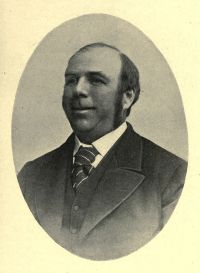
Arnold James CooleyDmitry Ivanovich MendeleyevWilliam Edwards HendersonC. Beringer Arthur Jeffrey Dempster
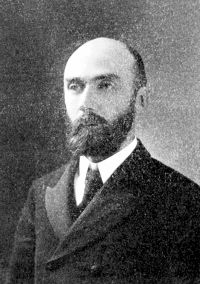 Henry Paul TalbotJosef BerschWilliam de Wiveleslie Abney, James Waterhouse &…William Anderson Syme
 Harvey Washington WileyFrederick Hutton GetmanJulius SchnaussWilliam Cecil Dampier WhethamHenry R. BlaneyVarious
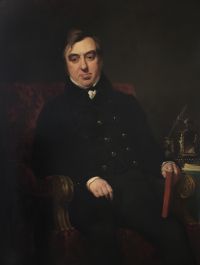 John Ayrton Paris
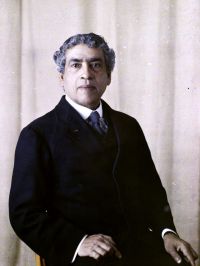 Jagadish Chandra BoseAaron A. WarfordProject GutenbergSelimo Romeo Bottone
Arthur Jeffrey DempsterHenry Paul TalbotJosef BerschWilliam de Wiveleslie Abney, James Waterhouse &…William Anderson SymeHarvey Washington WileyFrederick Hutton GetmanJulius SchnaussWilliam Cecil Dampier WhethamHenry R. BlaneyVariousJohn Ayrton ParisJagadish Chandra BoseAaron A. WarfordProject GutenbergSelimo Romeo Bottone