“ I am a poor courtier, sir, quoth he, That am forth of service worn; And fain I would thy prentice be, Thy cunning for to learn. Marry heaven forfend, the tanner replied, That thou my prentice were: Thou wouldst spend more good than I should win By forty shilling a year. [Pg 111] Yet one thing would I, said our king, If thou wilt not seem strange: Though my horse be better than thy mare, Yet with thee I fain would change. ”
Prentice
Definition and stakes
The concept of "prentice" historically refers to an apprentice, illustrating a social and economic relationship centered on the transfer of skills and the structure of classes. Authors have examined this theme from various perspectives: Charlotte M. Yonge depicts apprenticeship as a route to a reputable trade, contrasting it with senseless violence, while Archibald Prentice analyzes it in the context of political and economic conflicts, promoting mutual fairness in governance.
Legal works by Stanley Matthews and Robert Cooper Grier present "prentice" within contractual and property disputes, highlighting its formal role in 19th-century law. These viewpoints together demonstrate "prentice" as a complex symbol of education, power relations, and social order.
Quotes about “prentice”
Archibald Prentice, History of the Anti-Corn Law League (1853)
“ They know that much as a peer of the realm may value his order, we value our order at least as highly, that we have no longing for honours for ourselves, and no disposition to suffer tamely the wrongs inflicted by the class upon whom honours are now bestowed. ”
Archibald Prentice, History of the Anti-Corn Law League (1853)
“ Why every man who buys, sells reciprocity; and everyman who sells, buys reciprocity; and if one government had courage to government and overthrow reciprocity' in the intercourse of nation and nation, it would do a noble deed. I wish my right honourable friend, your representative, would consider this his high and noble mission— (cheers ) —and that he would obliterate from the statute-book every statute by which governments have pretended to teach merchants how to trade, and manufacturers how to work. ”
Archibald Prentice, History of the Anti-Corn Law League (1853)
“ I had the honour to he one of ten or twelve members of the House of Commons who were assisting, in conjunction with many most meritorious, able individuals of the working classes, in drawing up that composition. When that was done, there did, as it appeared to me at least, arise another set of men, who said: 'You have drawn up a charter, and the charter is a very good charter, but we are the only men who know anything how it should be gained.' Now, on that, I say there may be two opinions ”
Stanley Matthews, Prentice v. Stearns — Opinion of the Court
“ An argument is also addressed to us by counsel for the plaintiff in error, in support of the proposition, that, if the deed under which he claims title were not effectual to convey the patented land by reason of mistaken description, equity would relieve the plaintiff by reforming the deed. ”
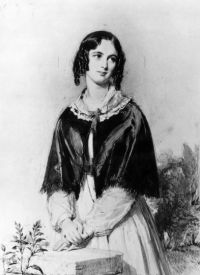 Charlotte M. Yonge,
The Armourer's Prentices
Charlotte M. Yonge,
The Armourer's Prentices
“ She shook her head. “The less you deal with Hal Randall the better,” she said. “Come now, lads, be advised and go no farther than Winchester, where Master Ambrose may get all the book-learning he is ever craving for, and you, Master Steevie, may prentice yourself to some good trade.” “Prentice!” cried Stephen, scornfully. “Ay, ay. As good blood as thine has been prenticed,” returned Joan. “Better so than be a cut-throat sword-and-buckler fellow, ever slaying some one else or getting thyself slain—a terror to all peaceful folk. ”
Archibald Prentice, History of the Anti-Corn Law League (1853)
“ Your conduct, unopposed as you have been, has been peaceable, and such as my intimate knowledge of you led me to expect from you. We are all liable to err; you have committed an error, but it is not a fatal one—it may be retrieved. ”
Archibald Prentice, History of the Anti-Corn Law League (1853)
“ As the Queen could not be approached in person, it was resolved that the constitutional and responsible adviser should be so told of the condition of the country, as to give assurance that the representation should reach her Majesty. ”
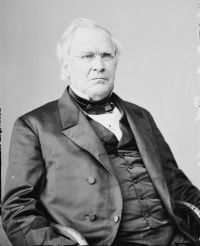 Robert Cooper Grier,
Prentice v. Zane's Administrator…
Robert Cooper Grier,
Prentice v. Zane's Administrator…
“ Every person in possession of a bill or note, indorsed in blank, and appearing to be the lawful holder thereof, can by delivery convey a good title thereto to any one believing him to be such owner, so as to convey a right of action against the maker or acceptor, notwithstanding the want of consideration, or any other matter of defence, as between the previous parties to the bill or note. ”
Charlotte M. Yonge,
The Armourer's Prentices
“ Here, Lord Cardinal—more, let the free pardon be drawn up for the two lads. And we will ourselves write to the Lord Mayor and to Norfolk that though they may work their will on the movers of the riot—that pestilent Lincoln and his sort—not a prentice lad shall be touched till our pleasure be known. There now, child, thou hast won the lives of thy lads, as thou callest them. Wilt thou rue the day, I marvel? Why cannot some of their mothers pluck up spirit and beg them off as thou hast done? ”
Charlotte M. Yonge,
The Armourer's Prentices
“ If we cannot get into our own tent again, we can mingle with the outskirts, and learn how the day is going, and how our lances and breastplates have stood where the knaves at the Eagle have gone like reeds and egg-shells—just as I threw George Bates, the prentice at the Eagle yesterday, in a wrestling match at the butts with the trick old Diggory taught me. ”
Archibald Prentice, History of the Anti-Corn Law League (1853)
“ And we call for the co-operation of all the honest, hard-working men of this town, to go with us to fight this great battle manfully, and to the end; and whenever they see on our banners one word about compromise or accepting a fixed duty, then we tell the people, who always stuck to, principle, to abandon us from that moment. ”
Archibald Prentice, History of the Anti-Corn Law League (1853)
“ There is nothing I like so much as free discussion, and settling the truth by the test of reason and argument. I shall never flinch from meeting any man, or any body of men, who, as reasonable beings, are disposed to take up the advocacy of the Corn Laws. ”
Archibald Prentice, History of the Anti-Corn Law League (1853)
“ They have been following the advice of certain honourable gentlemen who have ever that most mischievous word 'reciprocity' upon their lips, for no word has done so much damage to commerce as that word. ”
Archibald Prentice, History of the Anti-Corn Law League (1853)
“ Their strong inclination to hold office, doubtless because they had a strong conviction that the government of the country would be better in their hands than in the hands of the tories, made men believe that they would not hastily relinquish their opportunities to effect public good. ”
Charlotte M. Yonge,
The Armourer's Prentices
“ Said I not ye were my guests?”“Yea, sir, and thanks; but we can give no cause for being called beggars nor beggars’ brats.”“What beggary is there in being guests, my young gentlemen?” said the master of the house. “If any one were picked up on the heath, it was I. We owned you for gentlemen of blood and coat armour, and thy brother there can tell thee that ye have no right to put an affront on me, your host, because a rude prentice from a country town hath not learnt to rule his tongue.” ”
Archibald Prentice, History of the Anti-Corn Law League (1853)
“ Amongst the audience were a number of chartists, and their presence gave a turn to the proceedings which was exceedingly encouraging to the friends of the free-trade movement, for it showed that a fearless and uncompromising course of argument, expressed in a conciliatory spirit, would ensure the respect of a body of men, who, in their zeal for the charter, who were apt to forget what was due to others who demanded a more immediately practicable measure of reform. ”
Archibald Prentice, History of the Anti-Corn Law League (1853)
“ One unanimous sentiment prevaded the deliberations—that it was desirable to be fully prepared with the whole of the petitions previously to the meeting of Parliament and that it was expedient to concentrate the energies of the League as much as possible upon the different modes of agitation which had met the sanction of the delegates. ”
Graham B. Forbes, The boys of Columbia High on the river (1911)
“ The girls have had an adventure themselves, and don't want to hear any more about my doings. Chuck it, Paul!" cried Frank."Tell us all about it, Paul. Now that you've excited our curiosity do you think we could exist in ignorance? What has he been doing since we left home? Helen said he had gone off to carry a message for his father, over to Squire Prentice, and on his wheel, too. Whatever could have happened to him?" demanded Minnie, stepping in between Frank and his chum, as though to prevent interference. ”
Archibald Prentice, History of the Anti-Corn Law League (1853)
“ They have, in short, obtained a clear stage, and the country is disposed to see them have fair play; and if, under such favourable circumstances, and without the excuse that they are either opposed with factious pertinacity, or pushed on with imprudent ardour, they fail to effect great public good, the people will be exceedingly apt to suspect the want of inclination. ”
Archibald Prentice, History of the Anti-Corn Law League (1853)
“ The address concluded thus: "The prayers of many who are ready to perish is with you, and their blessings are upon your endeavours to aid in procuring them that share of the means of subsistence, which was designed and is provided by the Creator of all things." A deputation of hand-loom weavers was then introduced, and read an address to the conference, and, in reply to questions put by several of the ministers, made statements, as to the condition of their fellow workmen, which very deeply affected their audience. ”
Archibald Prentice, History of the Anti-Corn Law League (1853)
“ You may further examine whether the principle of protection, upon which others of those duties are founded, be not carried to an extent injurious alike to the income of the state and the interests of the people. ”
Joseph P. Bradley, The Distilled Spirits — Opinion of the Court
“ With the qualification that the agent is at liberty to communicate his knowledge to his principal, it appears to us to be a sound view of the subject. The general rule that a principal is bound by the knowledge of his agent is based on the principle of law, that it is the agent's duty to communicate to his principal the knowledge which he has respecting the subject-matter of negotiation, and the presumption that he will perform that duty. ”
Peter Vivian Daniel, Calvert v. Bradley — Opinion of the Court
“ The doctrines upon the subjects of joint and several interests under a deed, and of the necessity or propriety for conformity with remedies for enforcing those interests to the nature of the interests themselves, have been maintained by a course of decision as unbroken and perspicuous, perhaps, as those upon which any other rule or principle can be shown to rest. ”
Najeeb M. Saleeby, Studies in Moro History, Law, and Religion
“ If a principal and his agent differ, and the agent claims that he has acted in accordance with the orders of his principal, and the claim be denied by the principal, the statement of the latter shall be sustained if confirmed by oath. ”
Richard D. Currier, Commercial Law
“ When we say, therefore, that a principal is bound if his agent had apparent authority, we do not mean that whenever a third person is deceived into the belief that the agent has authority, the principal is bound. ”
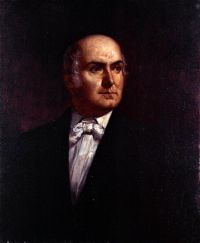 Abel P. Upshur,
A Brief Enquiry into the Nature and Character of our Federal Government
(1863 (org. 1840))
Abel P. Upshur,
A Brief Enquiry into the Nature and Character of our Federal Government
(1863 (org. 1840))
“ Their declaration was simply their joint expression of their separate wills; each expressing its own will, and not that of any other; each bound by its own act, and not responsible for the act of any other. ”
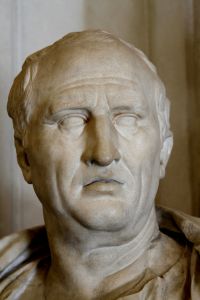 Marcus Tullius Cicero,
On Invention — Book 2
Marcus Tullius Cicero,
On Invention — Book 2
“ But some kinds of law have already been established by certain custom: such as those relating to covenants, equity, formal decisions. A covenant is that which is agreed upon between two parties, because it is considered to be so just that it is said to be enforced by justice; equity is that which is equal to all men; a formal decision is that by which something has been established by the declared opinion of some person or persons authorized to pronounce one. ”
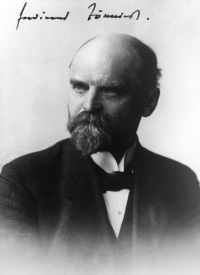 Ferdinand Tönnies,
The American Journal of Sociology
(1905)
Ferdinand Tönnies,
The American Journal of Sociology
(1905)
“ There must be a tacit or an open understanding, a sort of covenant or convention, that only volitions and acts so differentiated shall be considered as volitions and acts of the said moral person whom that one or those several individuals are supposed to represent. ”
Nathan Clifford, Jones v. United States (96 U.S. 24…
“ Whether one promise be the consideration for another, or whether the performance, and not the mere promise, be the consideration, is to be determined by the intention and meaning of the parties, as collected from the instrument, and the application of good sense and right reason to each particular case. ”
 David Hume,
Treatise of Human Nature/Book 3…
(1739)
David Hume,
Treatise of Human Nature/Book 3…
(1739)
“ Those political writers, who have had recourse to a promise, or original contract, as the source of our allegiance to government, intended to establish a principle, which is perfectly just and reasonable ”
Charter of Virginia, 1611 (1611)
“ Therefore, Our Will and Pleasure is, that in any Suit or Suits commenced, or to be commenced in any of our Courts at Westminister, or elsewhere, by the said Treasurer and Company, or otherwise against any such persons, that our Judges for the Time being, both in our Court of Chancery, and at the Common Pleas do favour and further the said Suits so far forth as Law and Equity will in any wise further and permit. ”
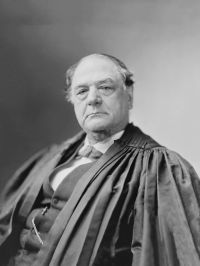 Noah Haynes Swayne,
Lowber v. Bangs — Opinion of the Court
Noah Haynes Swayne,
Lowber v. Bangs — Opinion of the Court
“ Upon reason, principle, and authority, we are of opinion that the stipulation before us is a condition precedent, and not a mere representation, nor an independent covenant, and that it goes to the entire root of the contract. ”
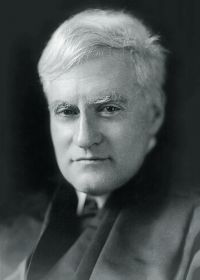 Benjamin Nathan Cardozo,
The Nature of the Judicial Process
(1921)
Benjamin Nathan Cardozo,
The Nature of the Judicial Process
(1921)
“ Other relations in life, as, e.g., those of trustee and beneficiary, or principal and surety, impose a duty to act in accordance with the highest standards which a man of the most delicate conscience and the nicest sense of honor might impose upon himself. In such cases, to enforce adherence to those standards becomes the duty of the judge. Whether novel situations are to be brought within one class of relations or within the other must be determined, as they arise, by considerations of analogy, of convenience, of fitness, and of justice. ”
Leslie Frederic Scott, 1911 Encyclopædia Britannica (1911)
“ Where a factor makes a contract in his own name without disclosing the existence of his principal, the third party may, on discovering the existence of the principal, elect whether he will sue the factor or the principal. ”
Stanley Matthews, Pritchard v. Norton — Opinion of the Court
“ The law we are in search of, which is to decide upon the nature, interpretation, and validity of the engagement in question, is that which the parties have, either expressly or presumptively, incorporated into their contract as constituting its obligation. ”
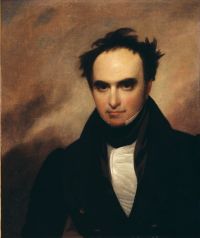 Daniel Webster,
The Great Speeches and Orations of Daniel Webster
Daniel Webster,
The Great Speeches and Orations of Daniel Webster
“ The duty of performing promises is thus shown to rest on universal law; and if, departing from this well-established principle, we now follow the teachers who instruct us that the obligation of a contract has its origin in the law of a particular State, and is in all cases what that law makes it, and no more, and no less, we shall probably find ourselves involved in inextricable difficulties. ”
Emma Helen Blair, The Philippine Islands, 1493–1898 (1903)
“ Although it is my will that complete justice be observed in each case, I charge you that, in so far as may be possible, and can be rightly done, you settle the differences and suits which arise, without having recourse to the technicalities of the law or proceeding by the ordinary methods, or condemning to pecuniary fines; but observing throughout the provisions of the decrees that shall be given you. ”
Nathan Clifford, Emerson v. Slater — Opinion of the Court
“ Other authorities state the proposition much stronger, authorizing the conclusion that benefit to the party by whom the promise is made, or to a third person at his instance, or damage sustained at the instance of the party promising, by the party in whose favor the promise is made, is sufficient to constitute a good and valid consideration on which to maintain an action. ”
 Herbert Spencer,
Man or the State? — The Right to Ignore the State
(1919)
Herbert Spencer,
Man or the State? — The Right to Ignore the State
(1919)
“ If A, B, and C debate whether they shall employ an agent to perform for them a certain service, and if, whilst A and B agree to do so, C dissents, C cannot equitably be made a party to the agreement in spite of himself. ”
 William Burnham Woods,
Bissell v. Foss — Opinion of the Court
William Burnham Woods,
Bissell v. Foss — Opinion of the Court
“ Story, Eq. Jur. § 2. It was one of those obligations which was binding on the honor and conscience of the party, but one not the subject of a suit, and not to be enforced in a court of either law or equity. ”
 Jonathan Swift,
The Prose Works of Jonathan Swift…
Jonathan Swift,
The Prose Works of Jonathan Swift…
“ In another paragraph of the patent your Majesty has covenanted and granted unto the said William Wood, his executors, &c. "That upon performance of covenants, on his and their parts, he and they shall peaceably, and quietly, have, hold, and enjoy all the powers, authorities, privileges, licences, profits, advantages, and all other matters and things thereby granted, without any let, suit, trouble, molestation or denial of your Majesty, your heirs or successors, or of or by any of your or their officers or ministers, or any person or persons, &c." ”
 Thomas Hill Green,
Lectures on the Principles of Political Obligation
Thomas Hill Green,
Lectures on the Principles of Political Obligation
“ The object of a right arising out of contract would be the action which the person contracting agrees to perform. The object of a connubial right would not be, as according to German usage, the person in regard to, or over, whom the right is exercised—that person would be the subject of the right—but either the behaviour which the person possessing the right is entitled to claim from that person, or the forbearances in respect to that person, which he is entitled to claim from others. ”
