Prime number

Definition and stakes

William Fleetwood Sheppard,  1911 Encyclopedia Britannica (1911)

“ Factors, Primes and Prime Factors.—If we take the successive multiples of 2, 3, . . . as in § 36, and place each multiple opposite the same number in the original series, we get an arrangement as in the adjoining diagram. If any number N occurs in the vertical series commencing with a number n (other than 1) then n is said to be a factor of N. Thus 2, 3 and 6 are factors of 6; and 2, 3, 4, 6 and 12 are factors of 12.
A number (other than 1) which has no factor except itself is called a prime number, or, more briefly, a prime.
”
Source: Wikisource

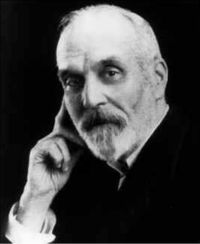
Portrait of Henry Ernest Dudeney Henry Ernest Dudeney,  The Canterbury Puzzles, and Other Curious Problems

“ The number composed of seventeen ones, 11,111,111,111,111,111, has only these two divisors, 2,071,723 and 5,363,222,357, and their discovery is an exceedingly heavy task. The only number composed only of ones that we know with certainty to have no divisor is 11. Such a number is, of course, called a prime number.
The maxim that there are always a right way and a wrong way of doing anything applies in a very marked degree to the solving of puzzles.
”
Source: Gutenberg

Portrait of Henry Ernest Dudeney Henry Ernest Dudeney,  The Canterbury Puzzles, and Other Curious Problems

“ The kernel of the puzzle is this: Any prime number, with the exception of 2 and 5, which are the factors of 10, will exactly divide without remainder a number consisting of as many nines as the number itself, less one. Thus 999999 (six 9's) is divisible by 7, sixteen 9's are divisible by 17, eighteen 9's by 19, and so on. This is always the case, though frequently fewer 9's will suffice; for one 9 is divisible by 3, two by 11, six by 13, when our ribbon rule for consecutive multipliers breaks down and another law comes in. ”
Source: Gutenberg

Get perspective with Kwize: daily news enlightened by great literature