 Niccolò Machiavelli,
The Prince
(1532)
Niccolò Machiavelli,
The Prince
(1532)
“ All states, all powers, that have held and hold rule over men have been and are either republics or principalities. ”
Niccolò Machiavelli,
The Prince
(1532)
“ All states, all powers, that have held and hold rule over men have been and are either republics or principalities. ”
 Orson Pratt,
The Kingdom of God, Part 1
Orson Pratt,
The Kingdom of God, Part 1
“ They hold the supreme authority and power in heaven, and in the heaven of heavens, and throughout the wide expanse of universal nature. All principalities, powers, and kingdoms, whether in heaven or on earth, must yield to be instructed and controlled by the supreme power, or they cannot stand. ”
Jean Louis de Lolme, Memorials of Human Superstition (1784)
“ Politicians inform us, that it is absolutely necessary that, in all States, there should be Powers of different kinds, established to maintain the general harmony of the whole, and that Legislative, Executive, Military, and Judicial Powers, for instance, should be formed, and lodged in different hands. ”
 Johann Gottlieb Fichte,
Characteristics of the Present Age
(1806)
Johann Gottlieb Fichte,
Characteristics of the Present Age
(1806)
“ The Rulers, as well as all other Individuals, with all their individual powers, are taken into account in order to direct the powers of the governed,—who no more than they constitute the State,—towards the common purpose, so far as they understand it, and to enforce this purpose on all who are opposed to it. ”
 Herbert Spencer,
Popular Science Monthly
(1881)
Herbert Spencer,
Popular Science Monthly
(1881)
“ Where, in virtue of supposed supernatural origin or authority, the king has become absolute, and, owning both subjects and territory, exercises all powers, he is obliged by the multiplicity of his affairs to depute his powers. ”
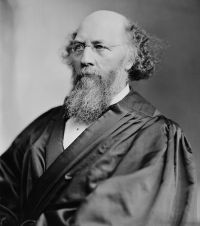 Stephen Johnson Field,
Ex Parte Clarke — Dissent
Stephen Johnson Field,
Ex Parte Clarke — Dissent
“ No one will deny that in the powers granted to it the general government is supreme, and that, upon all subjects within their scope, it can make its authority respected and obeyed throughout the limits of the Republic ”
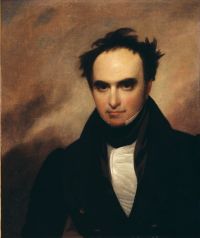 Daniel Webster,
The Great Speeches and Orations of Daniel Webster
Daniel Webster,
The Great Speeches and Orations of Daniel Webster
“ The powers, therefore, belonging to any branch of our government, are to be construed and settled, not by remote analogies drawn from other governments, but from the words of the grant itself, in their plain sense and necessary import, and according to an interpretation consistent with our own history and the spirit of our own institutions. ”
Daniel Webster,
The Seventh of March Speech
“ No monarchical throne presses these States together, no iron chain of military power encircles them; they live and stand under a government popular in its form, representative in its character, founded upon principles of equality, and so constructed, we hope, as to last for ever. ”
John Austin, Centralization (1847)
“ That the other political authorities in the given society are subordinate to the sovereign or supreme one; deriving their political powers from its express or tacit delegation, and holding those powers at its pleasure. ”
Alexander Hamilton, The Federalist Papers
“ The powers reserved to the several States will extend to all the objects which, in the ordinary course of affairs, concern the lives, liberties, and properties of the people, and the internal order, improvement, and prosperity of the State. ”
Herbert Spencer,
Popular Science Monthly
(1881)
“ Though the habit, general in past times, of regarding the powers of governments as inherent, has been, by the growth of popular institutions, a good deal qualified; yet, even now, there is no clear apprehension of the fact that governments are not themselves powerful, but are the instrumentalities of a power. ”
Alexander Hamilton, The Federalist (1863, Dawson edition)
“ Civil power, properly organized and exerted, is capable of diffusing its force to a very great extent; and can, in a manner, reproduce itself in every part of a great empire, by a judicious arrangement of subordinate institutions. ”
Various, Astounding Stories of Super-Science…
“ Their governments, their traditions, are entirely unlike. If you become my deputy and viceroy for all your nation, you shall rule as you will. A benevolent, yet strong, rule is needed for your people. It may even be—I will permit it—that the democratic institutions of your nation may continue if you so desire. I am offering you, Senor, the position of the absolute ruler of your nation. ”
Francis A. Cunningham, The War Upon Religion
“ That form arises from the ensemble of circumstances, historical or national, but always human, which give rise in a nation to traditional or even fundamental laws, and through these is determined the particular form of government, the basis of transmission of supreme powers. ”
Stephen Johnson Field,
Ex parte Virginia — Dissent
“ That the central government was created chiefly for matters of a general character, which concerned all the States and their people, and not for matters of interior regulation, is shown as much by the history of its formation as by the express language of the Constitution. ”
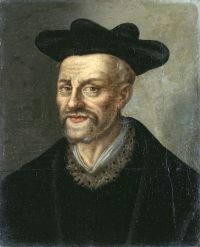 François Rabelais,
The Fourth Book
(1694<!--translation-->)
François Rabelais,
The Fourth Book
(1694<!--translation-->)
“ Would you, in time of peace, find a man capable of wisely governing the state of a commonwealth, of a kingdom, of an empire, of a monarchy; sufficient to maintain the clergy, nobility, senate, and commons in wealth, friendship, unity, obedience, virtue, and honesty? ”
Theodore Martin, Once a Week (1860)
“ The same principle shall be maintained mutually among the subjects of the three sovereigns, who will thus be taught to recognise that the only ruler is He to whom alone belongs power, and in whom are all the treasures of love and wisdom. ”
The Growth of Parliament and the War with Scotland…
“ We declare and ordain, also, that the said King shall have full power to govern freely in his kingdom and its dependencies, and shall be in the state and in the enjoyment of plenary power, in and through everything, even as he was before the aforesaid time. ”
B. Franklin Edmands, The Boston School Atlas, Embracing a Compendium of Geography
“ If the power of an emperor, or of a king, be limited by law, the government is called a limited monarchy; if there be no legal restraint to the will of the sovereign, it is called an absolute monarchy. ”
Jonathan Elliot, Debates in the Several State Conventions on the Adoption of the Federal Constitution (1907)
“ The citizens of the United States would reprobate, with indignation, the idea of a monarchy. But the essential qualities of a monarchy—unity of council, vigor, secrecy, and dispatch—are qualities essential in every government. ”
 Friedrich Nietzsche,
HUMAN, ALL TOO HUMAN, 'A Book For Free Spirits' Part I
(1909)
Friedrich Nietzsche,
HUMAN, ALL TOO HUMAN, 'A Book For Free Spirits' Part I
(1909)
“ NEW AND OLD CONCEPTIONS OF GOVERNMENT.—To draw such a distinction between Government and people as if two separate spheres of power, a stronger and higher, and a weaker and lower, negotiated and came to terms with each other, is a remnant of transmitted political sentiment, which still accurately represents the historic establishment of the conditions of power in most States. ”
Andrew W. Young, The government class book
“ But the forms of government which have most prevailed, are designated by the terms, monarchy, aristocracy, and democracy, or republic. These words severally indicate by what persons, and in what manner, the governing power of a state is exercised. This power is usually called the sovereign, or supreme power. Where kings rule, they are called sovereign; and where the power is in the hands of the people, the people are sovereign. ”
Orson Pratt,
Journal of Discourses — Volume 7…
“ Hence the various nations, both before and after the flood, instituted governments according to human wisdom, some making choice of one form, and some of another; some giving the whole authority into the hands of a ruler, called a king, an emperor, or monarch; others reserving a portion of the power in the hands of various individuals, termed nobles or princes; others leaving the form of government more or less in the hands of the people at large, something resembling a republic. ”
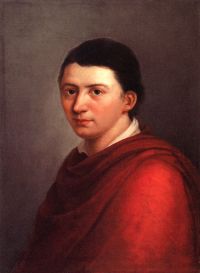 Friedrich von Schlegel,
The philosophy of life, and philosophy of language…
Friedrich von Schlegel,
The philosophy of life, and philosophy of language…
“ For historical experience, that great teacher of political science, distinctly proves that in those dynamical states, which are based on the principle of the division and nicely-adjusted balance of power, the ministry and the opposition usurp between them all the functions of authority, while the sacred cipher of an hereditary monarch is nothing more than a mere shadow, beneath which they can sit at ease to carry on their endless disputes. ”
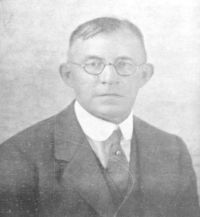 Westel Woodbury Willoughby,
Government and Administration of the United States
Westel Woodbury Willoughby,
Government and Administration of the United States
“ Different nations have, therefore, developed for themselves different forms of government. Yet these governments, however different in their structures and administration, are in all cases distinctly referable to four well defined types: Monarchy, Aristocracy, Democracy, and the Republic. #Monarchy.#—A monarchy is a nation at whose head is a personal ruler, called King, Emperor, or Czar, who has control of the government, appoints the principal officers of state, and to whom in theory at least, these appointees are responsible for their actions. ”
Daniel Webster,
The Great Speeches and Orations of Daniel Webster
“ We are all agents of the same supreme power, the people. The general government and the State governments derive their authority from the same source. Neither can, in relation to the other, be called primary, though one is definite and restricted, and the other general and residuary. ”
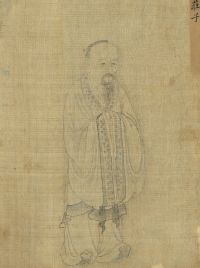 Zhuang Zi,
Chuang Tzŭ
(1889)
Zhuang Zi,
Chuang Tzŭ
(1889)
“ The Son of Heaven, the princes, the ministers, and the people,—if these four fulfil their proper functions, the result is good government. If they quit their proper places, the result is unutterable confusion. When the officials mind their duties and the people their business, neither is injured by the other. ”
Various, The International Magazine, Volume 2…
“ Monarch or People, we will submit ourselves to the power she herself shall organize. Is it possible that so moderate and rational a proposition should be the object of such false interpretations, in a country which reveres the idea of right and of self-government? Is it possible that its leaders should be the object of so much calumny? ”
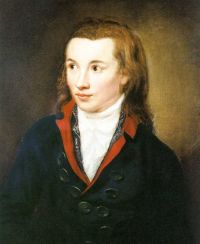 Georg Philipp Friedrich Freiherr von Hardenberg,
Novalis Schriften
(1907)
Georg Philipp Friedrich Freiherr von Hardenberg,
Novalis Schriften
(1907)
“ And, if at all possible, get their interconnections organized, so he would set the state in working order, his state amongst other states, his nation within humanity and his own to oversee on a grand scale, and here, in fact, to cultivate himself a royal human being. ”
 Woodrow Wilson,
An old master, and other political essays
(1893)
Woodrow Wilson,
An old master, and other political essays
(1893)
“ At last peoples have become conscious of their relations to the highest powers of the State, and have sought to give permanence and certainty to those relations by setting the conditions of their subordination fast in stubborn practices or in the solemn covenants of written documents. A constitution government has always had; but not until this latest age these deliberate formulations of principle and practice which determine the whole organization and action of the State, the domain of authority, the neutral territory85 of liberty, the postulates of obedience. ”
David Playfair Heatley, Diplomacy and the Study of International Relations (1919)
“ Monarchy rests, in principle, on unity, and it emphasizes the need for stability in the conduct of affairs of State. Effective monarchy affords, during its continuance, a better guarantee for persistence in policy and consistency in action than a democracy or a parliamentary government, based on diversities, on discussion, on considerable publicity, and on provisions duly made within the constitution for changes in policy in response to changes in opinion. ”
 John Stuart Mill,
Considerations on Representative Government
(1861)
John Stuart Mill,
Considerations on Representative Government
(1861)
“ In unbalanced governments—pure monarchy, pure aristocracy, pure democracy—such maxims are the only barrier which restrains the government from the utmost excesses in the direction of its characteristic tendency. ”
 Georg Wilhelm Friedrich Hegel,
Hegel's Philosophy of Mind
Georg Wilhelm Friedrich Hegel,
Hegel's Philosophy of Mind
“ The Absolute government is divine, self-sanctioned and not made98.” The real strength—the real connecting-mean which gives life to sovereign and to subject—is intelligence free and entire, independent both of what individuals feel and believe and of the quality of the ruler. “The spiritual bond,” he says in a lower form of speech, “is public opinion: it is the true legislative body, national assembly, declaration of the universal will which lives in the execution of all commands.” ”
Henry K. Rowe, Society: Its Origin and Development
“ Present tendency is in the direction of safeguarding the interests of all by a fully representative government, in which the individual efficiency of prince or commoner alike shall have due weight, but no one sovereign or class shall rule the people as a whole. ”
Robert B. Brough, The Life of Sir John Falstaff
“ Just so when, by common consent, we declare that a certain branch of the community shall do nothing but govern empires, kingdoms, principalities, provinces, or departments, we are bound, at whatever cost, to provide them with a sufficiency of empires, kingdoms, principalities, &c., to govern. ”
 Thomas Jefferson,
Memoir, Correspondence, and Miscellanies…
Thomas Jefferson,
Memoir, Correspondence, and Miscellanies…
“ But it is not by the consolidation, or concentration of powers, but by their distribution, that good government is effected. ”
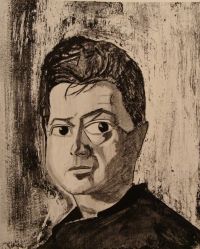 Francis Bacon,
Novum Organum; Or, True Suggestions for the Interpretation of Nature
Francis Bacon,
Novum Organum; Or, True Suggestions for the Interpretation of Nature
“ Let the sixteenth be that which we term the royal or political motion, by which the predominant and governing parts of any body check, subdue, reduce, and regulate the others, and force them to unite, separate, stand still, move, or assume a certain position, not from any inclination of their own, but according to a certain order, and as best suits the convenience of the governing part, so that there is a sort of dominion and civil government exercised by the ruling part over its subjects. ”
 William Smith,
Dictionary of Greek and Roman Geography
(1854)
William Smith,
Dictionary of Greek and Roman Geography
(1854)
“ The purposes of government were determined, its powers wielded, and the great offices held, — Saffetes, Senators, Generals, or Judges, — by the members of a small number of wealthy families; and the chief opposition they encountered was from their feuds against each other. In the main, the government was conducted with skill and steadiness, as well for internal tranquility, as for systematic foreign and commercial aggrandisement. ”
Johann Gottlieb Fichte,
Characteristics of the Present Age
(1806)
“ The power of governing others, possessed by the Ruler,—of legislating for them, particularly of legislating for them through the agency of others, became an object of ambition, and in proportion as the capacities of those who were at first willing and obedient subjects were developed, they must have begun to regard with envious eyes the power of government exercised over them by other men. ”
 Eugène Sue,
The Pocket Bible; or, Christian the Printer…
Eugène Sue,
The Pocket Bible; or, Christian the Printer…
“ If I wished to consider that question, I should first wish to know, What rank monarchy is to take among Republics, or if monarchy can at all rank with Republics, considering the difficulty of believing that there could be anything public in a government where all belongs to one?"I wish I could understand how it happens that so many citizens, so many men, so many cities, so many nations often endure only a tyrant, who has no power except that given to him; who has no power to harm them but because of their own power to endure him! ”
 ʻAbdu'l-Bahá,
The Secret of Divine Civilization
ʻAbdu'l-Bahá,
The Secret of Divine Civilization
“ The focal center of the executive power is the government, while that of the legislative is the learned—and if this latter great support and pillar should prove defective, how is it conceivable that the state should stand? ”
 F. Max Müller,
Auld lang syne
(1898)
F. Max Müller,
Auld lang syne
(1898)
“ Constitutional government under a royal protector will henceforth be recognised as the most perfect form of government which human ingenuity has been able to devise, after many centuries of patient and impatient search. ”
A Biography of Henry Clay, the Senator from Kentucky
“ The great difference between the two forms of government is, that in a republic all power and authority and all public offices and honors emanate from the people, and are exercised and held for their benefit. In a monarchy, all power and authority, all offices and honors, proceed from the monarch. ”
 Thomas Hobbes,
The English Works of Thomas Hobbes of Malmesbury…
(1839)
Thomas Hobbes,
The English Works of Thomas Hobbes of Malmesbury…
(1839)
“ But though the sovereignty be not mixed, but be always either simple democracy, or simple aristocracy, or pure monarchy, nevertheless in the administration thereof, all those sorts of government may have place subordinate. ”
 William Henry Giles Kingston,
The Circassian Chief: A Romance of Russia
William Henry Giles Kingston,
The Circassian Chief: A Romance of Russia
“ The government, indeed, such as it is, may be looked upon rather as a Republic, than as an Oligarchy; for those of all ranks may give their opinion, and vote at the public meetings, though the princes and chiefs of clans have the most influence, and their sentiments are looked upon with the greatest respect. ”
J. N. Larned, History for ready reference, Volume 3… (1895)
“ We see monarchy, aristocracy, democracy, rising side by side and one after another, the changes being regulated in each community by its past experience and its special interests in the immediate present. ”
John Stuart Mill,
Considerations on Representative Government
(1861)
“ The interest of the monarch, or the interest of the aristocracy, either collective or that of its individual members, is promoted, or they themselves think that it will be promoted, by conduct opposed to that which the general interest of the community requires. ”
John Stuart Mill,
Considerations on Representative Government
(1861)
“ On the contrary, many a people has gradually emerged from this condition by the aid of a central authority, whose position has made it the rival, and has ended by making it the master, of the local despots, and which, above all, has been single. ”
Michael Muller, Public School Education
“ Wherefore the choice of rulers in any state or kingdom is best, when one is chosen for his merit to preside over all, and under him are other rulers chosen for their merit; and the government belongs to all, because the rulers may be chosen from any class of society ”
