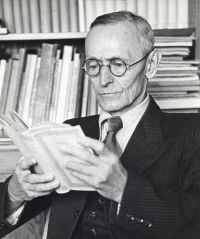
 Hermann Hesse,
Siddhartha: A Poem of India
“ And so now I am beginning to believe that this knowledge has no worse enemy than the pursuit of knowledge, than learning.” ”
Hermann Hesse,
Siddhartha: A Poem of India
“ And so now I am beginning to believe that this knowledge has no worse enemy than the pursuit of knowledge, than learning.” ”
 Robert S. Ball,
The Earth's Beginning
“ But the monumental fact remains that these three most sagacious men of science, whose lives were devoted to the pursuit of knowledge, each approaching the subject from his own direction, each pursuing his course in ignorance of what the others were doing, were substantially led to the same result. The progress of knowledge since the time when these great men lived has confirmed, in ways which we shall endeavour to set forth, the sublime doctrine to which their genius had conducted them. ”
 Samuel Johnson,
The Works of Samuel Johnson, LL.D. in Nine Volumes…
“ How the understanding is best conducted to the knowledge of science, by what steps it is to be led forwards in its pursuit, how it is to be cured of its defects, and habituated to new studies, has been the inquiry of many acute and learned men, whose observations I shall not either adopt or censure: my purpose being to consider the moral discipline of the mind, and to promote the increase of virtue rather than of learning. ”
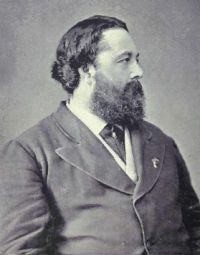 Thomas Sterry Hunt,
Popular Science Monthly
(1883)
“ It will be noticed that in this brief survey of the field of natural knowledge I have not spoken of the technical applications of science, nor alluded to its important aspects in relation to the material wants of life. On this theme, did time permit, I might speak at length. There are two classes of motives which urge men to the pursuit of knowledge; on the one hand, those of worldly fame or profit, and, on the other, the far nobler sentiment which has the finding-out of truth for its object. ”
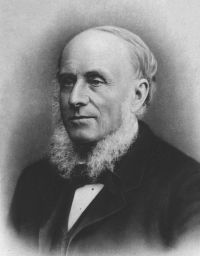 Alexander Bain,
Popular Science Monthly
(1878)
“ It is an effort of prime importance to trace exhaustively the inducements and allurements to intellectual exertion. What are the intrinsic charms of knowledge, whether in pursuit or in possession? The difficulty of the answer is increased rather than diminished by the flow of fifty years' rhetoric. ”
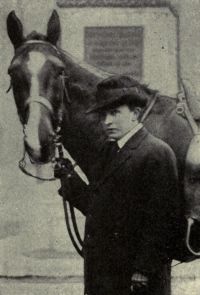 Will Levington Comfort,
The Public Square
(1923)
“ It was so in my training. We seek to silence all opinions, all half-truths, all thinking, in fact, in order to Know. We postulate, of course, a center of Spontaneous Knowledge, or Genius, above the mind. ”
 Brigham Young,
Journal of Discourses — Volume 9…
“ We should seek substantial information, and trust little to that kind of so-called learning that is based entirely upon theory. We should pluck fruit from the tree of knowledge, and taste, then shall our eyes be open to see, our ears to hear and our hearts to understand. ”
William Miller, Convocation Addresses of the Universities of Bombay and Madras (1892)
“ Ideals, it is true, are attained but seldom, and with you as with us all, mental training is far from perfect, and zeal for knowledge far from pure. Yet we trust that in no inconsiderable measure you have a sense of the dignity of wisdom a sense of your own need of it, and a power at the same time of gathering it henceforward for yourselves. Thus you are complete with the completeness of a seed. ”
 Dinah Maria Mulock Craik,
A Noble Life
“ But the distance between twenty and sixty—the life beginning and the life advancing toward its close— was frequently apparent; also between an active, original mind, requiring humanity for its study, and one whose whole bent was among the dry bones of ancient learning—the difference, in short, between learning and knowledge—the mere student and the man who only uses study as a means to the perfecting of his whole nature, his complete existence as a human being. ”
Anton Pavlovich Chekhov, The Chorus Girl and Other Stories
“ Our duty is to study and to study, to try to accumulate as much knowledge as possible, for genuine social movements arise where there is knowledge; and the happiness of mankind in the future lies only in knowledge. ”
Anonymous, The fourth progressive reader (1871)
“ But, while I am descanting [599] upon the conduct of the understanding, and the best mode of acquiring knowledge, some men may be disposed to ask, “Why conduct my understanding with such endless care? and what is the use of so much knowledge?” What is the use of so much knowledge? What is the use of so much life? What are we to do with the seventy years of existence allotted to us? ”
 John Stuart Mill,
Inaugural address delivered to the University of St…
(1867)
“ So far as these branches of knowledge have been acquired, we have learnt, or been put into the way of learning, our duty, and our work in life. Knowing it, however, is but half the work of education; it still remains, that what we know, we shall be willing and determined to put in practice. Nevertheless, to know the truth is already a great way towards disposing us to act upon it. What we see clearly and apprehend keenly, we have a natural desire to act out. ”
David Masson, The Three Devils: Luther's, Milton's…
“ The mind thinks with what it knows; and, if you alter the knowledge in any one whit, you alter the thinking instrumentality in proportion. Our whole practice of education is based on this idea, and yet somehow the idea is allowed to lurk. ”
 Herbert Spencer,
Essays on Education and Kindred Subjects
“ As, throughout life, not what we are, but what we shall be thought, is the question; so in education, the question is, not the intrinsic value of knowledge, so much as its extrinsic effects on others. ”
W. R. Sorley, Recent Tendencies in Ethics
“ It is the need to perform or attain something, which is the motive that leads to the understanding of things; and the understanding of things with which alone we are satisfied is commonly that which helps us so to describe our experience as to be able to control some practical result. 'Knowledge is power' ”
Harper's New Monthly Magazine, No…
“ The first comprehends knowledge, purely intellectual, whether derived from observation, memory, reflection, books, or men, Aristotle, or Fleet-street. The second demands training, not only intellectual, but moral ”
Brigham Young,
Journal of Discourses — Volume 13…
“ They have the foundation, and they can improve and add knowledge to knowledge, wisdom to wisdom, light to light, and intelligence to intelligence. This power to increase in wisdom and intelligence so that we can know things for ourselves is within every one of us. ”
 John Lancaster Spalding,
Means and Ends of Education
“ If we are to work to good purpose we must take our stand, with the great thinkers and educators, on the broad field of man's nature, and act in the light of the only true ideal of education,—that its end is wisdom, virtue, knowledge, power, reverence, faith, health, behavior, hope, and love; in a word, whatever powers and capacities make for intelligence, for conduct, for character, for completeness of life. ”
 William Marsden,
The history of Sumatra
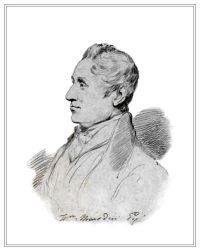
“ The love of novelty, the vanity of learning, the fascination of ceremony, the contagion of example, veneration for what appears above his immediate comprehension, and the innate activity of man's intellectual faculties, which, spurred by curiosity, prompts him to the acquisition of knowledge, whether true or false--all conspire to make him embrace a system of belief and scheme of instruction in which there is nothing that militates against prejudices already imbibed. ”
 Henry Rowe Schoolcraft,
Personal Memoirs of a Residence of Thirty Years with the Indian Tribes on the American Frontiers
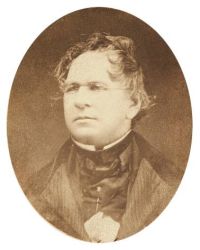
“ The same application, the same quantity of habit, will fit us for one as completely as for the other. And as to those who tell us, with an air of seeming wisdom, that it is men, and not books, that we must study to become knowing; this I have always remarked, from repeated experience, to be the common consolation and language of dunces." Now although I have no purpose of aiming at extreme heights in knowledge, yet there are some points in which every man should have that precision of knowledge which is a concomitant of scholarship. ”
 John Wilkins,
An Essay towards a Real Character and a Philosophical Language
(1668)
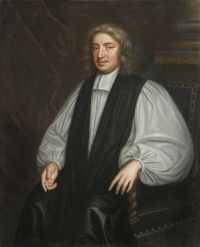
“ Such Persons may know, that the discovery of the true nature and Cause of any the most minute thing, doth promote real Knowledge, and therefore cannot be unfit for any Mans endeavours, who is willing to contribute to the advancement of Learning. ”
 John Wesley,
The works of the Rev. John Wesley…
(1771)
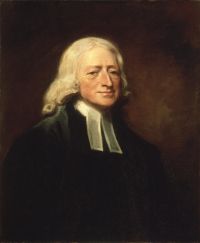
“ Let learning therefore speak for itself. Let its own works praise it. What has it done? What has brought forth a multiplicity of churches, but that very same acuteness of learning, which asserts and proves there is but one? Whence comes transubstantiation, election, reprobation, insignificancy of works, socinianism, arianism, but from that knowledge of history, and critical skill in words, which is the glory of the learned world. ”
P.-J. Proudhon, What is Property? An Inquiry into the Principle of Right and of Government
“ By means of self-instruction and the acquisition of ideas, man finally acquires the idea of SCIENCE,—that is, of a system of knowledge in harmony with the reality of things, and inferred from observation. ”
Delaumosne, Delsarte System of Oratory
“ Trained by tradition, reason is called common sense. Trained by personal experience to the knowledge of principles, reason is called science. Trained by the contemplation of principles to the perfection of the intellect, reason is called wisdom. ”
M. Valentine, Theoretical Ethics
“ The clearer light is forceful and efficacious for a better realization of the moral task. "Knowledge is power," especially knowledge which throws into view the most impressive realities and relations, and appeals with the most cogent motives. ”
John Lancaster Spalding,
Means and Ends of Education
“ If we bend our thoughts to this subject, we shall gain insight into the meaning and purpose of education, which is nothing else than the urging of intellect and conscience to the conquest of the world, and to the clear perception and practical acknowledgment of the primal and fundamental truth that man is man in virtue of his thought and love. Instruction, which is but part of education, has for its object the development of the intellect and the transmission of knowledge. This, whether we consider the individual or society, is indispensable. ”
 Ralph Waldo Emerson,
Miscellanies
(1855)
“ In order to a knowledge of the resources of the scholar, we must not rest in the use of slender accomplishments,—of faculties to do this and that other feat with words; but we must pay our vows to the highest power, and pass, if it be possible, by assiduous love and watching, into the visions of absolute truth. The growth of the intellect is strictly analogous in all individuals. ”
Charlotte M. Mason, An Essay Towards a Philosophy of Education…
“ Each incident stands out, every phrase acquires new force, each link in the argument is riveted, in fact we have performed The Act of Knowing, and that which we have read, or heard, becomes a part of ourselves, it is assimilated after the due rejection of waste matter. Like those famous men of old we have found out “knowledge meet for the people” and to our surprise it is the best knowledge conveyed in the best form that they demand. ”
George Spring Merriam, The Chief End of Man
“ Some, after pushing their inquiry to the farthest, and keeping it united with right living, will rest in "devout and contented uncertainty."The advance of knowledge has been the great fact of the world's intellectual life for the past century. ”
 George Grote,
Plato and the Other Companions of Sokrates…
“ They must give proof of self-command against pleasures as well as pains, and of competence to deal with the highest studies.186 But what are the highest studies? What is the supreme object of knowledge? ”
Herbert Spencer,
First Principles
“ It takes in not so much the reality as its accompaniments—not so much the substance as the shadow. That progress in intelligence seen during the growth of the child into the man, or the savage into the philosopher, is commonly regarded as consisting in the greater number of facts known and laws understood; whereas the actual progress consists in those internal modifications of which this increased knowledge is the expression. ”
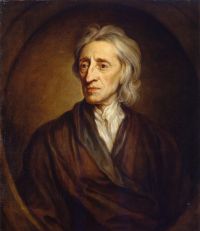 John Locke,
Of the Conduct of the Understanding
(1901)
“ To this perhaps it will be objected, that to manage the understanding as I propose would require every man to be a scholar, and to be furnished with all the materials of knowledge and exercised in all the ways of reasoning. ”
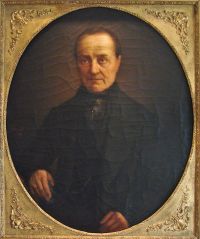 Auguste Comte,
A General View of Positivism
“ Special studies carried on without regard for the encyclopædic principles which determine the relative value of knowledge, and its bearing on human life, will be condemned by all men of right feeling and good sense. ”
Emory Adams Allen, The Golden Gems of Life; Or, Gathered Jewels for the Home Circle
“ Knowledge merely gathered together, whether in books or in brains, is devoid of power, unless quickened into life by the thoughts and reflections of some practical worker. But when this is supplied knowledge becomes an engine of power. ”
Charlotte M. Mason, Home education (1906)
“ They will rule, and they will act—cautiously, we may hope, and modestly, and charitably—because in learning true knowledge they will have learnt also their own ignorance, and the vastness, the complexity, the mystery of Nature. But they will be able to rule, they will be able to act, because they have taken the trouble to learn the facts and the laws of Nature. ”
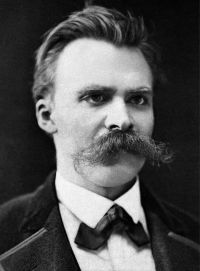 Friedrich Wilhelm Nietzsche,
We Philologists
“ I wish to breathe the breath of this purpose into science. Let us advance our knowledge of mankind! The good and rational in man is accidental or apparent, or the contrary of something very irrational. There will come a time when training will be the only thought. ”
 Thomas Henry Huxley,
Aphorisms and Reflections from the Works of T. H. Huxley
“ And thus mankind will have one more admonition that "the people perish for lack of knowledge"; and that the alleviation of the miseries, and the promotion of the welfare, of men must be sought, by those who will not lose their pains, [Pg 90] in that diligent, patient, loving study of all the multitudinous aspects of Nature, the results of which constitute exact knowledge, or Science. ”
Saint of Alexandria Clement, The writings of Clement of Alexandria… (1869)
“ But that which par excellence is termed knowledge, bears the impress of judgment and reason, in the exercise of which there will be rational cognitions alone, applying purely to objects of thought, and resulting from the bare energy of the soul. ”
Brigham Young,
Discourses of Brigham Young
“ We have the privilege of learning the arts and sciences that the learned among the Gentile nations understand; we have the privilege of becoming classical scholars—of commencing with the rudiments of all knowledge—of entering into the academies, we might say, of perfection. We might study, and add knowledge to knowledge, from the time that we are capable of knowing anything until we go down to the grave. If we enjoyed healthy bodies, so as not to wear upon the functions of the mind, there is no end to a man's learning. ”
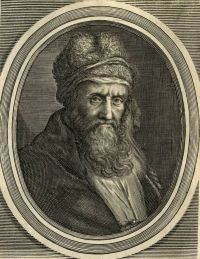 Diogenes Laërtius,
The Lives and Opinions of Eminent Philosophers
“ And here it is necessary for those who have made sufficient progress in their view of the general question, to recollect the principles laid down as elements of the whole discussion; for we have still greater need of a correct notion of the whole, than we have even of an accurate understanding of the details. We must, therefore, give preference to the former knowledge, and lay up in our memory those principles on which we may rest, in order to arrive at an exact perception of things, and at a certain knowledge of particular objects. ”
 John Hamilton Moore,
The Young Gentleman and Lady's Monitor…
“ The diligence with which you endeavour to cultivate the knowledge of nature, manners, and life, will perhaps incline you to pay some regard to the observations of one who has been taught to know mankind by unwelcome information, and whose opinions are the result, not of solitary conjectures, but of practice and experience. ”
W. S. Monroe, Comenius and the Beginnings of Educational Reform
“ We should advance from the easy to the more difficult, from the near to the more distant, and from the simple to the complex. Proceed toward knowledge by the perception and understanding of objects present to the senses, and later to the information of others about the objects. ”
B. G. Jefferis, Searchlights on Health: Light on Dark Corners
“ If light and education, on these important subjects, does injury, then all knowledge likewise must do more wrong than good. Knowledge is power, and the only hope of the race is enlightenment on all subjects pertaining to their being. ”
Nicolas August Ludwig Jacob Johannsen, Popular Science Monthly (1875)
“ When we learn what knowledge is most valuable, the habit or discipline incidentally acquired in seeking that knowledge will, no doubt, be the discipline which will aid most in seeking and applying other valuable knowledge throughout the whole course of life. ”
Charlotte M. Mason, An Essay Towards a Philosophy of Education…
“ Shortly we shall have a new rule,—every school must educate every scholar in the three sorts of knowledge proper to him as a human being. What is knowledge? some one will say, and there is no pat, neatly-framed answer to be given; only this we can assert,—Knowledge is that which we know; and the learner knows only by a definite act of knowing which he performs for himself. ”
Joseph R. Gay, Progress and Achievements of the Colored People
“ It is true that we may attain some degree of morality without giving it especial study, just as we may live in the world and perform the ordinary work of life without scholastic learning. There is a natural desire for knowledge—we seek a rational account of things. ”
John LockeJohn Lancaster Spalding John DeweySaint of Alexandria Clement
 Zhuangzi
 Frances WrightA. W. Tozer
 Baruch Spinoza
 James Hutchins BakerBrigham YoungThomas Henry Huxleythe Whose Knowledge?Ralph Waldo EmersonHerbert Spencer
 Johann Gottlieb Fichte
 Orison Swett MardenBaron Edward Bulwer Lytton Lytton
 Francis BaconHermann Hesse
