 George Santayana,
Winds Of Doctrine: Studies in Contemporary Opinion
George Santayana,
Winds Of Doctrine: Studies in Contemporary Opinion
“ the pint would call the quart a dualist, if you tried to pour the quart into him. ”
The quart, a unit of volume historically linked to the gallon, appears in various forms within systems such as the US customary and British imperial measures, each roughly equivalent to one liter. Writers have addressed the quart in different contexts: George Santayana used it metaphorically in philosophical discussions, while Carlotta C.
Greer mentioned it practically in cooking instructions. E. Donald Carr emphasized its role in commerce when measuring bilberries, and Emanuel Swedenborg examined its spatial significance in spiritual geography. These differing perspectives highlight the quart’s dual nature—as both a physical measure and a symbolic container—in literature and daily life.
George Santayana,
Winds Of Doctrine: Studies in Contemporary Opinion
“ the pint would call the quart a dualist, if you tried to pour the quart into him. ”
Carlotta C. Greer, School and Home Cooking
“ When the quantity of an ingredient is too small for practical measurement, merely the name of the ingredient is given and no definite quantity indicated. When large quantities of materials are to be measured, a quart measure on which the pint and half pint quantities are indicated usually proves more convenient than a measuring cup. ”
E. Donald Carr, A Night in the Snow
“ A family will pick many quarts of bilberries in the day, and as these are sold at prices varying from 3d. to 5d. a quart, it will be readily understood that it is by no means impossible that the large sum of £400 or £500 should thus be realised in a single season. ”
E. H. Davis, Ancient Monuments of the Mississippi Valley
“ Several hundreds in number, and not far from a quart in quantity, are in our possession, which retain their structure sufficiently well to be strung and handled. The largest of these measures two and a half inches in circumference, or upwards of three fourths of an inch in diameter. They are of all intermediate sizes, down to one fourth of an inch in diameter. Most are irregular in form, or pear-shaped; yet there are many perfectly round. They have been obtained from separate localities, several miles apart, and from five distinct groups of mounds. ”
Ancient Poems, Ballads, and Songs of the Peasantry of England
“ Here’s a health to the barley-mow! The ocean, the river, the well, the pipe, the hogshead, the half-hogshead, the anker, the half-anker, the gallon, the pottle, the quart, the pint, the half-a-pint, the quarter-pint, the nipperkin, and the jolly brown bowl! Cho. Here’s a health to the barley-mow, my brave boys! Here’s a health to the barley-mow! [The above verses are very much ad libitum, but always in the third line repeating the whole of the previously-named measures; as we have shown in the recapitulation at the close of the last verse.] ”
Various, Alexander's Magazine (Vol. 1, No… (1905)
“ There’ll be a quarter and two 10-cent pieces and a nickel. If you’re generous you won’t pick up the quarter; if you’re kind of stingy you’ll leave a dime, and you’ll pass over the nickel anyway, even if you’re tighter than a tight shoe. ”
Various, Astounding Stories, March, 1931
“ Above my head were stars which, compared to my bodily size now, were vast worlds ten thousand light-years away! Yet, from the other viewpoint, I had only descended perhaps an eighth or a quarter of an inch beneath the broken pitted surface of a little fragment of golden quartz the size of a walnut—into just one of its myriads of golden atoms! ”
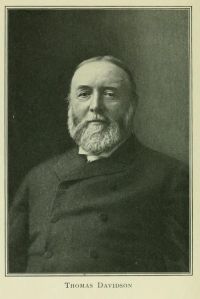 Thomas Davidson,
Chambers's Twentieth Century Dictionary 1908…
(1908)
Thomas Davidson,
Chambers's Twentieth Century Dictionary 1908…
(1908)
“ Quar′termaster-gen′eral, in the British army, a staff-officer of high rank (major-general or colonel) who deals with all questions of transport, marches, quarters, fuel, clothing, &c.; Quar′tern, the fourth part of a peck, a stone, or a pint: the quarter of a pound; Quar′tern-loaf, a loaf weighing, generally, four pounds; Quarteroon′ (see Quadroon) ; Quar′ter-plate, in photography, a size of plate measuring 31⁄4 by 41⁄4 inches: a picture of this size; Quar′ter-round, a moulding having an outline approximating to a quadrant, an ovolo: any tool adapted for making such ”
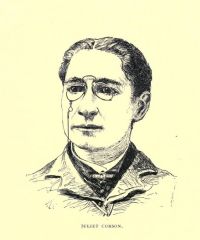 Juliet Corson,
A Course of Lectures on the Principles of Domestic Economy and Cookery
Juliet Corson,
A Course of Lectures on the Principles of Domestic Economy and Cookery
“ The meat of the fore quarter is sweeter, and quite as nutritious as the meat of the hind quarter, and the fore quarter is always cheaper. So that, you see, on the score of flavor and economy, the fore quarter is more desirable for use than the hind quarter. ”
Emanuel Swedenborg, Divine Love and Wisdom (1915)
“ The quarters in the spiritual world shall now be spoken of. There are quarters there in like manner as in the natural world, but like that world itself, they are spiritual; while the quarters in the natural world, like that world itself, are natural; the difference between them therefore is so great that they have nothing in common. In each world there are four quarters, which are called east, west, south, and north. In the natural world, these four quarters are constant, determined by the sun on the meridian ”
Meyer D. Rothschild, A Hand-book of Precious Stones
“ Quartz crystallizes in the rhombohedral system, and many varieties are found massive and compact. The cleavage is indistinct but can sometimes be found by plunging a heated crystal into cold water. The hardness of quartz is 7; specific gravity 2.5 to 2.8, the purest kinds being 2.65; the lustre is vitreous to resinous, and fracture conchoidal.Quartz is tough, brittle, and feels cold; it becomes positively electric by rubbing, shows phosphorescence in the dark, and gives sparks if struck with another piece of quartz or with steel. ”
Various, Birds and All Nature, Vol. 6, No…
“ Quartz.—The most abundant of all minerals, existing as a constituent of many rocks, composing of itself the rock known as quartzite or quartz rock and some of the sandstones and pure sand, forming the chief portion of most mineral veins. ”
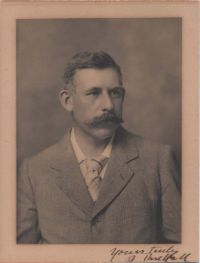 Richard Threlfall,
On Laboratory Arts
Richard Threlfall,
On Laboratory Arts
“ A rod of quartz, say three inches long, one-sixteenth of an inch in diameter, and free from bubbles for half an inch of its length, even when examined by a strong lens, is suitable for drawing into threads. ”
William J. Miller, Geology: The Science of the Earth's Crust
“ Quartz is exceedingly abundant in all the great groups of rocks. It constitutes the main bulk of sandstones, is common in shales, and occurs in certain other strata. In many igneous rocks, like granite, it is a very prominent constituent. ”
 William Herbert Hobbs,
Earth Features and Their Meaning
William Herbert Hobbs,
Earth Features and Their Meaning
“ Quartz.—Oxide of silicon or silica, SiO2. Both an important vein mineral associated with the ores and a rock maker. In the former case particularly, often in crystals of notably simple forms (Fig. 487, 7) . Few minerals which are not gems are so hard. Remarkable freedom from cleavage so that the mineral breaks much like window glass—conchoidal fracture. Wide range in both transparency and color. Transparent and colorless crystalline variety (rock crystal) , brown translucent (smoky quartz) , turbid white (milky quartz) , and various colored varieties (carnelian, jasper, jet, etc.) ”
 Henry Chichester Hart,
Climbing in The British Isles, Vol…
Henry Chichester Hart,
Climbing in The British Isles, Vol…
“ Highly crystalline quartz veins render the rock surfaces even rougher than they would otherwise be, and in a few places the face of the rock is covered with egg-like projections, each containing a core of quartz. ”
Various, Popular Science Monthly (1901)
“ When touched with the flame, quartz splinters so badly as to be almost unworkable, though in time past a few have used it for small objects, and some ten years ago Professor Boys introduced the use of quartz fibres, which have found several important applications in the physical laboratory. ”
 Robert Vaughn,
Then and Now; or, Thirty-Six Years in the Rockies
Robert Vaughn,
Then and Now; or, Thirty-Six Years in the Rockies
“ Quartz is softer than granite, in which formation gold is invariably found, and, having been washed down the mountains and gulches, and, coming in contact with harder stones, the quartz is worn off until nothing but the gold is left ”
William O. Crosby, Common Minerals and Rocks
“ By examining a typical sand with a lens, and noting the glassy appearance of the grains, and then testing their hardness on a piece of glass, which they will scratch as easily as quartz, the pupil is readily convinced that each grain is simply an angular fragment of quartz. ”
Various, Scientific American Supplement…
“ I have, therefore, a duplicate apparatus with a quartz fiber, and you will see that the spot of light comes back to its true place on the screen after the mirror has been twisted round twice.I shall now for a moment draw your attention to that peculiar property of melted quartz that makes threads such as I have been describing a possibility. A liquid cylinder, as Plateau has so beautifully shown, is an unstable form. It can no more exist than can a pencil stand on its point. ”
Various, The Journal of Geology, May-June 1893
“ When studied in thin section, the massive beds of quartzite show more decided effects of dynamic action than at Devil’s Lake. However, the major portions of the grains of quartz have distinct cores which are often beautifully enlarged. ”
Thomas Davidson,
Chambers's Twentieth Century Dictionary 1908…
(1908)
“ The western churches kept it on the Sunday after the 14th day—the usage approved by the Council of Nice (325 A.D.) . [L. quartodecimus, fourteenth, quatuor, four, decem, ten.] Quartz, kworts, n. the common form of native silica, or the oxide of silicon, occurring both in crystals and massive, scratching glass easily, and becoming positively electrical by friction, colourless when pure—Rock-crystal, Common, and Compact Quartz.—ns. Quartz′-crush′er, -mill, a machine, mill, where auriferous quartz is reduced to powder, and the gold separated by amalgamation.—adj. ”
J. C. F. Johnson, Getting Gold: A Gold-Mining Handbook for Practical Men
“ Quartz, dense and milky, also in quartz of nearly every colour and appearance, saccharoidal, crystalline, nay, even in clear glass-like six-sided prismatic crystals, and associated with silver, copper, lead, arsenic, iron as sulphide, oxide, carbonate, and tungstate, antimony, bismuth, nickel, zinc, lead, and other metals in one form or another; in slate, quartzite, mica schist, granite, diorite, porphyry, felsite, calcite, dolomite, common carbonate of iron, siliceous sinter from a hot spring, as at Mount Morgan; as alluvial gold in drifts formed of almost all these materials ”
Various, Scientific American Supplement…
“ Since figures as large as a million cannot be realized properly, it may be worth while to give an illustration of what is meant by a fiber one-millionth of an inch in diameter.A piece of quartz an inch long and an inch in diameter would, if drawn out to this degree of fineness, be sufficient to go all the way round the world 658 times; or a grain of sand just visible—that is, one-hundredth of an inch long and one hundredth of an inch in diameter—would make one thousand miles of such thread. ”
Harold W. Fairbanks, The Western United States: A Geographical Reader
“ FIG. 104.—MINING THE GRAVEL OF AN OLD RIVER-BED Not all quartz veins carry gold. There are many in which not a single speck of the precious metal can be found. Gold usually prefers the society of quartz to that of other substances, for minerals, like people, seem to have their likes and dislikes. ”
Richard Nathaniel Rubidge, ../../ (1862)
“ I suppose no one in the present day would call quartzite an igneous or upheaving rock. Yet it is certainly my impression that if any rock in this country influences the change of dip in either rocks, quartzite does. Mr. Niven, the gentleman from whom I have the last fact, and who has done so much in throwing new light on the geology of this province, tells me that the quartzite, a hundred and eighty yards from the slate, dips 45°. ”
E. W. Hildgard, Soils, their formation, properties… (1906)
“ Among the prominent soil minerals, quartz is almost always recognizable by its glassy luster and the irregular fracture—absence of definite planes or facets of cleavage, causing the grains to be abraded or rounded nearly alike in all directions. ”
Various, Popular Science Monthly (1896)
“ Here, as before, Nature is against you. The quadrant results from space-relations which are unchangeable and necessarily impose, in this as in other cases, division into quarters. Nature's lead has been followed by mankind in various ways. Beyond the quarter of a year we have the moon's four quarters. The quarter of an hour is a familiar division, and also the quarter of a mile. Though the yard is divided into feet and inches, yet in every draper's shop yards are measured out in halves, quarters, eighths, and sixteenths or nails. ”
 A. E. H. Tutton,
Crystals
(1911)
A. E. H. Tutton,
Crystals
(1911)
“ Almost every crystal of quartz found in such granite rocks displays thousands of small cavities filled with liquid and a bubble, although it is very rare to find one with so good a cube of salt and having the configuration of a quartz crystal for the shape of the cavity. ”
Ernest Glanville, The Golden Rock
“ If you’ll believe me, I never thought of retrieving the gold, a work of uncommon difficulty, since we cannot possibly coax the metal from its matrix and will have to load ourselves with a worthless weight of quartz. If the rock is as rich as the specimen implies, we would have to carry away half of quartz, giving twenty-five pounds of gold to each, or only 1,500 pounds. ”
Various, The Mirror of Literature, Amusement…
“ Small crystals of quartz, tinged with iron, are found in Spain, and have been termed hyacinths of Compostella. Flint, chalcedony, carnelian, onyx, sardonyx, and bloodstone, or heliotrope, and the numerous varieties of agates, are principally composed of quartz, with various tinging materials.Why is opal among the most beautiful productions of the mineral world? ”
 Henry Rowe Schoolcraft,
Summary Narrative of an Exploratory Expedition to the Sources of the Mississippi River…
Henry Rowe Schoolcraft,
Summary Narrative of an Exploratory Expedition to the Sources of the Mississippi River…
“ Some conditions of the reticulated filaments are covered with minute crystals of cal. spar; others of minutely crystallized quartz. There appear, at other localities, in low positions, layers of quartz in the condition of a coarse bluish, flinty, striped agate. The entire stratum appears to be a reproduced mass, which is plainly denoted, if I mistake not, by some imbedded masses of an elder lime-rock. The whole stratum is too shelly and fissured to be of value for economical purposes. ”
John MacCulloch, Supplementary Observations on Quartz Rock (1817)
“ The most crystallized and pure specimens of quartz rock afford this variety, and examples of it are to be found every where among the more compact beds of that rock. We may therefore conclude that the avanturine, so much esteemed and long so ill understood, is a variety of quartz rock ”
Henley's Twentieth Century Formulas…
“ One cubic foot of solid quartz or limestone, entirely free from voids, would weigh 165 pounds, and the amount by which a cubic foot of any loose material falls short of this weight represents the proportion of voids contained in it. ”
Rosa J. Key-Schwartz, Ph.D., NIOSH/DART; Paul A. Baron, Ph.D., NIOSH/DART; David L. Bartley, Ph.D., NIOSH/DART; Faye L. Rice, NIOSH/EID, and Paul C. Schlecht, NIOSH/DART, Chapter R (1994)
“ PHYSICAL PROPERTIES OF QUARTZ, CRISTOBALITE AND TRIDYMITE. In nature, quartz is the crystalline form most commonly encountered and is so abundant that the term quartz is often used in place of the general term crystalline silica [6, 7] . Quartz is abundant in most rocks and soils and is also present in sand, mortar, concrete, fluxes, abrasives, construction aggregate, porcelain, paints and brick [8] . ”
A. E. H. Tutton,
Crystals
(1911)
“ Water crystallises like quartz, in the trigonal system, its normal forms being the hexagonal prism and the rhombohedron. A slab of lake ice is generally a huge crystal plate perpendicular to the trigonal axis, or in the case of disturbed growth an interlacing mass of such crystals, all perpendicular to the optic axis, the axis of the hexagonal prism and of trigonal symmetry. ”
Leonard James Spencer, 1911 Encyclopædia Britannica (1911)
“ The material is, however, usually very impure, the crystals enclosing sometimes as much as 30 or 40% of quartz and other minerals as well as carbonaceous matter. Crystals are orthorhombic and have the form of six-sided prisms. Interpenetrating cruciform twinned crystals are very common and characteristic ”
Various, American Journal of Science, Vol…
“ Sometimes the mineral is imbedded in limestone, in the form of nodules, thus indicating their original connexion with it. [225] The varieties, so far as I have observed, are quartz, hornstone, flint, jasper, and semi-opal; and several, which to me are non-descripts. Quartz is the most abundant. It is found of different colours; compact, and porous or cellular; of every size; simple and associated with other silicious stones; massive and crystallized. In Augusta and Rockbridge counties in Virginia, beautiful crystals of quartz, of a singular form, are found. ”
 John Ruskin,
The Ethics of the Dust — Lecture 6
(1875)
John Ruskin,
The Ethics of the Dust — Lecture 6
(1875)
“ Here is nobly born quartz living with a green mineral, called epidote; and they are immense friends. Now, you see, a comparatively large and strong quartz-crystal, and a very weak and slender little one of epidote, have begun to grow, close by each other, and sloping unluckily towards each other, so that at last they meet. They cannot go on growing together; the quartz crystal is five times as thick, and more than twenty times as strong [Footnote: Quartz is not much harder than epidote; the strength is only supposed to be in some proportion to the squares of the diameters.] ”
 Charles Sturt,
Two expeditions into the interior of Southern Australia…
Charles Sturt,
Two expeditions into the interior of Southern Australia…
“ Quartz Rock varieties--Slaty Quartz varieties.--Composition of the first elevations to the Westward of the marshes of the Macquarie, called New Year's Range, a group of five hills. The loftiest about 200 feet in elevation; distant about 80 miles to the N.W. of Mount Harris. ”
Joseph Leidy, Popular Science Monthly (1880)
“ Though quartz is the most abundant mineral substance of the land in which we live, yet perhaps not one in a hundred of an educated community knows a quartz-pebble from any other. To the writer the sciences, including natural history, have appeared to be of the utmost importance to the welfare and happiness of mankind, and no other branches of knowledge can equal them in these relations. ”

