Resistor

Definition and stakes

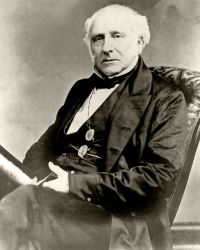
Portrait of A. Frederick Collins A. Frederick Collins,  The Radio Amateur's Hand Book

“ RESISTOR.--A fixed or variable resistance unit or a group of such units. Variable resistors are also called resistance boxes and more often rheostats.
RESONANCE.-- (1) Simple resonance of sound is its increase set up by one body by the sympathetic vibration of a second body. (2) By extension the increase in the amplitude of electric oscillations when the circuit in which they surge has a natural period that is the same, or nearly the same, as the period of the first oscillation circuit.
RHEOSTAT.--A variable resistance unit. See Resistor.
”

Source: Gutenberg

N. Hawkins,  Hawkins Electrical Guide v. 07…

“ The resistance of the stick resistor limits the flow so that an excessive power current cannot pass through the arrester. The tendency for a destructive power arc to follow the discharge arc is thus counteracted. The composition resistors and the gap cylinders are mounted in pairs on a porcelain base, and complete units are arranged within weather proof wooden boxes as indicated. For two pole arresters, one unit is mounted on the back of the box. For three pole and four pole arresters, two units are used; one is secured on each side of the box.
[Pg 1690]
”
Source: Gutenberg

Portrait of John Ambrose Fleming John Ambrose Fleming,  1911 Encyclopædia Britannica, Volume 27… (1911)

“ The choice is decided by the nature of the quantities themselves. Since resistance is a permanent quality of a substance, it is possible to select a certain piece of wire or tube full of mercury, and declare that its resistance shall be the unit of resistance, and if the substance is permanent we shall possess an unalterable standard or unit of resistance. For these reasons the practical unit of resistance, now called the international ohm, has been selected as one of the above three electrical units. ”
Source: Wikisource

Get perspective with Kwize: daily news enlightened by great literature