Rib cage

Definition and stakes

Édouard Cuyer,  Artistic Anatomy of Animals

“ The curvature of the ribs is less pronounced in quadrupeds than in the human being, but this is not equal in all animals. The ribs of the bear are more curved than those of the dog; the latter has ribs more curved than those of the horse.
Each rib, at its vertebral extremity, presents, from within outwards, a wedge-shaped head for articulation with two dorsal vertebræ, a neck, and a tuberosity. External to the tubercle are found some rough impressions, for muscular attachments, which correspond to the angle of the human rib.
”
Source: Gutenberg

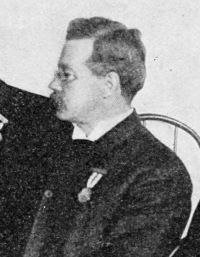
Portrait of William Berryman Scott William Berryman Scott,  A history of land mammals in the Western Hemisphere (1913)

“ The sternal ribs are better developed than in any other mammals, and in the anteaters and †ground-sloths they articulate with the breast-bone by regular synovial joints, and each rib has head and tubercle like a vertebral rib.
In the limbs and feet there is great variety, according to the manner of their employment. The shoulder-blade has a very long acromion and very large coracoid, which long remains separate from the scapula; collar-bones are very generally present, though often in much reduced condition.
”
Source: Gutenberg

William D. Granger,  How to Care for the Insane: A Manual for Nurses

“ By rough handling it is very easy to push a fragment of bone through the skin, thus making a simple fracture a compound one. When a rib is fractured a sharp end may pierce the skin or the lung; either complication is serious. If the lung is injured the sputa will be bloody, and the appearance of such a condition should be at once reported. Sometimes patients are violent after the injury and need to be firmly held, and sometimes they have to be carried to the ward from the outside, or placed upon a bed. Always carry the fractured limb as well as the patient. ”
Source: Gutenberg

Get perspective with Kwize: daily news enlightened by great literature