Rudimentary organ

Definition and stakes

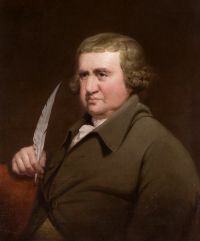
Portrait of Charles Darwin Charles Darwin,  Life and Letters of Charles Darwin…

“ On the theory of Natural Selection there is a wide distinction between Rudimentary Organs and what you call germs of organs, and what I call in my bigger book "nascent" organs. An organ should not be called rudimentary unless it be useless—as teeth which never cut through the gums—the papillae, representing the pistil in male flowers, wing of Apteryx, or better, the little wings under soldered elytra. ”

Source: Gutenberg

William A. Locy,  Biology and Its Makers

“ Rudimentary Organs.—But, strangely enough, the course of development in any higher organism is not straightforward, but devious. Instead of organs being produced in the most direct manner, unexpected by-paths are followed, as when all higher animals acquire gill-clefts and many other rudi [Pg 196] mentary organs not adapted to their condition of life. Most of the rudimentary organs are transitory, and bear testimony, as hereditary survivals, to the line of ancestry. ”
Source: Gutenberg

Portrait of Charles Darwin Charles Darwin,  On The Origin of Species (1859)

“ I have now given the leading facts with respect to rudimentary organs. In reflecting on them, every one must be struck with astonishment; for the same reasoning power which tells us that most parts and organs are exquisitely adapted for certain purposes, tells us with equal plainness that these rudimentary or atrophied organs are imperfect and useless. In works on natural history, rudimentary organs are generally said to have been created "for the sake of symmetry," or in order "to complete the scheme of nature." ”
Source: Gutenberg

Get perspective with Kwize: daily news enlightened by great literature