“ Consider the influence you may have upon the other institutions of our country, by attaching yourself to some one under the existing organization. If you take an [Pg 231] academy or a private school, constituted and organized like other similar institutions, success in your own, will give you influence over others. A successful teacher of an academy, raises the standard of academic instruction. A college professor, if he brings extraordinary talents to bear upon the regular duties of that office, throws light, universally, upon the whole science of college discipline and instruction. ”
School (academic)
Definition and stakes
The theme of “school (academic)” has been addressed by authors such as Charles Hubbard Judd, Thomas E. Sanders, Adoniram Judson Ladd, M. Alderton Pink and William Torrey Harris. It is often associated with terms like education, college, university, teacher and higher.
Quotes about “school (academic)”
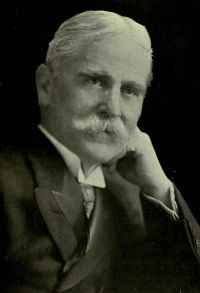 Henry Van Dyke,
The Spirit of America
“ But, generally speaking, you may understand that a college is an institution which gives a four years’ course in liberal arts and sciences, for which four years of academic preparation are required: a university adds to this, graduate courses, and one or more professional schools of law, medicine, engineering, divinity, or pedagogy; a technological school is one in which the higher branches of the applied arts and sciences are the chief subjects of study and in which only scientific degrees are conferred. ”
Various, Popular Science Monthly (1886)
“ Some of these opponents have gone so far as to assert that the customary college degree, Bachelor of Arts, stands as definitely for Latin and Greek as the degree M.D. stands for the study of medicine. Now, inasmuch as the college is the school in which, according to the best authorities, our young people are expected to gain a higher degree of education than the lower schools, academies, and high-schools can give them, the question. What constitutes the basis of higher education? ”
 James Hutchins Baker,
Education and life
(1900)
“ We believe that a critical examination of rational courses of study in the schools would show that little of the work could well be omitted; that nearly all contributes toward the end of a well-rounded education, indeed is necessary to that end; and that the training of faculty is only well begun at the end of the high-school course. Even the study of the classics, besides other incidental advantages, trains the critical powers, refines the taste, and is in an important sense a subjective study. ”
Charles S. Bryant, Popular Science Monthly (1881)
“ When the higher grades are reached, the pupils take more and more optional studies, and less and less required. And, as the curriculum widens toward the end of the course, the linguistic and scientific studies yield more and more to the inclination of the parent or the pupil, until the post-graduates of the high-school, as well as of the university, severally fall into chosen specialties, as their tastes and preparation may dictate. ”
Edmond Holmes, What Is and What Might Be
“ What, then, are the faculties which education is supposed to train? In my attempt to answer this question I will confine myself to the elementary school,—the only school which I can pretend to know well. A glance at the time-table of an ordinary elementary school might suggest to us that there were two chief groups of faculties to be trained—those which perceive and those which express, those which take in and those which give out. When such subjects as History, Geography, or Science are being taught, the child's perceptive faculties are being trained. ”
M. Alderton Pink, Procrustes; or, the future of English education (1927)
“ What are the aims? At present the secondary school’s main function is to give sufficient training in the humanities, in mathematics and science, to enable pupils to pass the entrance examination of a university. (We may for the purpose of the present [23] argument disregard the social activities of the school.) In other words, its business is to produce scholars of the intellectual type fitted for university training. It is true that art, handicraft, domestic science, and physical exercises appear in the curriculum but they occupy more or less subordinate places. ”
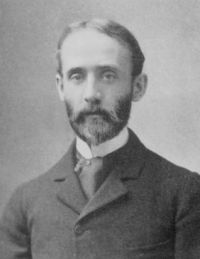 Varnum Lansing Collins,
1922 Encyclopædia Britannica
(1922)
“ The elective principle was broadened so as to bridge the gaps between preparatory school and college, and underclass and upperclass years, giving the student in his underclass years a broad general training in subjects deemed fundamental to real education, and in his upperclass years requiring him to follow continuous work in one of three divisions of studies, the literary-philosophical, the historical-economic, or the mathematical-scientific. ”
 Angela Brazil,
The Girls of St. Cyprian's: A Tale of School Life
“ Those who looked forward to a University degree, or any career in which public examinations must play an important part, were placed on the "Collegiate" side, and trained accordingly in the necessary classics, mathematics and physics, which would fit them for matriculation, or as candidates for certain scholarships. ”
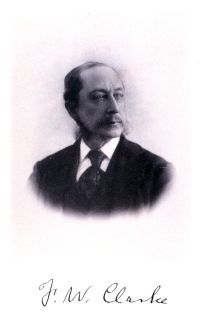 Frank Wigglesworth Clarke,
Popular Science Monthly
(1875)
“ PROFESSOR OF CHEMISTRY AND PHYSICS, UNIVERSITY OF CINCINNATI. EDUCATORS, to-day, are divided into two schools, especially with regard to colleges and universities. The older of these schools insists very vigorously upon the importance of thorough instruction in the so-called "dead languages," and makes all else subordinate to them. The new school, on the other hand, the school which seems to be steadily gaining ground, upholds the claims of the sciences, and gives to them the places of honor in every general course of study. ”
George Emory Fellows, The American Journal of Sociology (1896)
“ Can a student in the university, with only the history training he has received in the earlier school, enter with proper comprehension upon the study of the Middle Ages, or the French Revolution, or the Reformation? Yet these are examples of the courses offered in the best universities by the best known and the best prepared teachers. People often accomplish their objects without using the best methods. ”
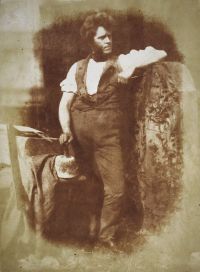 Hugh Miller,
Leading Articles on Various Subjects
“ We have seen placed side by side, in the same burgh town, an English school, in which what are deemed the branches suitable for mechanics and their children, such as reading, writing, and arithmetic, were energetically taught, and a grammar school in which a university-bred schoolmaster laboured, with really not much energy, especially in those lower departments in which his rival excelled, but who was fitted to prepare his pupils for college, and not devoid of the classical enthusiasm. ”
Frank Wigglesworth Clarke,
Popular Science Monthly
(1875)
“ Such an education is never completed; it grows throughout a lifetime; it is self-propagating; its most valuable features are acquired outside of schools and colleges. All that a college can do is to help lay its foundations, by training the mental power for subsequent use. Which course of studies best carries out this purpose? The argument has been summed up by certain advocates of the new school in the following very condensed way: "Science deals with things, language with words. Words merely represent things. ”
Duke of John Douglas Sutherland Campbell Argyll, Memories of Canada and Scotland…
“ Where many are rather apt to suppose that sufficient is done by a school education for the practical and rougher life, which is the lot of many here, I am sure that all present value the higher training to be alone obtained in a university. ”
H. Fielding, The Passing of Empire
“ Now seeing this difference, how much education is there in school or college? In the classrooms there is none. All that is given in classes is instruction, which may be useful or detrimental inasmuch as it helps personality or not. ”
Thomas E. Sanders, Twenty Talks to Teachers (1908)
“ The high school course will prepare your boy for the deeper and broader training of the university.—If he is made of the right material he will get the university training for himself, or urge you to help him to secure it. If he does not go to the university the high school course will fit him to become a successful leader in business or lay the foundation for a professional course or career. ”
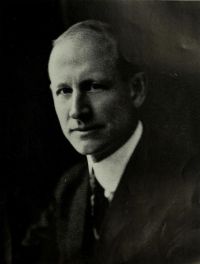 Frank Pierrepont Graves,
A student's history of education
“ In connection with higher education there are such new tendencies as university extension, correspondence courses, summer sessions, university interest in the practical problems of the people, the correlation of the first two years of college with the secondary school, more flexible entrance requirements, an increasing number of fields of professional work, and, above all, the professional training of teachers through Departments of Education, Teachers Colleges, and Schools of Education. ”
Various, Popular Science Monthly (1908)
“ But accepting our colleges and universities as they are, at the same time discarding the results of tradition and of half-hearted experiment, what should the high school do? By high school we mean the instruction in the public school for four years of school life from the age of 13 or 14 to that of 17 or 18, resting on the primary and grammar school on the one hand and presumably leading to the college on the other—in most cases the last of the years in which a student lives at home and goes to school. ”
Thomas E. Sanders, Twenty Talks to Teachers (1908)
“ Examine a course of study and you will find revealed much of the judgment and mental caliber of the teachers49 of the school. It is not uncommon to find high schools proper with university curricula. High-sounding names, often, are an attempt to hide the fact that it is an ordinary high school and many times very ordinary indeed. ”
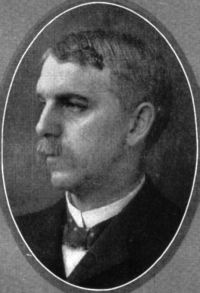 Frank M. McMurry,
How to Study and Teaching How to Study
“ Our better normal schools—which are the only kind that might be expected to grant degrees—give instruction in literature, history, geography, fine art, etc., the same as the degree-conferring colleges. To these subjects the normal school adds the history of education and the principles of education, which are presumably harmless so long as they are not applied, and they usually are not. There remain then the subjects that involve practice, such as special method courses, applied psychology and practice teaching ”
Civilization in the United States… (1922)
“ And now the undergraduate will emphasize study. But a sharp line must be drawn between study that looks forward merely to the A.B. degree as the end of schooling and the beginning of business, and study that is a part of professional training, that looks forward to some professional degree at Commencement or to matriculation in a graduate school. ”
John S. Hart, In the School-Room: Chapters in the Philosophy of Education
“ Were it possible to have a Normal School, not which should undertake to teach the entire encyclopædia of the sciences, but which, limiting itself to its one main function of developing the art and mystery of communicating knowledge, should turn out College Professors, and even Divinity, Law, and Medical Professors,—men who were really skilful teachers,—it would work a change in those venerable institutions as marked and decisive as that which it is now effecting in the common schools. ”
Ellwood Patterson Cubberley, The History of Education
“ Not being bound up with the colleges, as the earlier Latin grammar schools had largely been, the academies became primarily independent institutions, taking pupils who had completed the English education of the common school and giving them an advanced education in modern languages, the sciences, mathematics, history, and the more useful subjects of the time, with a view to "rounding out" their studies and preparing them for business life and the rising professions. ”
A. S. Draper, Report of the Committee of Fifteen
“ It is a widely prevalent doctrine, to which the customs of our best schools conform, that teachers of elementary schools should have a secondary or high school education, and that teachers of high schools should have a collegiate education. ”
“ If the scholars are led to understand that the school is to a great extent their institution, that they must assist to sustain its character, and that they share the honor of its excellence, if any honor is acquired, a feeling will prevail in the school which may be turned to a most useful account. ”
Charlotte M. Mason, An Essay Towards a Philosophy of Education…
“ One hears, for instance, of an adolescent school with some nine thousand pupils who come in batches of a few hundreds, each batch to learn one or other of a score or so of admirable crafts and accomplishments; but not one hour is spent in a three or four years’ course in this people’s university on any sort of humane knowledge, in any reading or thinking which should make the pupils better men and women and better citizens. ”
Popular Science Monthly (1881)
“ The college thus becomes in an important sense a school of moral self-culture, a discipline in manhood, and offers the best preparation that can be given for the duties and responsibilities of practical life. ”
Francis B. Pearson, The Vitalized School
“ It proclaims its possessor a student but not a teacher. Yet, in our practices, we proceed upon the assumption that teacher and student are synonymous. We hold examinations for teachers in our schools, but not for teachers in our colleges of education. His degree is the magic talisman that causes the doors to swing wide open for him. ”
Various, Popular Science Monthly (1910)
“ With the present modern differentiation into a classical and modern side, or their equivalents, the ordinary school subjects should be sufficient preparation for any university course if they are not mutually strangled in the pressure of an overcrowded curriculum. ”
Adoniram Judson Ladd, On the Firing Line in Education
“ The Arts student may, and often does, select courses that are not the most appropriate for high school teaching: for example, instead of a course in adolescence he may select one in child study which deals only with the child in the grades. Instead of a special methods course in the subjects he plans to teach in high school, he may select a course in methods in elementary subjects; and he may not take any course in secondary education nor have any practise teaching in the Model High School. ”
1911 Encyclopædia Britannica, Volume 16… (1911)
“ The high school, built in 1806, for many years a familiar object on the west margin of the Links, gave way to the academy, a handsome and commodious structure, to which are drafted senior pupils from the numerous board schools for free education in the higher branches. ”
Charles Hubbard Judd, Introduction to the scientific study of education
“ The growth of summer schools at universities and the frequent transfer of normal-school graduates to college and graduate courses show with clearness the desire of teachers to enjoy the advantages of all kinds of higher education. ”
M. Alderton Pink, Procrustes; or, the future of English education (1927)
“ The fact is that the ordinary secondary school is attempting—unsuccessfully, of course—to give the same treatment to pupils of various types who, owing to lack of sufficiently varied provision for higher education, now find themselves herded together. ”
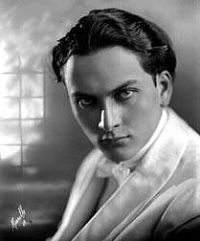 Manly P. Hall,
The Initiates of the Flame
“ Those who would go into the greater colleges and universities must first, day by day, and year by year, work through the common school of life, and present to their new teachers the diplomas they have won, upon which is written the name that none may read save those who have received it. ”
 H. G. Wells,
Mankind in the Making
“ Now let us first have it perfectly clear that this second stage in development lies no more completely within the idea of College than the former lay completely within the idea of School. In the general discussion of these things we are constantly faced by the parallel error to that we have tried to dissipate in regard to schools, the error that the Professor and his Lecture and (in the case of experimental sciences) his Laboratory make, or can make, the man, just precisely in the same way that the Schoolmaster or Schoolmistress is supposed to be omnipotent in the education of the boy or girl. ”
 Agnes Repplier,
In the dozy hours, and other papers
“ The notion is gradually gaining ground that common-school education is as good as college education; that extension lectures and summer classes are acceptable substitutes for continuous study and mental discipline; that reading translations of the classics is better, because easier, than reading the classics themselves ”
Charles H. Ham, Mind and Hand: Manual Training the Chief Factor in Education (1900)
“ MANUAL TRAINING THE CHIEF FACTOR IN EDUCATION. CHAPTER I. THE IDEAL SCHOOL. Its Situation. — Its Tall Chimney. — The Whir of Machinery and Sound of the Sledge-hammer. — The School that is to dignify Labor. — The Realization of the Dream of Bacon, Rousseau, Comenius, Pestalozzi, and Froebel. — The School that fitly represents the Age of Steel.The Ideal School is an institution which develops and trains to usefulness the moral, physical, and intellectual powers of man. It is what Comenius called Humanity’s workshop, and in America it is becoming the natural center of the Public School system. ”
Related terms
Authors who wrote about “school (academic)”
Charles Hubbard JuddThomas E. SandersAdoniram Judson LaddM. Alderton Pink William Torrey HarrisFrank Pierrepont GravesEllwood Patterson CubberleyCharles H. HamJohn L. Alexander
 Booker T. WashingtonJames Hutchins BakerVarious
 Jacob Abbott
 Simon NewcombA. S. Draper
 Henry AdamsCharlotte M. MasonFrank Wigglesworth ClarkeCharles S. BryantEdmond Holmes
William Torrey HarrisFrank Pierrepont GravesEllwood Patterson CubberleyCharles H. HamJohn L. AlexanderBooker T. WashingtonJames Hutchins BakerVariousJacob AbbottSimon NewcombA. S. DraperHenry AdamsCharlotte M. MasonFrank Wigglesworth ClarkeCharles S. BryantEdmond Holmes