Second law of thermodynamics

Definition and stakes

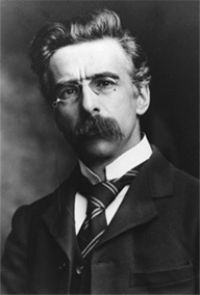
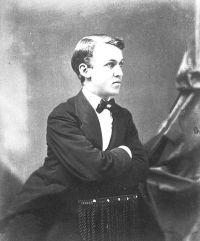
Portrait of Fielding Hudson Garrison Fielding Hudson Garrison Popular Science Monthly (1909)

By the second law (irreversible increase of entropy in natural processes) there is still greater probability that it tends to a final state of thermal equilibrium or death; and since the universe itself is so great, there is sufficient probability that other worlds than ours may deviate from thermal equilibrium. As a graphic exposition of this theory, which shows the vast scope of the second law of thermodynamics, a curve can be plotted with the variables H and the time as coordinates, to visualize what takes place in the universe.
Source: Wikisource

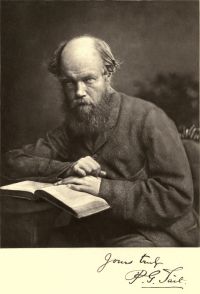
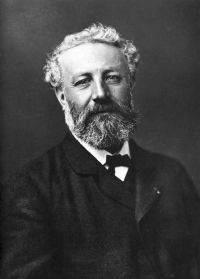
Portrait of John Joly John Joly The Birth-Time of the World and Other Scientific Essays

It follows, in fact, from the
second law of thermodynamics, that whenever work is derived from
heat, a certain quantity of heat falls in potential without doing
work or, in short, is dissipated. On the other hand, work may be
entirely converted into heat. The result is the heat-tendency of
the universe. Heat, being an undirected form of energy, seeks, as
it were, its own level, so that the result of this heat-tendency
is continual approach to uniformity of potential.
Source: Gutenberg

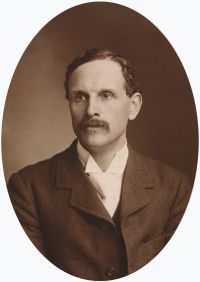
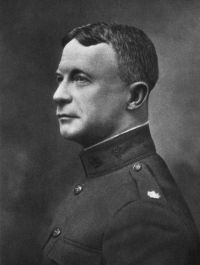
Portrait of U. G. Krishnamurti U. G. Krishnamurti Science and U.G.

The second law of thermodynamics states that everything tends to become more and more disorderly until the final and natural state of things is a completely random distribution of matter. Thus, any kind of order, even the arrangement of atoms in a molecule, is unnatural and happens only by chance, and it eventually encounters the reverse trend.
Source: Wikisource

Get perspective with Kwize: daily news enlightened by great literature