Seniority, defined as the condition of being older or holding a higher status due to extended experience, influences organizational, political, and social frameworks. From military ranks to workplace interactions, it determines authority and privilege. Leo Tolstoy critiqued its role in hierarchy, promoting a servant-like form of equality, while Herbert Giles examined respect for elders as a social obligation.
The Folk-Lore Society employed allegory to challenge the arbitrary nature of seniority, and Northcote and Trevelyan observed its prevalence over merit in civil service. Halleck weighed seniority against merit in military promotions, underscoring its dual function as both a stabilizing element and a possible obstacle to advancement. These viewpoints illustrate seniority as a complex principle, interwoven with power, tradition, and the balance between continuity and change.
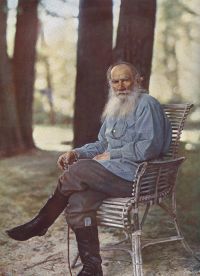 Leo Tolstoy,
The Gospel in Brief — The Gospel in Brief…
Leo Tolstoy,
The Gospel in Brief — The Gospel in Brief…