“ Later on it was: “The captain is well paid, master; but the ship is in his keeping, and he is never free from the burden. It is the owner who is better paid—the owner who sits ashore with many servants and turns his money over.” “True, but a schooner costs five thousand dollars—an old schooner at that,” I objected. “I should be an old man before I saved five thousand dollars.” “There be short ways for white men to make money,” he went on, pointing ashore at the cocoanut-fringed beach. ”
Ship money
Definition and stakes
Ship money was a medieval tax in England, imposed by monarchs without parliamentary consent, mainly to support naval endeavors. While its historical importance lies in its role as a catalyst for constitutional conflict—most notably during Charles I’s attempts to levy it during peacetime—authors such as Arthur Hamilton Clark and Rosalind Amelia Young examined maritime economics and the symbolic significance of ships within broader societal frameworks.
Their works, though not directly addressing the tax, highlight the lasting cultural and economic importance of ships as agents of commerce, authority, and financial interaction. The tax’s contested legacy ultimately emphasized the tension between royal authority and parliamentary supremacy, influencing England’s constitutional development.
Quotes about “ship money”
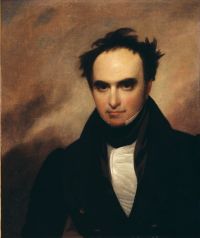
Daniel Webster,
Select Speeches of Daniel Webster…
“ Here, at once, it will be seen, he gets his provisions for half price, because prices do not always rise suddenly, as money depreciates. He delivers his freight in Europe, and gets paid for it in good money. The disordered currency of the country to which he belongs does not follow and afflict him abroad. He gets his freight in good money, places it in the hands of his owner's banker, who again draws at a premium for it. The ship-owner, then, makes money, when all others are suffering, because he can escape from the influence of the bad laws and bad currency of his own country. ”
Barlow Cumberland, A Century of Sail and Steam on the Niagara River
“ The insurance companies make their money, not on the ships' hulls, but on the cargoes which the ships carry. A single ship in one season will carry dozens of cargoes. We are the shuttles which carry backwards and forwards the cargo values on which the companies earn their rates. In fact, we help to earn their money for them. Where would be the cargoes without the ships? 'Gin Plimsoll had his way he'd wipe all the British ships off the seas, but we're no so bad as he wad paint us. ”
Carl Schurz,
The Development of our Foreign Commerce
(1891)
“ We all know how our merchant marine in the foreign trade has declined since the wooden ship had to make way for the ship built of iron. What is the cause of our having no mercantile fleet worth speaking of in the foreign trade under the American flag? Is it the unwillingness of American business men to put capital in ships? By no means. There is in fact a large amount of American money invested in ships aside from our coasting trade. ”
Arthur Hamilton Clark,
The Clipper Ship Era
(1911)
“ The primary reason for the existence of a merchant ship is, of course, her ability to pay her way and earn money for her owners. When a ship ceases to be able to do this, the sooner she is converted into a hulk or broken up, the better. So the true measure of a nation's merchant marine is its earning capacity, not merely the number or tonnage of its ships; and judged by this standard, the merchant marine of the United States was at this time far in advance of the merchant shipping of the whole British Empire. ”
J. Y. Brinton, The Law of the Sea
“ Such a bond carries usually a very high rate of interest, to cover the risk of loss of the ship as well as a liberal indemnity for other risks and for the use of the money, and will bind the ship only where the necessity for supplies and repairs, in order to the performance of a contemplated voyage, is a real necessity, and neither the master nor the owners have funds or credit available to meet the wants of the vessel. ”
Edward Stratemeyer,
Fighting in Cuban Waters
(1899)
“ It's the money got out of a captured ship when she's sold. You see, when a ship is captured she's taken to some port and turned over to a prize court, and if she doesn't turn out a Scotch prize she is knocked down under the hammer. ”
Ralph Delahaye Paine,
The ships and sailors of old Salem
(1912)
“ You will be careful not to break any acts of trade while you are out on the voyage, to lay the ship and cargo liable to seizure, [Pg 184] for my insurance will not make it good. Be very careful of the expense attending the voyage, and remember that a one dollar laid out while absent is two dollars out of the voyage. Pay particular attention to the quality of your goods, as your voyage very much depends on your attention to this. You are not to pay any moneys to the crew while absent from home unless in a case of real necessity, and then they must allow an advance for the money. ”
John Randolph Spears,
The Story of the American Merchant Marine
“ But because American manufacturers had little to ship to Brazil the American ship lost money on both passages. [317] Every business man understands the advantages of one who is well-established in any trade, over one who is just beginning, but one method by which established lines of ships hold their trade must have mention. The merchant who sends all his goods by the established line receives a rebate of 10 per cent on the amount of his freight bill, the rebate being calculated once in six months, say, and the payment being made six months later. ”
Morgan Robertson,
The Grain Ship
“ The profits of a sailors' boarding-house depend not upon the cash paid in by men with money, who choose their own ship and come and go as they please, but upon the advance or allotment of pay which the law allows to deep-water seamen in order that they may purchase an outfit of clothing before sailing. To get this allotment, Murphy and others of his kind would take in and feed any penniless sailor long enough to run up an inflated bill for board, money lent, and clothing, then find him a ship and walk him to the shipping-office, more or less drugged or drunk. ”
Various, Watson's Jeffersonian Magazine…
“ The difference in price between the cheap foreign-built ship and the dear home-built ship IS TO BE MADE UP OUT OF YOUR MONEY.At your expense, the Trust will therefore be ABLE TO COMPETE for the ocean business.At your expense, the Trusts themselves will scoop the Carriers’ profit upon the transportation of the Trust-made goods which ARE SOLD ABROAD CHEAPER THAN THEY ARE SOLD AT HOME.You catch it all around, don’t you, son? ”
“ Then look at the trouble they get in with their money! They come ashore from a long trip, smelling of it a’most, and they go from port to port like a lord. Everybody has got their eye on that money—everybody except the sailorman, that is—and afore he knows wot’s ’appened, and who ’as got it, he’s looking for a ship agin. ”
John McLean, Nathan v. Louisiana — Opinion of the Court
“ That money and exchange brokers are a convenient machine in conducting an extensive commercial business may be true. But they are nothing more. A ship or a steamboat is not only a convenient, but an essential, means of importing foreign merchandise from abroad. ”
Thomas Wallace Knox,
How to Travel
“ It is always well to provide yourself with the money of the country you are going to, or with that of the nationality of the steamer. On an English ship, take ten pounds or so of English money, to cover all your fees and extras, and to have a supply on landing until a visit can be made to the banker. ”
Robert Kerr, A General History and Collection of Voyages and Travels…
“ Taking a favourable opportunity, I resolved to try what money might do, which often makes wise men blind, that so I might procure my loading by means of large bribes. I offered to give a thousand pounds, so that I might be sure of my loading, and besides to give the chain I wore about my neck, to any one who could procure me this, and offered to give a higher price than they paid for the spice. Having set this matter afloat, and knowing that my ship rode in a dangerous place, I told the governor that, now he was satisfied I was not a man of war, I would bring my ship into their roads. ”
“ It would seem that the small share of prize which might possibly be received by a sailor in a modern ship would be a negligible factor in increasing naval efficiency. Rather it would be a deterrent as it would attract vessels into commercial war instead of into the more effective conflicts with the enemy's armed vessels. With the abolition of privateering it would seem that the value of prize money as a means of increasing the efficiency of the navy departed. ”
John Bates Clark,
Essentials of Economic Theory
“ In the case of the ship the accurate test is made, not by taking stores, etc., bodily out of it and putting them into other ships, but by letting the stores first earn what they can where they are, converting the earnings into money, and, when the stores are completely used up, spending the money to procure marginal additions to the outfit provided for the other ships. ”
Peter B. Kyne,
Cappy Ricks; Or, the Subjugation of Matt Peasley
“ When a fellow freights one cargo to Panama and another back, and it doesn't cost him a blamed cent to stow the first cargo and cheap Jamaica nigger labor to stow the second, and the cost of operating the ship for the round trip is absolutely nil—I tell you, sir, there's money in it. ”
James Russell Soley, The Boys of 1812 and Other Naval Heroes
“ The merchants in the different cities raised large sums of money to build ships by subscription, to be repaid later by the Government, and everywhere the ship-yards were busy getting ready the new fleet. ”
George Pugh, At the back of the world (1913)
“ Several vessels had got away full up with passengers, whom the shipowners charged thirty pounds passage money per man, and the same for each horse, the passengers finding their own provender and the ship finding fresh water. ”
Arthur Hamilton Clark,
The Clipper Ship Era
(1911)
“ Ship-owners were content to spend large sums of money, not only upon refined decoration, which was but a small portion of the expense, but also in carefully selected woods, such as India teak and Spanish mahogany for deck fittings, and in the finest shipwright's and joiner's work about the decks, which were marvels of neatness and finish. ”
Samuel Johnson,
The Works of Samuel Johnson, LL.D. Volume 10
“ If the merchants are restrained from allowing men their wages beyond a certain sum, they will make contracts for the voyage, of which the time may very easily be computed, they may offer a reward for expedition and fidelity, they may pay a large sum by way of advance, they may allow the sailors part of the profits, or may offer money by a third hand. To fix the price of any commodity, of which the quantity and the use may vary their proportions, is the most excessive degree of ignorance. ”
William Henry Giles Kingston,
Foxholme Hall, and Other Tales
“ If the weather were fine we used to anchor close in shore, always keeping a bright look out in case of treachery. As soon as it was dark, the merchant”, or their agents, would come off in their boats, and take the goods on shore, and pay us good prices in hard dollars. So much for restrictive duties. Scarcely a ship entered at the custom-house at any of those ports, and the Government got no revenue, while, on account of the difficulties and risks, the people had to pay just as much as they would have done for the goods had moderate dues been levied, and the trade been regular and above board. ”
“ So extended were his powers that he could take the steamer into a port, sell her cargo, sell the vessel herself, discharge her crew, and disappear for ever. It is a sad pill for us sentimentalists that those who live by and on the sea have less sentiment than any others. These masters are wholly intent on the things of which money is the exchange. ”
Ralph Delahaye Paine,
The Praying Skipper, and Other Stories
“ Is not the old vessel safer than the banks, which, as they say in New York, bust higher as a kite every little while? Perhaps they give me a piece of paper worth ten thousand dollars in Antwerp. When I dock in New York, perhaps the bank has gebust while I am in mid-ocean, then my paper is worth nothing; the money is a total loss. In the Wasdale, in my room, in my safe, it is mine, and I have never lost a life, much less ten thousand good dollars. You do not worry when I go to sea. Am I not worth as much as our stocking full of gold? Answer me that, my Flora. ”
Sir William Bower Forwood, Reminiscences of a Liverpool Shipowner…
“ Advances of money by the Government at a low rate of interest would no doubt be an encouragement—and those shipowners who can afford to be bold and accept the position will probably be rewarded; but to go on building ships at the very high prices may be beyond the prudent reach of the average private shipowner. ”
A Compilation of the Messages and Papers of the Presidents…
“ Building ships and navigating them utilizes vast capital at home; it employs thousands of workmen in their construction and manning; it creates a home market for the products of the farm and the shop; it diminishes the balance of trade against us precisely to the extent of freights and passage money paid to American vessels, and gives us a supremacy upon the seas of inestimable value in case of foreign war. Our Navy at the commencement of the late war consisted of less than 100 vessels, of about 150,000 tons and a force of about 8,000 men. ”
Edward Money, The Truth About America
“ When the bell rings for dinner on board ship or at an hotel, there is a strange scene. As the time approaches, so eager is the expectation, conversation lulls. Some, anxious to get a good start, congregate near the companion ladder or the door. Tingle, tingle, at last goes the bell; every one jumps up, and away they go to the [Pg 126] dining-room pell-mell, as men crush in for the best seats in the pit of a theatre. Seated, they devour their food as if eating against time, and the stranger who cares not to be left a course or two behind, has to look sharp too. ”
Various, Blackwood's Edinburgh Magazine…
“ Taking the average passage-money of each passenger in these vessels at £6, the conveying of emigrants yields a revenue of upwards of £1,000,000 sterling to the shipping which belongs to or frequents this port, independent of the great amount of money which the passage of such an immense multitude of persons through the town must cause to be spent in it. ”
Willis J. Abbot,
American Merchant Ships and Sailors
(1902)
“ As I write, the actual head of the greatest shipping concern the world has ever known, is a Wall Street banker, whose knowledge of the sea was gained from the deck of a private steam yacht or the cabin de luxe of a fast liner, and who has applied to the shipping business only the same methods of stock manipulating that made him the greatest railroad director in the world before he thought to control the ocean as well. With steam, the sailor has become a mere deckhand; the captain a man of business and a disciplinarian, who may not know the names of the ropes on a real ship ”
Élisée Reclus,
The Earth and its inhabitants, Volume 1…
“ None can compete with them as regards low freight, for every sailor has an interest in the cargo, and all of them are anxious to increase the profits. One may have furnished the wood, another the rigging, a third a portion of the cargo, whilst their fellow-citizens have advanced money for the purchase of merchandise, without requiring any bond except their word of honour. ”
Various, Graham's Magazine, Vol. XL, No…
“ Admitting the profit of a merchant ship to be four thousand dollars a year, which is a large allowance, it will take the earnings of one hundred ships to build and employ for one year a single sloop of War—one hundred and fifty ships to build and employ a frigate, and nearly three hundred ships to build and employ a ship of the line. ”
The Diplomatic Correspondence of the American Revolution…
“ The greatest encouragement is given to seamen, which ought to be made known throughout Europe. Their pay in our navy is eight dollars per month, with the best chance for prize money, that men ever had, and liberty of discharges after every cruise if they choose it. In the merchant service they now get from thirty to forty dollars per month; and this leads me to the state of our commerce. ”
Frank Thomas Bullen, The Men of the Merchant Service
“ Then, if he be a regular tradesman, he is in his glory; but if a promoted seaman, he will usually be just a terrified unit of the crew, badgered by the master and flouted by the men. And the ship herself suffers accordingly. It is false economy, saving at the most but a few shillings a month, and should never be indulged in. ”
J. Stephen Jeans, Waterways and Water Transport in Different Countries
“ At the time that the great work was commenced, and for many years afterwards, the revenue from shipping dues was quite insufficient to enable any substantial progress to be made, and the trade grew so rapidly that it became imperative to either borrow money in order to carry out the required works, or allow the shipping to seek other ports, where better facilities were provided. ”
Frederick Whymper, The Sea: Its Stirring Story of Adventure…
“ The quality of provisions depends entirely upon the liberality of the captain, who not unfrequently has a share in the ship, and whose interest is consequently concerned in keeping down all expenses; the comfort of the men seems to be made subservient to pecuniary advantages.”And now—for a change—to good owners. There are many, and the present writer believes fully that the average ship-owner not merely wishes to preserve his ship, but all on board—crew, passengers, and cargo. The proprietor of a grand vessel feels, as he should, that her loss is a very great deal more than his loss. ”