“ The second and higher form of the communication impulse also—namely, the desire to influence other wills and to direct and control public action; in short, to become a social leader—finds full scope in play, which affords good preliminary practice of the art of ruling, just as it is the first school for voluntary subordination to social law. Here the masterful mind learns how to control milder spirits and to identify his own with the common interest, and here awakens the feeling of responsibility and the wish to become by his example an inspiration to his fellows. ”
Social leader
Definition and stakes
The theme of “social leader” has been addressed by authors such as Fredy Perlman, Warren H. Wilson, H. G. Wells, William Graham Sumner and John Humphrey Noyes. It is often associated with terms like society, community, democracy, public and hierarchy.
Quotes about “social leader”
“ When the display of one’s excellences thus transcends verbal expression it results from the highest forms of social intercourse, from that devotion of time and energy to society which constitutes the vocation of the social leader. It is the very opposite to that voluntary subordination to a leader of which we have spoken, and yet true social leadership also is founded on just such subordination. The aspirant for its honours must so merge himself in the society that its aggrandizement shall mean his own—a signal proof of the force of the social impulse. ”
Henry K. Rowe, Society: Its Origin and Development
“ In the city the opportunity for leadership may seem to be larger, but few can dominate more than a small group. In the country the start may be slower and more discouraging, but the goal reaches out ahead. From better agriculture the leader may draw on the people to better social ideals, to a new appreciation of education and broad culture, to a truer understanding of ethics and religion. He may refashion institutions that may express the new in modern terms. ”
Mrs. S. A. Barnett, Practicable Socialism: Essays on Social Reform
“ He would so arrange that all should occupy positions in which they would become friends of his neighbours, and discover, perhaps as none have yet discovered, how to meet their needs.In such an institution it is easy to see that development might be immeasurable. A born leader of men surrounded by a group of intelligent and earnest friends, pledged not ‘to go round in an eddy of purposeless dust,’ and placed face to face with the misery and apathy they know to be wrong, would of necessity discover means beyond our present vision. ”
William James, Memories and Studies
“ But what on earth is "social force"? Sometimes he identifies it with "social activity" (showing the latter to be proportionate to the amount of food eaten) , sometimes with the work done by human beings and their steam-engines, and shows it to be due ultimately to the sun's heat. It would never occur to a reader of his pages that a social force proper might be anything that acted as a stimulus of social change,—a leader, for example, a discovery, a book, a new idea, or a national insult ”
Mrs. S. A. Barnett, Practicable Socialism, New Series
“ The real Social Reformer is therefore the business man, the customer, the pleasure-seeker, who in his pursuits thinks first of the effect of those pursuits on the health and wealth of his partners in such pursuits. The spirit of moral thoughtfulness widely spread among rich and poor, employers and employed, better than the power of any leader or of any law, will most surely set right a world which is out of joint. ”
Clark Wissler, The Social Life of the Blackfoot Indians
“ He is one of an indefinite number of men designated as head men. These head men may be considered as the social aristocracy, holding their place in society in the same indefinite and uncertain manner as the social leaders of our own communities. ”
Clark Wissler, The Social Life of the Blackfoot Indians
“ Thus, the head men are those who are or have been social leaders. Naturally, individual worth counts in such contests and he who is born to lead will both in matters great and small. In former times, these rivalries often led to assassination and other dark deeds. ”
 Jane Addams,
Democracy and Social Ethics — Political Reform
(1902)
“ On the other hand, the real leaders of the people are part of the entire life of the community which they control, and so far as they are representative at all, are giving a social expression to democracy. ”
 Carl Schurz,
Speeches, correspondence and political papers of Carl Schurz
(1913)
“ Such a task, sometimes small in its details, but difficult and grand in its comprehensiveness, required that creative, organizing, building kind of statesmanship, which to large and enlightened views of the aims and ends of political organization and of the wants of society must add a practical knowledge of details, a skilful handling of existing material, a just understanding of causes and effects, the ability to compose distracting conflicts and to bring the social forces into fruitful coöperation. ”
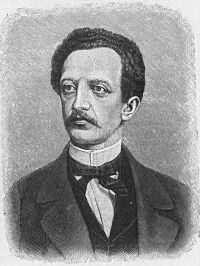 Ferdinand Lassalle,
The Working Man's Programme
(1884)
“ We have now seen, gentlemen, two periods of the world, each of which is dominated by the ruling idea of a particular class of the community which impresses its own principle on all the social arrangements of its time. ”
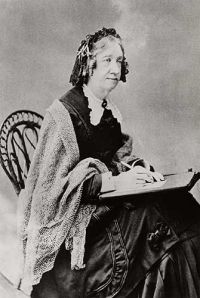 Catharine Esther Beecher,
A Treatise on Domestic Economy…
(1845)
“ Shall we not rather take the place to which we are entitled, as the leaders, rather than the followers, in the customs of society, turn back the tide of aristocratic inroads, and carry through the whole, not only of civil and political, but of social and domestic, life, the true principles of democratic freedom and equality? ”
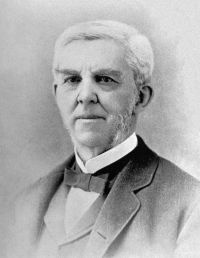 Oliver Wendell Holmes Sr.,
The Professor at the Breakfast-Table
(1860)
“ Who are the “quality,”—said the Model, etc., in a community like ours? I confess I find this question a little difficult to answer,—I said. —Nothing is better known than the distinction of social ranks which exists in every community, and nothing is harder to define. The great gentlemen and ladies of a place are its real lords and masters and mistresses; they are the quality, whether in a monarchy or a republic; mayors and governors and generals and senators and ex-presidents are nothing to them. ”
Mrs. S. A. Barnett, Practicable Socialism: Essays on Social Reform
“ They would bind themselves by sympathy and service to the lives of the people; they would bring the light and strength of intelligence to bear on their government, and they would give a voice both to their needs and their wrongs. ”
 Ralph Waldo Emerson,
Letters and social aims
(1875)
“ These are the bases of civil and polite society; namely, manners, conversation, lucrative labor, and public action, whether political, or in the leading of social institutions. We have much to regret, much to [Pg 95] mend, in our society; but I believe that with all liberal and hopeful men there is a firm faith in the beneficent results which we really enjoy; that intelligence, manly enterprise, good education, virtuous life, and elegant manners have been and are found here, and, we hope, in the next generation will still more abound. ”

“ It would be very presumptuous to attempt to tell any man how to acquire the highest position in his community, especially as the answer is written in his heart, his intellect, his altruistic sympathy, and his ardent civic pride. A subject, however, that is not so serious or over-aweing, and which can perhaps have directions written for it, is the lesser ambition of acquiring a social position. ”
by Sidney Webb and Beatrice Webb, The History of Trade Unionism (1920)
“ The working of democratic institutions means, therefore, one long training in enlightened altruism, one continual weighing, not of the advantage of the particular act to the particular individual, at the particular moment, but of those ' larger expediencies ' on which all successful conduct of social life depends. ”
 Scott Nearing,
Civilization and Beyond: Learning from History
(1975)
“ As we move beyond civilization onto a more mature and more complicated culture level, we may have a workable system of social priorities, but does our oncoming stream of manpower have the interest, the imagination, the competence, the sense of social responsibility and the staying power necessary to arouse in a series of generations the will and determination to carry out social policy? ”
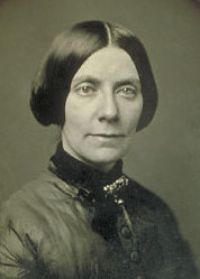 Emma Dorothy Eliza Nevitte Southworth,
Love's bitterest cup
(1882)
“ Very much better than we could into any other society on the face of the earth. The wives of the high officers of the government are the leaders of society; the latter are under the dominion of the sovereign people, who flock to the city in great numbers, and from all parts of the country, and all ranks and grades of the social scale; and you will find the drawing rooms of cabinet ministers and foreign ambassadors filled with companies more mixed than you could find elsewhere in the world. ”
Jr. John D. Rockefeller, The Personal Relation in Industry
“ The test of the success of our social organization is the extent to which every man is free to realize his highest and best self; and in considering any economic or political problem, that fundamental fact should be recognized. ”
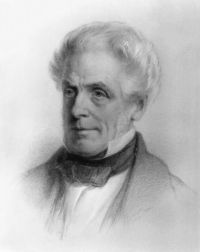 Isaac Taylor,
Natural History of Enthusiasm
“ Skill and sagacity in managing the affairs of common life, or wisdom in council and command, is nothing else than an extensive and ready knowledge of the intricate movements of the great machine of the social system; and the high price which this skill and wisdom always bears among men, may be held to represent two abstractions; first, the perplexing Irregularities of the system to which human agency is to be conformed; and then, the real and substantial Uniformity of the movements of that system. ”
Milan C. Edson, Solaris Farm: A Story of the Twentieth Century
“ These admissions have a wonderful significance. Let us examine them."The question of society, becomes a potent factor in the solution of this problem. Society, like a great leviathan, covers the face of our country. Representing the aggregate of life, it affects all lives. As the social side of the body politic, it has the power to strangle or to nourish, every interest which is dear to those lives. Dominant society, is the support and inspiration of government. The excellence of any government, may be measured by the excellence of the society upon which that government is based. ”
 Richard T. Ely,
French and German Socialism in Modern Times
“ We have finally to inquire what is the principle in accordance with which functions (positions, offices) and remuneration are distributed among the workers in the ateliers sociaux? What is the ideal of social justice?First, as to the social hierarchy, or social rank. Faculties, powers, abilities, are of almost infinite variety in man. They are, however, all talents meant to be used for others. Have I great strength? In giving it to me God measured thereby my obligations to society. The same holds regarding mental acumen, profundity of thought, poetic imagination, a fine voice, [121] etc. ”
 William Lyon Mackenzie King,
The Secret of Heroism
(1906)
“ With the added responsibility there has come to me an increasing sense of the usefulness of the work which we are doing. I believe we can do much towards determining the direction of social progress. With a knowledge of fact, an absence of sectarian prejudice, some understanding of the progress of human institutions, and of the motives which influence men, we should, if we can keep control of ourselves, and maintain high ideals as inspiration for the development of the best that is in us, be able to render a lasting service to this country. ”
John Marshall Barker, Colleges in America
“ Page 219Those who are to be trained for this leadership, and expect to gain a strong hold on society, should be taught and trained to think upon complicated questions, and able not only to frame platforms and shape legislation, but to grapple with modern social problems, and lead the people to nobler action. ”
 George Bernard Shaw,
The Doctor's Dilemma
(1906)
“ No doubt the higher the life we secure to the individual by wise social organization, the greater his value is to the community, and the more pains we shall take to pull him through any temporary danger or disablement. ”
Portal:The Folk-Lore Society, Folk-Lore (1915)
“ But, above all, their social organization is firmer and more efficient, because their respect for and obedience to their chiefs, and their loyalty to their community, are much greater; each man identifies himself with the whole community and accepts and loyally performs the social duties laid upon him. ”
William James, Social Value of the College-Bred
“ Whom shall they treat as rightful leaders? We and our leaders are the x and the y of the equation here; all other historic circumstances, be they economical, political, or intellectual, are only the background of occasion on which the living drama works itself out between us. ”
Carl Schurz,
The Reminiscences of Carl Schurz
(1908)
“ He had not only the intellectual and moral qualifications but also the temperament of a leader, and a leader, too, who would attract the best part of the community in point of morals and intelligence, as a trusty personal following. ”
 Herbert Spencer,
Popular Science Monthly
(1873)
“ Unless the mass of citizens have sentiments and beliefs in something like harmony with the social organization in which they are incorporated, this organization cannot continue. These sentiments proper to each type of society will inevitably sway the sociological conclusions of its units. And, among other sentiments, this awe of embodied power will take a large share in doing this. ”
Various, Charities and the Commons: The Pittsburgh Survey…
“ The leaders in the societies themselves insisted upon a better sensing of social responsibility, which meant simply the better realization of one principle, co-operation, the signpost to the second stage of growth. ”
 William Carleton,
The Emigrants Of Ahadarra
“ To this we reply again, in an earnest fixed resolution to promote, in the first place, the best social and domestic interests of the people, to improve their condition, to stock their minds with, useful and appropriate knowledge, to see that they shall be taught what a sense of decent comfort means, that they shall not rest satisfied with a wad of straw for a bed, and a meal of potatoes for food, and that they shall, besides, come to understand the importance of their own position as members of civil society. ”
Constitution of Socialist Federal Republic of Yugoslavia (1974)
“ The question of self -management, the relations and forms through which the working people will manage production and distribution, and in general the question of real democratic management of social affairs, are today the central themes of modern society. ”
E. W. Burgess, Introduction to the Science of Sociology
“ Lack of success has led to the search for causes, and investigation has revealed the obstacles, as well as the aids, to reform embodied in influential persons, "political bosses," "union leaders," "the local magnate," and in powerful groups such as party organizations, unions, associations of commerce, etc. Social control, it appears, is resident, not in individuals as individuals, but as members of communities and social groups. ”
 Woodrow Wilson,
The social center a means of common understanding
(1894)
“ If you can once see that a working majority is obtained for the handsome passions, for the feelings that draw us together, rather than for the feelings that separate us, then you have laid the foundation of a community and a free government and, therefore, if you can do nothing else in the community center than draw men together so that they will have common feeling, you will have set forward the cause of civilization and the cause of human freedom. ”
 John Stuart Mill,
Considerations on Representative Government
“ What, for example, are the qualities in the citizens individually which conduce most to keep up the amount of good conduct, of good management, of success and prosperity, which already exist in society? Every body will agree that those qualities are industry, integrity, justice, and prudence. But are not these, of all qualities, the most conducive to improvement? and is not any growth of these virtues in the community in itself the greatest of improvements? ”
 Charles Horton Cooley,
Social organization
(1909)
“ The guiding force back of public will, now as ever, is of course human nature itself in its more enduring characteristics, those which find expression in primary groups and are little affected by institutional changes. ”
 Charles James Lever,
The Martins Of Cro' Martin, Vol…
“ To the practice of these social amenities is doubtless ascribable the absence of any rancor from the rough contests and collisions of public life, and thus men of every shade of politics and party, differing even in class and condition, formed admirable social elements, and cohered together to perfection. ”
 H. G. Wells,
Social Forces in England and America
“ On the assumption that there is a People there could be no better state of affairs. You and I and everyone, except for a vote or a book, or a service now and then, can go about our business, you to your grocery and I to mine, and the direction of the general interests rests safe in the People’s hands. ”
 George Wharton James,
Quit Your Worrying!
“ Is it essential to be a society leader, to belong to every club, to hold office, to give as many dinners as one's neighbors, to have a bigger house, furniture with brighter polish, bigger carvings and more ugly designs than anyone else in town, to have our names in the papers oftener than others, to have more servants, a newer style automobile, put on more show, pomp, ceremony and circumstance than our friends? ”