“ The true Neapolitan does not eat his spaghetti at all—he inhales it. He gathers up a loose strand and starts it down his throat. He then respires from the diaphragm, and like a troupe of trained angleworms that entire mass of spaghetti uncoils itself, gets up off the plate and disappears inside him—en masse, as it were—and making him look like a man who is chinning himself over a set of bead portieres. I fear we in America will never learn to siphon our spaghetti into us thus. It takes a nation that has practiced deep breathing for centuries. ”
Spaghetti
Definition and stakes
Spaghetti, a long, slender, cylindrical pasta crafted from durum-wheat semolina, is a cornerstone of Italian cuisine, frequently served with tomato sauce, cheese, or vegetables. Writers have examined its cultural and gastronomic importance, from Irvin S. Cobb’s vivid portrayal of Neapolitan dining customs to Elizabeth Robins Pennell’s lyrical connection of spaghetti to Italian scenery.
Recipes from the Campbell Soup Company illustrate its flexibility in international settings, while Maria Gentile highlights conventional cooking techniques. These diverse viewpoints emphasize spaghetti’s dual nature as both a simple staple and an emblem of culinary creativity, showcasing its lasting adaptability across cultures and time periods.
Quotes about “spaghetti”
The Stag Cook Book: Written for Men by Men
“ As this is poured over the spaghetti add grated Roman cheese. You will get it all properly dressed by using two forks, lifting and dropping the strands. Serve piping hot with an automatic revolver at hand so that the man who cuts his can be disposed of promptly. Some twine the spaghetti about the fork. Others just lead a mass of it to the face and bite off what they want at that particular mastication.A good salad and Italian bread, to be secured at any small dealer’s where the boss sings Santa Lucia in a thin high voice as he slices the salami, goes well with the roast. ”
 Elizabeth Robins Pennell,
The Feasts of Autolycus: The Diary of a Greedy Woman
Elizabeth Robins Pennell,
The Feasts of Autolycus: The Diary of a Greedy Woman
“ If you have learned the trick of association, at once you see before you a steaming harmony in pale yellow and scarlet, the long soft tubes of macaroni or spaghetti encompassed round about by a deep stream of tomatoes stewed and seasoned; at once you feast upon macaroni al pomodoro and Chianti, and Italy lies, like a map, before your mind's eye, its towns and villages marked by this dish of dishes. With rice, tomatoes are no less in pleasant, peaceful unity; in stuffed paprika, or pepper, they find their true affinity. Grilled, they make a sympathetic garniture for filet piqué à la Richelieu ”
Related terms
Authors who wrote about “spaghetti”
Campbell Soup Company Rufus Estes
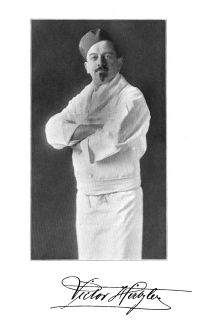 Victor HirtzlerMaria GentileMarietta McPherson GreenoughAnonymous
 Carolyn WellsElizabeth Robins Pennell
 George Barr McCutcheonHelen Follett JamesonJessie ConradPaul PierceFlorence Kreisler Greenbaum
 Irvin S. CobbS. T. RorerWoman's Institute of Domestic Arts and SciencesJean Prescott AdamsBob BrownElizabeth O. HillerM. R. L. Sharpe
Rufus EstesVictor HirtzlerMaria GentileMarietta McPherson GreenoughAnonymousCarolyn WellsElizabeth Robins PennellGeorge Barr McCutcheonHelen Follett JamesonJessie ConradPaul PierceFlorence Kreisler GreenbaumIrvin S. CobbS. T. RorerWoman's Institute of Domestic Arts and SciencesJean Prescott AdamsBob BrownElizabeth O. HillerM. R. L. Sharpe