“ A fat little red-faced boy pushes the skillet back and forth to keep the butter from burning. The frantic beating of eggs comes nearer and nearer. The shrill voice of Madame Poularde screams voluble French at her assistants. She boxes somebody’s ears, snatches the eggs, gives them one final puffy beating, which causes them to foam up and overflow, and at that exciting moment out they bubble into the smoking skillet, the handle of which she seizes at the identical moment that she lets go of the empty bowl with one hand and pushes the red-faced boy over backward with the other. ”
Skillet
Definition and stakes
A skillet is a versatile cooking vessel, traditionally used over open flames for frying, searing, and boiling, often associated with simplicity and practicality. From Lilian Bell’s vivid depiction of a bustling kitchen to Della R. Prescott’s description of colonial-era skillets designed for open-fire cooking, authors have highlighted its adaptability. J. C.
Long praised its usefulness in camping, while Carlton McCarthy noted its role in communal survival. Culinary texts, such as those by Florence Kreisler Greenbaum and Robert May, further emphasize its importance in preparing diverse dishes. Across literature and history, the skillet emerges as a symbol of resourcefulness, bridging domestic routine and survival.
Quotes about “skillet”
Della R. Prescott, A Day in a Colonial Home
“ A cast-iron skillet with legs to lift it above the coals and ashes. As all cooking vessels were 55 used at an open fire they were all made either to hang above it like a pot or to stand before it like a tin oven, or to rest upon its coals like a three-legged skillet. FIGURE 5A tin kitchen or roaster. A box of tin standing on legs and with one side open. A steel spit was stuck through the meat and the meat was fastened to it by skewers, which passed through the meat and through small holes in the spit itself. ”
“ The coffee being made, the hot skillet goes back over the fire to receive the bacon, eggs or whatever else is to be cooked. The skillet can be used with equal success for frying, stewing, boiling, or even for making flapjacks, as required. A surprisingly large variety of dishes may be successfully prepared with this simple cooking utensil. In fact a skillful camper needs only a skillet, and finds all other pots and pans simply burdensome. The skillet will serve all needful purposes in cooking. ”
Carlton McCarthy, Southern Historical Society Papers (1876)
“ One skillet and a couple of frying pans, a bag for flour or meal, another bag for salt, sugar and coffee, divided by a knot tied between, served the purpose as well. The skillet passed from mess to mess. Each mess generally owned a frying pan, but often one served a company. ”
Susanna Cocroft, Foods; nutrition and digestion (1912)
“ All meats broiled in skillets should be put into a very hot skillet and one surface seared, then should be turned so as to sear the other side. The skillet should be kept covered so as to retain the moisture. ”
Charles Dudley Warner,
A-Hunting of the Deer, and other essays…
(1906)
“ Everything has been cooked in a tin pail and a skillet,—potatoes, tea, pork, mutton, slapjacks. You wonder how everything could have been prepared in so few utensils. When you eat, the wonder ceases: everything might have been cooked in one pail. ”
Robert May,
The accomplisht cook
“ Boil your milk in a clean scowred skillet, and when it boils take it off, and warm in the pot, bowl, or bason some sack, claret, beer, ale, or juyce of orange; pour it into the drink, but let not your milk be too hot, for it will make the curd hard, then sugar it. Otherways.Beat a good quantity of sorrel, and strain it with any of the foresaid liquors, or simply of it self, then boil some milk in a clean scowred skillet, being boil’d, take it off and let it cool, then put it to your drink, but not too hot, for it will make the curd tuff. ”
Robert May,
The accomplisht cook
“ Set on a skillet, either full of milk, wine, water, verjuyce, or sack, make the liquor boil, then have twenty eggs beaten together with salt, and some sweet herbs chopped, run them through a cullender into the boiling liquor, or put them in by spoonfuls or all together; being not too hard boil’d, take them up and dish them with beaten butter, juice of orange, lemon, or grape-verjuyce, and beaten butter. ”
Florence Kreisler Greenbaum, The International Jewish Cook Book
“ QUEEN FRITTERS Put in a deep skillet on the fire one cup of water, one-fourth cup of fresh butter; when it comes to a boil, stir in one cup of sifted flour and continue stirring until the dough leaves the side of the skillet clean. Remove from the fire and when cool break in three eggs, one at a time, stirring continually. Add a little salt. Mix all well, then drop pieces about the size of a walnut into plenty of boiling butter or Crisco and fry a light brown. Drain, make an opening in each, fill with preserves and sprinkle with sugar; serve at once. ”
Florence Kreisler Greenbaum, The International Jewish Cook Book
“ Heat a large deep skillet about half full with boiling hot butter or Crisco, drop in the snowballs, not more than three at one time, brown quickly on one side, then on the other, turn carefully with a perforated skimmer as they are easily broken. ”
Lydia Maria Child,
The American Frugal Housewife
“ When the meat is about done, pour these drippings into a skillet, and let it boil. If it is not thick enough, shake in a little flour; but be sure to let it boil, and be well stirred, after the flour is in. If you fear it will be too greasy, take off a cupful of the fat before you boil. The fat of beef, pork, turkeys and geese is as good for shortening as lard. Salt gravy to your taste. If you are very particular about dark gravies, keep your dredging-box full of scorched flour for that purpose. ”
Florence Kreisler Greenbaum, The International Jewish Cook Book
“ Now put one-half cup of rendered butter in a skillet that has a top to it; when the butter is hot, lay in the pieces of dough (do not put too many in at one time) , throw in one-half cup of cold water, put on the cover and let cook until the water is cooked out and noodles are brown on one side. ”
Eliza Leslie,
Miss Leslie's Lady's New Receipt-Book…
“ While they are frying, keep shaking the skillet about, holding it by the handle. They will puff up very light, and must be done of a bright brown. Take them out with a perforated skimmer, that will drain off the butter. Have ready some powdered sugar, flavoured with nutmeg or cinnamon. Roll the fritters in this, and send them to table hot. ”
Brigham Young,
Journal of Discourses — Volume 9…
“ You can go into many houses in this Territory and find, for cooking utensils, an old skillet in which they cook their meat, heat their dish-water, wash their dishes, mix up pig feed, &c.; and when they set their table it is in keeping with the old skillet; you, find little to eat, and that is half burnt and half cooked, unpalatable and unhealthy. ”
United States. Work Projects Administration, Slave Narratives: A Folk History of Slavery in the United States from Interviews with Former Slaves…
“ There is another way of cookin' flour bread without a skillet or a stove, is to make up your dough stiff and roll it out thin and cut it in strips and roll it on a green stick and just hold it over the coals, and it sure makes good bread. When one side cooks too fast, you can just turn it over, and have your stick long enough to keep it from burnin' your hands. ”
“ Catch an onion when it isn't looking and push it in the skillet. Add water and let it sizzle. Add more water. Be sure there are no chemicals in the water. Add more water. Always wash the water before adding. Now upset the skillet into the soup tureen and add imitation Tabasco sauce. Imitation Tabasco sauce can be made from pickled firecrackers. Serve hot and keep the lips closed firmly while eating it from the left-hand side of the spoon. ”
“ Put two tablespoonfuls butter and two tablespoonfuls lard in a skillet; also, with that, two tablespoonfuls flour, a little parsley, one pint boiling water, a little wine, catsup, salt, and cayenne pepper. Boil a few minutes; then take four eggs, half a pint cream or butter; beat well together. Lay the fish in a large deep dish, pour gravy from skillet over it; spread butter over top of fish. ”
Alice Morse Earle,
Colonial dames and good wives
(1895)
“ The change in methods of cooking is plainly evinced in many of our common kitchen utensils. In olden times the pots and kettles always stood on legs, and all skillets and frying-pans and saucepans stood on slender legs, that, if desired, they might be placed with their contents over small beds of coals raked to one side of the hearth. A further convenience to assist this standing over coals was a little trivet, a tripod or three-footed stand, usually but a simple skeleton frame on which the skillet could be placed. ”
Mary Randolph, The Virginia Housewife; Or, Methodical Cook (1836)
“ Boil four calfs’ feet, that have been nicely cleaned, and the hoofs taken off; when the feet are boiled to pieces, strain the liquor through a colander, and when cold, take all the grease off, and put the jelly in a skillet, leaving the dregs which will be at the bottom. ”
Solomon Northup,
Twelve Years a Slave
(1853)
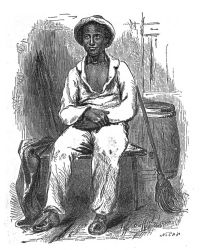
“ To ask the master for a knife, or skillet, or any small convenience of the kind, would be answered with a kick, or laughed at as a joke. Whatever necessary article of this nature is found in a cabin has been purchased with Sunday money. ”
Tested Recipes: Waterless Cooking for Better Meals…
“ Brown meat balls in hot fat, a few at a time; place in bowl until all have been browned. Add a little extra fat to skillet as needed.5. To drippings in skillet add 1 cup water. Bring to boil. Blend 1 tablespoon flour with 2 tablespoons cold water; stir into gravy. Stir constantly until thickened.6. Return meat balls to skillet. Cover; simmer gently 1⁄2 hour. Makes 8 servings.10 PAN-FRIED BANANAS 6 firm bananas [1] Salt1⁄4 cup melted butter or margarineKeep whole or cut crosswise into halves. ”
Philip Alexander Bruce, Economic History of Virginia in the Seventeenth Century (1896)
“ In the kitchen there were three brass kettles, a brass and a bell-metal skillet, a bell-metal and a brass mortar and pestle, a brass skimmer and ladle, two iron pots, two iron dripping-pans, a frying-pan, a pewter still, two iron pothooks, two iron potracks, a pair of andirons, six pewter spoons, two pewter flagons, one pottle-pot, one sugar basin, one salt-cellar, one pewter tankard, one saucer, a box iron, and two heaters. ”
Various, Godey's Lady's Book, Vol. 48, June…
“ Thanks to the modern stoves, with their nicely-arranged skillets and stewpans, which science and mechanical skill have substituted for the blazing kitchen hearth of other days, young ladies of the nineteenth century, just passing its prime, may cook without soiling their fingers or injuring their complexions. ”
“ From there, it was time for dinner: roaring fires, meat popping on spits, tofu sizzling on skillets (it's northern California, a vegetarian option is not optional) , and a style of eating and drinking that can only be described as quaffing. ”
Lucy M. Alexander & Fanny Walker Yeatman, U.S. Department of Agriculture, Bureau of Home Economics, Foods and Nutrition Division, Meat for Thrifty Meals (1942)
“ Tender, well-fatted meat holds its juices, cooks perfectly in an open pan if moderate heat is used. Tough meat, on the other hand, requires long, slow cooking in a covered pan with water or steam. So turn the less tender cuts into pot roast, stew, or some other braised dish. Or, grind them and cook the same as tender meat. Meat cooked in water or steamed is juicier if cooled in the broth for an hour or longer. Regardless of cut, add fat to very lean beef, lamb, and most veal for richness and good flavor. Then cook as braised steaks and chops, oven-braised meat, pot roast, or stew. ”
Mrs. H. W. Beecher,
Motherly talks with young housekeepers
(1873)
“ One rib is too small for baking; it dries in cooking, and is not good economy, unless you take out the bone, roll the meat and stuff it, when it makes a nice dish for a small family.Veal should be small and white, the kidney well covered with fat. If the calf is over ten weeks old the meat will be coarse. The flesh should be dry and white. If coarse-grained, moist, and clammy, have nothing to do with it. The fillet, loin, and shoulder are the best for roasting. The breast, well cut and jointed, makes a fine stew or pot-pie, and is better economy than when baked or roasted. ”
Sarah Josepha Buell Hale, Mrs. Hale's Receipts for the Million
“ Legs and loins of pork, legs of mutton, and fillets of veal will bake to much advantage; especially if they be fat.3605. Never bake a lean, thin piece, it will all shrivel away. Such pieces should always be boiled or made into soup.3606. Pigs, geese, and the buttock of beef are all excellent baked.3607. Meat always loses in weight by being cooked.—In roasting, the loss is the greatest. It also costs more in fuel to roast than to boil—still there are many pieces of meat which seem made for roasting; and it would be almost wrong to cook them in any other way. ”
W. Mattieu Williams, The Chemistry of Cookery
“ It is evident that many domestic cooks (not hotel or restaurant cooks) have a vague idea that the metal plate forming the bottom of the frying-pan should directly convey the heat of the fire to the fried substance, and that the bit of butter or lard or dripping put into the pan is used to prevent the fish from sticking to it or to add to the richness of the fish by smearing its surface.The theory which I have propounded above is that the melted fat cooks by convection of heat, just as water does in the so-called boiling of meat. ”
Jane Grey Cannon Swisshelm, Half a Century
“ When one piece of pork was cooked, it was cut into small pieces and distributed, and another put into the boiler. During our cooking times I usually sat on the stairs, where I could direct and be out of the way; and to improve the time, often had a plate and cup from which I ate and drank. Cook always saved me something nice, and I made tea for myself. I was running my body as I did the cook stove, making it do quadruple duty, and did not spare the fuel in either case. Around each foot, below the instep, I had a broad, firm bandage, one above each ankle and one below each knee. ”
Mary A. Wilson, Mrs. Wilson's Cook Book
“ Meat allowed to lie on a platter soon loses its nutritious qualities with the escaping of the juices.FILLET OF BEEFHave the butcher trim the fillet into shape and then lard it with salt pork. Dust lightly with flour and then place on a rack in the roasting pan and place in a hot oven, basting every ten minutes. Cook, allowing the meat one-half hour to become thoroughly heated and to start cooking; then allow twelve minutes for every pound. This cut is the choicest of the entire cattle and is without a single ounce of waste. It is delicious either hot or cold. ”
Friedrich Christian Accum,
Culinary Chemistry
“ A sufficient quantity of mutton or [100] beef suet, butter, lard, or oil, being melted in a pan, and made boiling-hot, the meat is laid in it. It is not necessary that the meat be wholly immersed in the boiling fat; if it be immersed in part, it will be quite sufficient. When flesh is the substance to be fried, the pieces, previously to their being put into the pan, are sometimes brushed over with eggs and crumbs of stale bread, flour, or any other farinaceous substance. ”
Fannie Merritt Farmer,
The Boston cooking-school cook book
“ To Carve a Roast of Beef. Have roast placed on platter skin side up; with a pointed, thin-bladed, sharp knife cut a sirloin or rib roast in thin slices at right angles to the ribs, and cut slices from ribs. If there is tenderloin, remove it from under the bone, and cut in thin slices across grain of meat. Carve back of rump in thin slices with the grain of meat; by so doing, some of the least tender muscle will be served with that which is tender. By cutting across grain of meat, the tenderest portion is sliced by itself, as is the less tender portion. ”
Daniel B. Woods, Sixteen months at the gold diggings (1852)
“ We lead here a strangely wild life. As we had no mules to bring our provisions, implements for cooking and labor, &c., we were obliged to bring them ourselves. We therefore left behind us every thing which could by any possibility be dispensed with. An iron pan, which we use for washing gold, serves also for boiling our coffee. A frying-pan is our only cooking utensil. In this one of the company—who leaves work before the others for the purpose—fries some pork, which is rancid, and then, in the fat, fries some flour batter. ”
William Kitchiner,
The Cook's Oracle; and Housekeeper's Manual
“ A very pretty garnish for lamb chops, fish, &c.Fried Bread Sippets.— (No. 319.) Cut a slice of bread about a quarter of an inch thick; divide it with a sharp knife into pieces two inches square; shape these into triangles or crosses; put some very clean fat into an iron frying-pan: when it is hot, put in the sippets, and fry them a delicate light brown; take them up with a fish slice, and drain them well from fat, turning them occasionally; this will take a quarter of an hour. Keep the pan at such a distance from the fire that the fat may be hot enough to brown without burning the bread ”
Mary J. Lincoln,
Carving and Serving
(1906)
“ I believe most strongly, as a matter of economy, in removing the bone, and any tough membrane or gristle that will not be eaten, before cooking the steak. If there be a large portion of the flank, cook that in some other way. With a small, sharp knife cut close to the rib on each side, round the backbone, and remove the tough white membrane on the edge of the tenderloin. Leave the fat on the upper edge, and the kidney fat also, or a part of it, if it be very thick. There need be no waste or escape of juices if the cutting be done quickly, neatly, and just before cooking. ”