Spine (plant)

Definition and stakes

Portrait of Ralph Waldo Emerson Ralph Waldo Emerson,  Representative Men — Swedenborg… (1850)

“ The whole art of the plant is still to repeat leaf on leaf without end, the more or less of heat, light, moisture and food determining the form it shall assume. In the animal, nature makes a vertebra, or a spine of vertebrae, and helps herself still by a new spine, with a limited power of modifying its form,- spine on spine, to the end of the world. A poetic anatomist, in our own day, teaches that a snake, being a horizontal line, and man, being an erect line, constitute a right angle ”
Source: Wikisource

Frances Bonker,  The Fantastic Clan: The Cactus Family

“ The spine system is grouped and spreading, with four to seven central spines sometimes three inches in length, often crooked or twisted, and surrounded by smaller radials scattered along the stem ridges, not more than a fourth-inch to an inch long, all thorns of a beautiful golden or light translucent yellow. The spines often vary in their general characteristics, long and short, twisted and bulbous, straight and bent and twisted, flat and grooved, tough and easily broken. ”
Source: Gutenberg

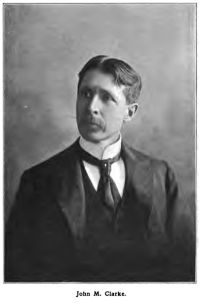
Portrait of John Mason Clarke John Mason Clarke,  The Eurypterida of New York (1912)

“ The long curved spines (s, s, s) , are a very curious feature of the appendage and the most marked character of the genus and species. They are articulated to the posterior margin of the joints, as the latter rest flattened out in the slate or shale, and there is no evidence but that they form a single series as shown in the specimen and in the drawing, figure 2. Each spine is constricted a little near its base, forming a rounded end or point of articulation; from this well out toward their pointed termination they retain an average width curving gently backward and inward. ”
Source: Wikisource

Get perspective with Kwize: daily news enlightened by great literature