 Louisa May Alcott,
Little Women
(1868)
Louisa May Alcott,
Little Women
(1868)
“ Now and then, in this workaday world, things do happen in the delightful storybook fashion, and what a comfort it is. ”
Louisa May Alcott,
Little Women
(1868)
“ Now and then, in this workaday world, things do happen in the delightful storybook fashion, and what a comfort it is. ”
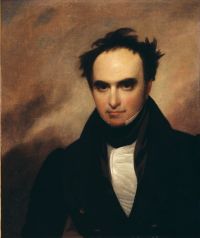 Daniel Webster,
The Dignity and Importance of History
(1852)
Daniel Webster,
The Dignity and Importance of History
(1852)
“ The province of the epic is the poetical narrative of real or supposed events, and the representation of real, or at least natural, characters; and history, in its noblest examples, is an account of occurrences in which great events are commemorated, and distinguished men appear as agents and actors. Epic poetry and the drama are but narratives, the former partly and the latter wholly, in the form of a dialogue, but their characters and personages are usually, in part at least, the creations of the imagination. ”
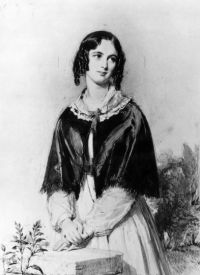 Charlotte M. Yonge,
What books to lend and what to give
(1887)
Charlotte M. Yonge,
What books to lend and what to give
(1887)
“ A book labelled ‘A tale for—’ is apt to carry a note of warning to the perverse spirits of those to whom it is addressed.Historical tales and those of other lands require a certain degree of cultivation and imagination, to be appreciated. To some, even the best are distasteful, to others they supply the element of romance. Those that have a charm about them of character and adventure, fitting them for almost all [13] readers, have been put into the groups intended for the age they suit, as well as into their places as illustrations of history. ”
Katherine Jewell Everts, Vocal Expression: A Class-book of Voice Training and Interpretation
“ The plot, the characters, the setting of a story which is to live, must have the vividness of real experience. This does not mean that the creator of the story must have actually experienced the plot, the people, and the pictures which together make up his tale—they may be the product of actual experience or of imagination—but it does mean that while he is putting these elements together and creating his narrative he must realize as though it were actual experience the incident of his plot with the characters and in the atmosphere of his creation. ”
 Agnes Repplier,
Essays in Miniature
(1892)
Agnes Repplier,
Essays in Miniature
(1892)
“ Those were not days, be it remembered, when people wrote fiction for the sake of introducing discussions. There still lingered in the novelist's mind the time-worn heresy that he had a story to tell, and that his people must act as well as talk. The plot—delightful and obsolete word!—was then in good repute, and conversation was mainly useful in helping on the tale, in providing copious love scenes, and, with really good novelists, in illustrating and developing character. ”
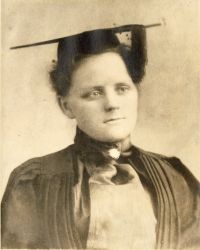 Blanche Colton Williams,
How to study "The best short stories"
Blanche Colton Williams,
How to study "The best short stories"
“ What national and racial customs intensify the setting?“To me, a narrative that has for its aim to interest the reader in its plot is an anecdote, be its plot ever so thick. A narrative that aims to interest the reader in a slice of palpitating life—the joys or sorrows of people—be its plot ever so thin, I call it a short story.”—Benjamin Rosenblatt. ”
Blanche Colton Williams,
How to study "The best short stories"
“ Technically, the plot is the underlying plan “of which no part can be removed without ruin to the whole”; it is the development of the struggle or conflict which every “short-story” possesses in common with the drama.What in “The Excursion” is the struggle? What part does the dialogue between the two sisters play in the revelation of the struggle? If the struggle were made dominant, what lamentable result would follow for the “situation” value of the whole narrative? Is there a hint near the conclusion that the struggle may have an outcome? ”
Agnes Repplier,
Varia
(1898)
“ Four ways there are of telling a curious world that endless story of the past which it is never tired of hearing. History, memoir, biography, and the diary run back like four smooth roads, connecting our century, our land, our life, with other centuries and lands and lives that have all served in turn to make us what we are. ”
Hattie Greene Lockett, The Unwritten Literature of the Hopi
“ From this collection of 104 tales he concludes that: "In the tales of a people those incidents of the everyday life that are of importance to them will appear either incidentally or as the basis of a plot. Most of the reference to the mode of life of the people will be an accurate reflection of their habits. The development of the plot of the story, further-more, will on the whole exhibit clearly what is considered right and what wrong." ”
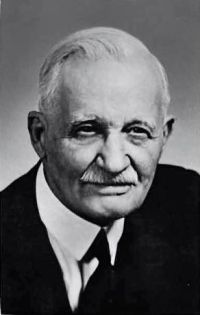 Lewis Worthington Smith,
The Writing of the Short Story
Lewis Worthington Smith,
The Writing of the Short Story
“ Further, as the lives of all men and women are more or less conditioned by their surroundings and circumstance, any story will require more or less description. Incidents are of but little moment, character showing may have but slight interest, description is purposeless, unless the happenings of the story develop in the characters feelings toward which we assume some attitude of sympathy or opposition. Including this fourth element of the story, we shall then have [2] incident, description, character, mood, as the first elements of the narrative form. ”
Porter Lander MacClintock, Literature in the Elementary School
“ Story is, in general, the narrative of a succession of incidents or events. It is a large, general form or device, useful, indeed inevitable, in all subjects. Like language itself, story is a universal medium, conveying the facts of history, of science, of life. Whenever we have the steps of any experience arranged according to any of the laws of subsequence or consequence, we have story; such as the story of the dandelion seed, the story of the life of Mary Stuart, the story of the invention of the steam engine, the story of a day in the city. ”
Albert Keim and Louis Lumet, Honoré de Balzac — General Note
“ Accurate biographies record narratives which no romancer's imagination could hope to rival. Researches, sufferings, labors, triumphs, agonies and disasters, the defeats of destiny, glory, which is the "sunlight of the dead," illuminating the past, whether fortunate or tragic,—such is what the lives of Great Men reveal to us, or, if the phrase be allowed, paint for us in a series of fascinating and dramatic pictures. ”
 Oliver Optic,
All Taut; or, Rigging the boat
Oliver Optic,
All Taut; or, Rigging the boat
“ The story, which carries the same hero through the six books of the series, is always entertaining, novel scenes and varied incidents giving a constantly changing, yet always attractive aspect to the narrative. ”
Allan Nevins, The Evening Post: A Century of Journalism
“ The narrative is one of intense interest from beginning to close, and the characters of the various personages with whom the hero of the story is associated, are drawn with perhaps more skill, and a deeper knowledge of human nature, than in most of the author’s previous novels. ”
 Herbert Butterfield,
The historical novel
(1924)
Herbert Butterfield,
The historical novel
(1924)
“ The entire novel tends to split up into particular knots of story, one cluster of narrative having perhaps only the most accidental of connections with another, and each being in a way complete in itself. ”
Charles Morris, Historic Tales: The Romance of Reality…
“ There are many such,—dramas on the stage of history, life scenes that are pictures in action, tales pathetic, stirring, enlivening, full of the element of the unusual, of the stuff the novel and the romance are made of, yet with the advantage of being actual fact. ”
“ THE STANDARD.—"Those who read 'A Maker of History' will revel in the plot, and will enjoy all those numerous deft touches of actuality that have gone to make the story genuinely interesting and exciting." ”
 Alleyne Ireland,
An Adventure with a Genius: Recollections of Joseph Pulitzer
Alleyne Ireland,
An Adventure with a Genius: Recollections of Joseph Pulitzer
“ My adventures, in a word, have been chiefly those of personal contact with the sort of men whose lives are the material around which history builds its story, and from which fiction derives all that lends to it the air of reality. ”
Percy Lubbock, The Craft of Fiction
“ And first of the dramatic incident, the scene, properly so called—this comes first in importance, beyond doubt. A novelist instinctively sees the chief turns and phases of his story expressed in the form of a thing acted, where narrative ceases and a direct light falls upon his people and their doings. ”
Katherine Jewell Everts, Vocal Expression: A Class-book of Voice Training and Interpretation
“ We shall use for suggestive analysis in this study not a complete specimen of narration, but several examples illustrating two of the three elements necessary to the personnel of a good story. These three recognized elements are the setting or situation which the pictures compose, the atmosphere which the characters create, and the plot or the action in which the characters engage. We shall leave the question of the plot to class work upon the selections from epic poetry to be considered later in this study. ”
 William Henry Hudson,
Idle Hours in a Library
William Henry Hudson,
Idle Hours in a Library
“ The main plot, as a rule deceptively simple, is complicated from first to last by enormous and intricate ramifications of secondary actions; a characteristic due to the fact that every fresh individual introduced, whether in the central narrative, or in some excrescence from it, persists in recounting his own adventures at tremendous length. Thus we have story within story, wheel within wheel, 136till the reader completely loses his hold upon the tangled threads of intrigue, and collapses into a condition of dazed despair. ”
 Charles Dudley Warner,
Modern Fiction
Charles Dudley Warner,
Modern Fiction
“ Well, but life is full, also, of endings, of the results in concrete action of character, of completed dramas. And we expect and give, in the stories we hear and tell in ordinary intercourse, some point, some outcome, an end of some sort. If you interest me in the preparations of two persons who are starting on a journey, and expend all your ingenuity in describing their outfit and their characters, and do not tell me where they went or what befell them afterwards, I do not call that a story. ”
Percy Lubbock, The Craft of Fiction
“ The narrative, then, the chronicle, the summary, which must represent the story-teller's ordered and arranged experience, and which must accordingly be of the nature of a picture, is to be strengthened, is to be raised to a power approaching that of drama, where the intervention of the story-teller is no longer felt. The freedom which the pictorial method gives to the novelist is unknown to the playwright ”
 Jacob Abbott,
King Alfred of England
Jacob Abbott,
King Alfred of England
“ The gravest historians, as well as the lightest story tellers, frame their narrations for effect, and the tendency in all ages to shape and fashion the narrative with a view to the particular effect designed by the individual narrator to be produced has been found entirely irresistible. ”
Famous Reviews, Selected and Edited with Introductory Notes by R. Brimley Johnson
“ Such a history resembles an ingenious, fictitious narrative, exactly in the degree in which an old dramatic chronicle of the life and death of some distinguished character, where all the various agents appear and disappear as in the page of history, approaches a regular drama, in which every person introduced plays an appropriate part, and every point of the action tends to one common catastrophe. ”
Winston Churchill, Coniston — Complete
“ Decorous chronicles and biographies and monographs and eulogies exist, bound in leather and stamped in gold, each lauding its own hero: chronicles written in really beautiful language, and high-minded and noble, out of which the heroes come unstained. ”
Josh Billings, Josh Billings' Farmer's Allminax…
“ The plot, although not an involved one, hides enough mystery to lend the spice of the unknown to the reader's zest, and the simple and natural dénouement emphasizes the high moral ethics of the story, and throws into strong relief the deep human sentiments that dominate the tale. ”
Harriott Ely Fansler, Types of Prose Narratives: A Text-Book for the Story Writer
“ The story that emphasizes plot is primarily a narrative of a series of happenings, and only incidentally the record of character or place. The author has no interest in what kind of men perform the deeds, except that they shall be the general large types: the soldier and his friend, the lover and his rival, the magistrate and the citizen, the sovereign and his subject, the doctor and his patient, and so on. ”
Harriott Ely Fansler, Types of Prose Narratives: A Text-Book for the Story Writer
“ On the basis of form and of the attitude of the teller, narratives of actual events fall into three groups. The first set has five types: incident, anecdote, eye-witness account, traveler's sketch, and the tale of actual [xxv] adventure. The second set includes journal and diary, autobiography and memoirs, biography. The third set is composed of annals, and chronicles and true relations. ”
 Frederick R. Bechdolt,
When the West Was Young
Frederick R. Bechdolt,
When the West Was Young
“ Dry reading in themselves, they hold the meat of a remarkable story, a story whose colorful narration has been given by its own main characters and thus has come down among the true chronicles of the old-timers. ”
of Samosata Lucian, The Works of Lucian of Samosata…
“ After the preface, long or short in proportion to the subject, should come an easy natural transition to the narrative; for the body of the history which remains is nothing from beginning to end but a long narrative; it must therefore be graced with the narrative virtues— smooth, level, and consistent progress, neither soaring nor crawling, and the charm of lucidity—which is attained, as I remarked above, partly by the diction, and partly by the treatment of connected events. ”
Studying the short-story (1918)
“ Now when the outward or visible action, prominently displaying physical movement, becomes paramount, whether shown as cause or as effect, we have the action-story, and sometimes the adventure-story. And in proportion as the interest of the reader centers in what the characters do instead of in what they are, the story departs from the subtler forms, such as the character-study and the psychological-study, and action or adventure becomes the type. ”
Clayton Meeker Hamilton, A Manual of the Art of Fiction
“ I consider a story merely as a frame on which to stretch the materials; it is the play of thought, and sentiment, and language, the weaving in of characters, lightly yet expressively delineated; the familiar and faithful exhibition of scenes in common life ”
William James Sly, World Stories Retold for Modern Boys and Girls
“ Froebel, the father of the kindergarten, said: “Story-telling refreshes the mind as a bath refreshes the body; it gives exercise to the intellect and its powers, and tests the judgment and the feelings.” Charles Lamb, Sir Walter Scott, Robert Burns, Coleridge, Longfellow, Dickens, Emerson, Lowell, Milton, Hawthorne, Stanley, Hugh Miller, Ruskin, and Wagner tell of the influence of stories, and especially fairy stories, upon them before the age of sixteen, and many before they were twelve. ”
Charles Raymond Barrett, Short Story Writing: A Practical Treatise on the Art of the Short Story
“ The true method for the making of a plot is the development of what may be called a plot-germ. Take two or three characters, strongly individualized morally and mentally, place them in a strong situation and let them develop.... There are hundreds of these plot-germs in our every-day life, conversation and newspaper reading, and the slightest change in the character at starting will give a wide difference in ending.... ”
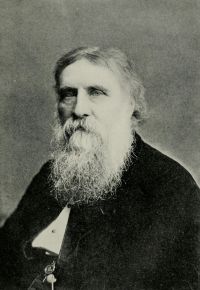 George MacDonald,
Phantastes
(1858)
George MacDonald,
Phantastes
(1858)
“ With a fiction it was the same. Mine was the whole story. For I took the place of the character who was most like myself, and his story was mine; until, grown weary with the life of years condensed in an hour, or arrived at my deathbed, or the end of the volume, I would awake, with a sudden bewilderment, to the consciousness of my present life, recognising the walls and roof around me, and finding I joyed or sorrowed only in a book. ”
Charles Dudley Warner,
The Works of Charles Dudley Warner
“ So we have novels for children; novels religious, scientific, historical, archaeological, psychological, pathological, total-abstinence; novels of travel, of adventure and exploration; novels domestic, and the perpetual spawn of books called novels of society. Not only is everything turned into a story, real or so called, but there must be a story in everything. ”
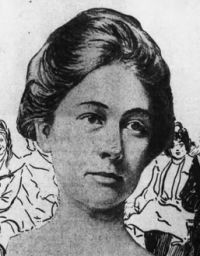 Sara Cone Bryant,
How to Tell Stories to Children…
Sara Cone Bryant,
How to Tell Stories to Children…
“ At a later stage, varying with the standard of capacity of different classes, we find the temper of mind which asks continually, "Is that true?" To meet this demand, one draws on historical and scientific anecdote, and on reminiscence. But the demand is never so exclusive that fictitious narrative need be cast aside. All that is necessary is to state frankly that the story you are telling is "just a story," or—if it be the case—that it is "part true and part story." ”
“ There is, indeed, an astonishing vitality and movement throughout the work, and, elaborate though the plot is, with all varieties and all contrasts of people and conditions, with constant shiftings of the scene, the story yet moves, and moves the interest of the reader too, along the rapid current of events towards the powerful culmination. ”
 Ellen Thorneycroft Fowler,
The Farringdons
Ellen Thorneycroft Fowler,
The Farringdons
“ As a story pure and simple his novel is distinguished by originality in motive, by a succession of striking and dramatic scenes, and by an understanding of the motives of the characters, and a justness and sympathy in their presentation which imparts a constant glow of human interest to the tale. ”
