Suggestion (psychology)

Definition and stakes

C. G. Jung,  Collected Papers on Analytical Psychology

“ This pseudo-scientific talk about suggestion is based upon the unconscious superstition that suggestion actually possesses some real magic power. No one succumbs to suggestion unless from the very bottom of his heart he be willing to co-operate.
By means of the hermeneutical treatment of the phantasies we arrive at the synthesis of the individual with the collective psyche, put theoretically, that is, but practically, one indispensable condition is yet lacking.
”
Source: Gutenberg

Hans Gross,  Criminal Psychology: A Manual for Judges…

“ And this influence, not through persuasion, imagination, citation, but through those still unexplained remote effects which may be best compared with “determining.” Suggestion is as widespread as language. We receive suggestions through the stories of friends, through the examples of strangers, through our physical condition, through our food, through our small and large experiences. Our simplest actions may be due to suggestion and the whole world may appear subject to the suggestion of a single individual. ”
Source: Gutenberg

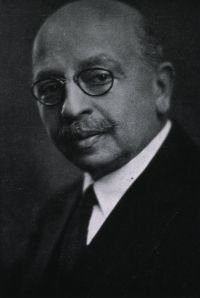
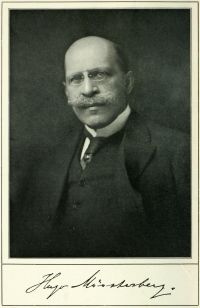
Portrait of Hugo Münsterberg Hugo Münsterberg,  Psychotherapy

“ But all those mysterious stories as to the achievements of suggestion cannot help so long as we do not understand the working of the process, and we shall have the better chance to understand it the more we keep away from the uncanny and mysterious results which refer to the most complex conditions, and rather seek to analyze the state in its simplest forms and compare it with other simple mental processes. The psychology of suggestion has suffered too much by the fascination which its most complex forms exert on a trivial curiosity. ”
Source: Gutenberg

Get perspective with Kwize: daily news enlightened by great literature