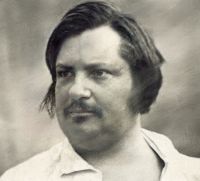
“ Undoubtedly the position of supernumerary in a government office is precisely what the novitiate is in a religious order,—a trial. It is a rough trial. The State discovers how many of them can bear hunger, thirst, and penury without breaking down, how many can toil without revolting against it; it learns which temperaments can bear up under the horrible experience—or if you like, the disease—of government official life. From this point of view the apprenticeship of the supernumerary, instead of being an infamous device of the government to obtain labor gratis, becomes a useful institution. ”
Supernumerary office
Definition and stakes
Quotes about “supernumerary office”
by the Alabama State Legislature, Alabama State Constitution of 1901… (1901)
“ No elected or appointed Bullock County official, including the sheriff, may assume a supernumerary office after the effective date of this amendment. Any person who, on the effective date of this amendment, is entitled to participate in a supernumerary program may continue to participate in that supernumerary program, which shall include the assumption of a supernumerary office according to the terms and conditions of the law which established that supernumerary program. ”
Emma Helen Blair, The Philippine Islands, 1493–1898 (1903)
“ No supernumerary commissioner shall be appointed without being examined, and giving bonds for the administration of his office. No dependent or member of a household of our said president and auditors may be appointed to such commissionership, under penalty that the clerk appointed contrary to this ordinance shall lose all fees and salary for the time during which he shall occupy himself with the commissionership. ”
William Duane, A military dictionary
“ When a company has lost the step, (a circumstance which frequently happens) the supernumerary officer of that company must watch a seasonable moment to suggest a change of step, in which operation, he will be assisted by the supernumerary serjeants. For it must be an invariable rule among officers in the ranks, never to deviate from their own perpendicular line of march, to correct the errors of their several companies. That business belongs entirely to the major and adjutant, who are occasionally assisted by the supernumeraries, in the manner just mentioned. ”
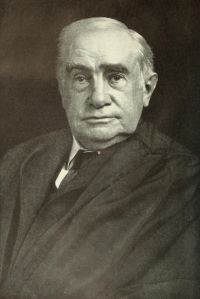
Henry Billings Brown,
Dennison v. United States — Opinion of the Court
“ The offices to be filled are purely temporary, and as soon as the election is held and the reports made the supervisors are functi officio. The office of the applications is even more temporary than that of the supervisors, since as soon as the appointments are made the applications have served the purpose for which they were intended. To speak of them as the official records of the chief supervisor is to dignify them with a title and importance entirely foreign to their real functions. ”
Jonathan Elliot, Debates in the Several State Conventions on the Adoption of the Federal Constitution (1907)
“ So, in the case of appointing officers, if it can be truly said that these heads of departments are the servants of the President alone, we shall make the executive department a dangerous one. I do not admit that any man has an estate in his office. I conceive all officers to be appointed during pleasure, except where the Constitution stipulates for a different tenure—unless, indeed, the law should create the office, or officer, for a term of years. After observing this, I must contend that the power of removal is incidental to the power of appointment. ”
James A. Roberts, A Century in the Comptroller's Office…
“ The Constitutional Convention of 1821, in deference to strong public demand, had abolished that disgraceful anomaly, and by section 6 of article 4 had provided that "the Secretary of State, Comptroller, Treasurer, Attorney-General, Surveyor-General and Commissioner-General shall be appointed as follows: The Senate and Assembly shall each openly nominate one person for the said offices respectively; after which they shall meet again, and if they shall agree in their nominations the person so nominated shall be appointed to the office for which he shall be nominated. ”
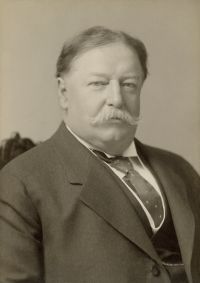
William Howard Taft,
Myers v. United States (272 U.S. 52…
“ And such would appear to have been the legislative construction of the Constitution. For in the organization of the three great Departments of State, War and Treasury, in the year 1789, provision is made for the appointment of a subordinate officer, by the head of the department, who should have the charge and custody of the records, books, and papers appertaining to the office, when the head of the department should be removed from the office by the President of the United States. ”
“ In the case of an appointment of the head of such an agency, the term of office may not be fixed at more than four years, the pay may not be at a rate in excess of that found by the President to be applicable to comparable officers in the executive branch, and if the appointment is not to a position in the competitive service, it shall be by the President, by and with the advice and consent of the Senate. ”
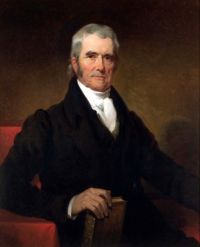
John Marshall,
Marbury v. Madison — Opinion of the Court
“ The appointment is the sole act of the President; the transmission of the commission is the sole act of the officer to whom that duty is assigned, and may be accelerated or retarded by circumstances which can have no influence on the appointment. A commission is transmitted to a person already appointed, not to a person to be appointed or not, as the letter enclosing the commission should happen to get into the post office and reach him in safety, or to miscarry. ”
Henry Billings Brown,
United States v. McDermott — Opinion of the Court
“ By section 2026 it is made the duty of the chief supervisor to 'prepare and furnish all necessary books, forms, blanks, and instructions for the use and direction of the supervisors of election in the several cities and towns in their respective districts;' but section 2031, prescribing the fees of the chief supervisor, makes no mention of compensation for services of this description, although an allowance of 15 cents per folio is made for a copy 'of any paper on file' in his office. ”
Westel Woodbury Willoughby,
Government and Administration of the United States
“ Separate bureaus and divisions have been created, which in some cases are, for all practical purposes, as independent and important as the departments themselves.The organization of all the different departments is much the same. At the head of each is an officer appointed by the President, the President thus having control generally over the whole executive business of the government. These officers are called Secretaries, except in the cases of the Post Office Department, whose head is the Postmaster-General, and of the Department of Justice, whose head is the Attorney-General. ”
Carl Schurz,
Speeches, correspondence and political papers of Carl Schurz
(1913)
“ Secondly, the Executive Department, which is responsible for the administration of public business, must, in making appointments or nominations to the Senate, remain independent of the dictation of Congressmen, many if not most of whom want to use the offices for the promotion of their own political ends. Thirdly, the qualifications of candidates for office must, whenever possible, be ascertained according to well regulated public methods, either by officers of the Departments themselves, or through competent men appointed for that purpose. ”
John Thomson,
Illustrations of China and Its People
(1874)
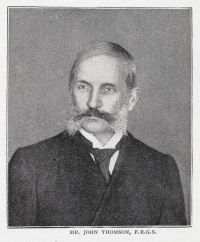
“ Membership of the Secretariat, as will be seen elsewhere, does not render residence at the capital obligatory, indeed distinguished provincial governors are often raised to that dignity, only so, however, when vacancies occur. Next in degree to this office, and of far more practical importance, are six boards representing as many departments in the administration. These are the Board of Civil Service; the Board of Finance; the Board of Rites, Obligations, and Observances (including public institutions and state worship) ”
Henry S. Gilbertson, The County: The "Dark Continent" of American Politics (1917)
“ Any vacancy on the Commission shall be filled by the Board of Supervisors for the unexpired term. Each member of the Commission shall serve until his successor is appointed and qualified. Not more than one member shall be an adherent of the same political party. No member shall hold any other salaried county office, nor shall he have been, within the year next preceding his appointment, an active executive officer in any political organization. ”
Lewis v. United States (244 U.S. 134…
“ Every surveyor general, register, and receiver, except where the President sees cause otherwise to determine, is authorized to continue in the uninterrupted discharge of his regular official duties, after the day of expiration of his commission, and until a new commission is issued to him for the same office, or until the day when a successor enters upon the duties of such office ”
Luke Owen Pike, The Public Records and The Constitution (1907)
“ Last of all the offices of the Comptroller-General of the Receipt and Issue of the Exchequer, of the Auditor of Excise, and of the Commissioners for Auditing Public Accounts were united by statute into the existing office of 'The Comptroller-General of the Receipt and Issue of the Exchequer and Auditor-General of Public Accounts', which is known as the 'Exchequer and Audit Department'. Statutes may expressly declare that an old office is abolished and a new office created, when changes such as these are effected, but they do not thereby undo the history of the past. ”
Michael MacDonagh,
The pageant of Parliament, vol…
(1921)
“ Some of them are capable of talking well upon any subject. These aspire to be Secretaries of State. Others, not so remarkable for general ability or so glib of tongue, confine themselves to particular departments of administration. It is the endeavour of each to obtain a mastery of the business details of some special office—Foreign, Home, Treasury, Colonial, Army, Navy, Post Office, Pensions, Trade, Transport, or Agriculture—looking for an Under-Secretaryship, in the expectation of ultimately attaining, after some years of diligent and capable service, to Cabinet rank. ”
W.E.B. DuBois,
The Freedmen's Bureau
(1901)
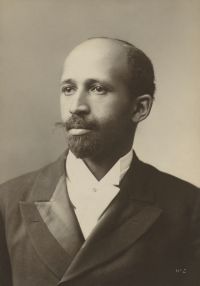
“ A commissioner, appointed by the President and Senate, was to control the Bureau, with an office force not exceeding ten clerks. The President might also appoint commissioners in the seceded states, and to all these offices military officials might be detailed at regular pay. ”
John Marshall,
Marbury v. Madison — Opinion of the Court
“ A commission bears date, and the salary of the officer commences from his appointment, not from the transmission or acceptance of his commission. When a person appointed to any office refuses to accept that office, the successor is nominated in the place of the person who [p162] has declined to accept, and not in the place of the person who had been previously in office and had created the original vacancy. ”
Stafford H. Northcote and Sir C. E. Trevelyan, Report on the Organisation of the Permanent Civil Service (1854)
“ If more have been elected (in order to maintain the average) than there is immediate demand for, they should be sent as supernumerary clerks to the offices in which the work happens to be the heaviest, unless there is any special service upon which they can with advantage be temporarily employed, or they might wait to take their turn. As vacancies occur from time to time before the next general examination, the supernumeraries should be appointed to them, and, if the whole have not been placed before that time, it will only be necessary to make the next batch the smaller. ”
Kitty O'Shea,
Charles Stewart Parnell: His Love Story and Political Life
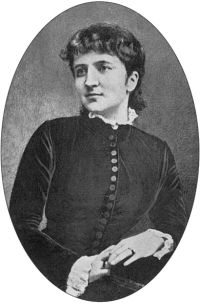
“ The Chamber shall have power to create departments for the transaction of all business connected with the affairs over which it has jurisdiction, and to appoint and dismiss chief and subordinate officials for such departments, to fix the term of their office, and to fix and pay their salaries ”
Benjamin Harrison, A Compilation of the Messages and Papers of the Presidents…
“ A new and rather anomalous office is therefore created—that of "colonel in the Army and chief of the Record and Pension Office of the War Department"—but upon the condition that the President shall nominate a particular person to fill it. I do not think it is competent for Congress to designate the person who shall fill an office created by law, and practically nothing remains of the bill under consideration if this person is not to be appointed. The office is an important one, connected with the active civil administration of the War Department. ”
W. H. Gray, A History of Oregon, 1792-1849
“ That in case of the vacancy of the office of major by death or otherwise, it shall be the duty of the Executive Committee to appoint another whose duty it shall be to serve in the place of such removed officer, until the annual election. ”
Columbus Delano,
Report of the Secretary of the Interior
(1872)
“ The Commissioner's suggestions in reference to the propriety of consolidating into one statute the principal features of the pre-emption and homestead laws, are, in my judgment, specially worthy of the attention of Congress. The necessity of a re-organization of the clerical force in his office, and of vesting him with authority to appoint special agents who shall bring the subordinate land-officers more immediately under his supervision, is clearly and forcibly stated, and the matter will, I earnestly hope, receive the early and favorable action of Congress. ”
Walter Bagehot,
Lombard Street: A Description of the Money Market
“ The Parliamentary Under-Secretary—the Deputy-Governor, so to speak, of that office—changes nearly as often. And if the administration solely, or in its details, depended on these two, it would stop. New men could not carry it on with vigour and efficiency; indeed they could not carry it on at all. But, in fact, they are assisted by a permanent Under-Secretary, who manages all the routine business, who is the depository of the secrets of the office, who embodies its traditions, who is the hyphen between changing administrations. ”
Stephen Johnson Field,
Norton v. Shelby Company — Opinion of the Court
“ And all that is required when there is an office to make an officer de facto, is that the individual claiming the office is in possession of it, performing its duties, and claiming to be such officer under color of an election or appointment, as the case may be. It is not necessary that his election or appointment be valid, for that would make him an officer de jure. ”
Jonathan Elliot, Debates in the Several State Conventions on the Adoption of the Federal Constitution (1907)
“ It will be time enough to determine the question when the President shall remove an officer in this way, I conceive it can properly be brought before that tribunal; the officer will have a right to a mandamus to be restored to his office; and the judges would determine whether the President exercised a constitutional authority or not. Some gentlemen think the Constitution takes no notice of this officer, as the head of a department. They suppose him an inferior officer in aid of the executive. ”
Carl Russell Fish,
The Civil Service and the Patronage…
(1905)
“ I must be permitted, with the best lights I can obtain, and upon a general view of characters and circumstances, to nominate such persons alone to offices, as in my judgment shall be the best qualified to discharge the functions of the departments to which they shall be appointed.” [17] This absolute requirement of capacity seems to have been generally understood, and nearly every existing application for office under Washington dwells on the applicant's ability.There is a broad difference between appointing only fit men to office, and appointing those who are most fit ”
James A. Roberts, A Century in the Comptroller's Office…
“ Several employees have been in the department's service for six or eight years or more, and no department of the State government is better equipped with honest, faithful, public servants than is the Comptroller's office. ”
Caleb Atwater, Mysteries of Washington City, during Several Months of the Session of the 28th Congress
“ If the office was derived from the President and Senate, the application had to be made to the President; but if the office applied for came from a Secretary, then he only was addressed, but it must be in writing. A story has been for some time past running around the whole Union, during the last year, in relation to the appointment of a clerk. ”
Eleanor C. Hill Smyth, Sir Rowland Hill: The Story of a Great Reform
“ On the score that the business of the Post Office is of a kind which peculiarly requires centralisation, the Commission condemned the principle of the double Secretariate, and recommended that the whole should be placed under the direction of a single secretary; that in order to enable “every deserving person” to have within his reach attainment to “the highest prizes,” the ranks of the Secretary's Office should be opened to all members of the establishment ”