Tensile stress

Definition and stakes

Samuel J. Record,  The Mechanical Properties of Wood

“ When external forces act upon a bar in a direction away from its ends or a direct pull, the stress is a tensile stress; when toward the ends or a direct push, compressive stress. In the first instance the strain is an elongation; in the second a shortening. Whenever the forces tend to cause one portion of the material to slide upon another adjacent to it the action is called a shear. ”
Source: Gutenberg

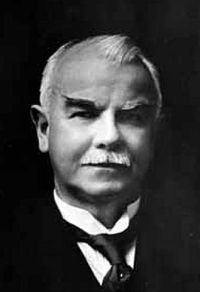
Portrait of James Alfred Ewing James Alfred Ewing,  1911 Encyclopædia Britannica (1911)

“ The stresses which occur in engineering practice are, or ought to be, in all cases within the limits of elasticity, and within these limits the change of cross-section caused by longitudinal pull or push is so small that it may be neglected in reckoning the intensity of stress.
Ultimate tensile strength and ultimate shearing strength are well defined, since these modes of stress (simple pull and simple shearing stress) lead to distinct fracture if the stress is sufficiently increased.
”
Source: Wikisource

Samuel J. Record,  The Mechanical Properties of Wood

“ Since the tensile strength of wood parallel to the grain is greater than the compressive strength, and exceedingly greater than the shearing strength, it is very difficult to make satisfactory tension tests, as the head and shoulders of the test specimen (which is subjected to both compression and shear) must be stronger than the portion subjected to a pure tensile stress. ”
Source: Gutenberg

Get perspective with Kwize: daily news enlightened by great literature