“ Yet nowhere can be found a single instance of transmutation of species. For example, if we should trace the pedigree of a horse backwards through a thousand generations we should find that the original animal was also a horse, though probably a very inferior animal. Of all the living animals and fossil remains of extinct ones, though thousands of specimens have been discovered, yet of land animals and the higher orders of creation not a single instance of transmutation can be found. ”
Transmutation of species
Definition and stakes
Quotes about “transmutation of species”
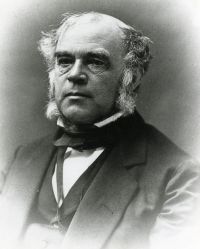
John William Draper,
History of the Intellectual Development of Europe…
“ Transmutation of species.The doctrine of the transmutation of species has met with no little resistance. They who have refused to receive it as one of the truths of Nature have perhaps not given full weight to physiological evidence. When they ask, Has any one ever witnessed such an event as the transmutation of one species into another? ”
Charles Darwin,
The Origin of Species
(1873)
“ The abrupt manner in which whole groups of species suddenly appear in certain formations, has been urged by several palæontologists — for instance, by Agassiz, Pictet, and Sedgwick — as a fatal objection to the belief in the transmutation of species. If numerous species, belonging to the same genera or families, have really started into life at once, the fact would be fatal to the theory of evolution through natural selection. For the development by this means of a group of forms, all of which are descended from some one progenitor, must have been an extremely slow process; ”
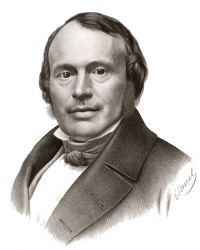
Sir Charles Lyell,
Principles of Geology
“ These changes inconsistent with the theory of transmutation.—Lamarck, when speculating on the transmutation of species, supposed every modification in organization and instinct to be brought about slowly and insensibly in an indefinite lapse of ages. But he does not appear to have sufficiently considered how much every alteration in the physical condition of the habitable surface changes the relations of a great number of co-existing species, and that some of these would be ready instantly to avail themselves of the slightest change in their favor, and to multiply to the injury of others. ”
William Whewell,
History of the inductive sciences…
(1875)
“ And the dilemma then presents itself to us anew:—either we must accept the doctrine of the transmutation of species, and must suppose that the organized species of one geological epoch were transmuted into those of another by some long-continued agency of natural causes; or else, we must believe in many successive acts of creation and extinction of species, out of the common course of nature ”
Thomas Henry Huxley,
Man's Place in Nature, and Other Essays
“ The other, the so-called “transmutation” hypothesis, considers that all existing species are the result of the modification of pre-existing species and those of their predecessors, by agencies similar to those which at the present day produce varieties and races, and therefore in an altogether natural way; and it is a probable, though not a necessary consequence of this hypothesis, that all living beings have arisen from a single stock. ”
Various, Popular Science Monthly (1896)
“ In a debate upon the development hypothesis, lately narrated to me by a friend, one of the disputants was described as arguing that as, in all our experience, we know no such phenomenon as transmutation of species, it is unphilosophical to assume that transmutation of species ever takes place. ”
George John Romanes, The Scientific Evidences of Organic Evolution
“ Yet the evidence of the natural transmutation of species, is, in one respect, much stronger than that of the natural transmutation of languages—in respect, namely, of there being a vastly greater number of cases all bearing testimony to the fact of genetic relationship. ”
Thomas Henry Huxley,
The Origin of Species
“ And so, while man may find it tax all his intelligence to separate any variety which arises, and to breed selectively from it, the destructive agencies incessantly at work in Nature, if they find one variety to be more soluble in circumstances than the other, will inevitably, in the long run, eliminate it. A frequent and a just objection to the Lamarckian hypothesis of the transmutation of species is based upon the absence of transitional forms between many species. But against the Darwinian hypothesis this argument has no force. ”
George Barry O'Toole, The case against evolution (1925)
“ No variation of which we have experience is interpretable as the transmutation of a specific type, and David Starr Jordan voices an inevitable conclusion when he says: “None of the created ‘new species’ of plant or animal I know of would last five years in the open, nor is there the slightest evidence that any new species of field or forest or ocean ever originated from mutation, discontinuous variation, or hybridization.” ”
August Weismann,
The Evolution Theory, Vol. 2 of 2
“ But even when we have fully recognized that, from the arcana of the germ-plasm, new minimal variations are continually cropping up, which are biologically indifferent, and nevertheless become variational tendencies, and may increase even to the extent of causing visible differences, and that therefore varieties of snails or of butterflies, or of any animal or plant whatever, may originate through germinal selection alone, it cannot for a moment be supposed that the transmutation of species depends upon this process exclusively or even preponderantly. ”
Thomas Henry Huxley,
Life and Letters of Thomas Henry Huxley…
“ T.H. Huxley.The fixity and definite limitation of species, genera, and larger groups appear to me to be perfectly consistent with the theory of transmutation. In other words, I think TRANSMUTATION may take place without transition.Suppose that external conditions acting on species A give rise to a new species, B ”
Charles Lyell,
The Antiquity of Man
(1863)
“ This would give rise to more frequent extinction of varieties, species, and genera, whereby the surviving types would be better limited, and the average duration of the same unaltered specific types would be lessened.ABSENCE OF MAMMALIA IN ISLANDS CONSIDERED IN REFERENCE TO TRANSMUTATION. But if mammalia vary upon the whole at a more rapid rate than animals lower in the scale of being, it must not be supposed that they can alter their habits and structures readily, or that they are convertible in short periods into new species. ”
William Lucas Distant,
The Zoologist
(1900)
“ Those holding to the theory of descent, evolution, or transmutation, look upon varieties, species, subgenera, genera, families, orders, classes, and sub-kingdoms, as distinctions of merely transient importance, corresponding to the state of our information at the present time; it being assumed that by means of gradual transmutation during the course of ages all organisms have become evolved from a single primitive cell, or from a few primitive types. ”
Sir Charles Lyell,
The Antiquity of Man
“ How far the Doctrine of Independent Creation is opposed to the Laws now governing the Migration of Species. CHAP. 22. OBJECTIONS TO THE HYPOTHESIS OF TRANSMUTATION CONSIDERED. Statement of Objections to the Hypothesis of Transmutation founded on the Absence of Intermediate Forms. Genera of which the Species are closely allied. Occasional Discovery of the missing Links in a Fossil State. Davidson's Monograph on the Brachiopoda. Why the Gradational Forms, when found, are not accepted as Evidence of Transmutation. ”
Louis Agassiz,
Louis Agassiz: His Life and Correspondence
“ Their age does not, therefore, go back to earlier geological periods; they belong to our times, geologically speaking. Whence, then, do their inhabitants (animals as well as plants) come? If descended from some other type, belonging to any neighboring land, then it does not require such unspeakably long periods for the transformation of species as the modern advocates of transmutation claim; and the mystery of change, with such marked and characteristic differences between existing species, is only increased, and brought to a level with that of creation. ”
George Barry O'Toole, The case against evolution (1925)
“ According to all theories of transformism, new species arise through the transformation of old species, and hence evolutionists are at one in affirming the occurrence of specific change. When it comes, however, to assigning the agencies or factors, which are supposed to have brought about this transmutation of organic species, there is a wide divergence of opinion. ”
Sir Charles Lyell,
The Antiquity of Man
“ Some of the opponents of transmutation, who are well versed in Natural History, admit that though that doctrine is untenable, it is not without its practical advantages as a "useful working hypothesis," often suggesting good experiments and observations and aiding us to retain in the memory a multitude of facts respecting the geographical distribution of genera and species, both of animals and plants, the succession in time of organic remains, and many other phenomena which, but for such a theory, would be wholly without a common bond of relationship. ”
Hugo de Vries,
Species and Varieties, Their Origin by Mutation
“ If we take the species into consideration that are not mutable at present, we may ask how we are to harmonize them with each of the two theories proposed. If mutability is permanent, it is manifest that the whole pedigree of the animal and vegetable kingdom is to be considered as built up of main mutable lines, and that the thousands of constant species can only be taken to represent lateral branches of the genealogic tree. ”
Frederic E. Clements, Research methods in ecology (1905)
“ On account of the suddenness with which they appear, mutants do not lend themselves readily to natural experiment, and after they have once been discovered, inquiry into the causes and course of mutation is practicable only by means of habitat and control cultures. Among variable species, those are most promising that show a wide range of variation and are found in abundance over extensive areas. ”
James Duncan,
Foreign Butterflies
“ The transmutability of species is a point which has been maintained by many naturalists besides Lamarck, and the reasons they have adduced in support of their opinions are so various, that the full consideration of them would be inconsistent with our present purpose. It may be assumed as capable of most satisfactory proof, that the mutations which species undergo in accommodating themselves to a change of external circumstances, have a definite limit, and are regulated by constant laws ”
George Barry O'Toole, The case against evolution (1925)
“ In any case, a mutation which suppresses a character is not, as we have seen, a specific change, but merely one of the varietal order, which does not result in the production of a genuine new species. The factorial mutant with a vestigial wing or eye belongs to the same species as its wild or normal parent stock. Moreover, neither disuse nor natural selection has the slightest power to induce mutations of this kind. ”
George John Romanes, The Scientific Evidences of Organic Evolution
“ On the other hand, it would be proof presumptive of natural selection if it could be shown that one species becomes slowly transmuted into another—i.e., that one set of adaptations may be gradually transformed into another set of adaptations according as changing circumstances require. ”
George John Romanes, Darwin, and After Darwin, Volumes 1 and 3
“ And forasmuch as natural selection may thus continue, ad infinitum, slowly to alter a specific type in adaptation to a gradually changing environment, if in any case the alteration thus effected is sufficient in amount to lead naturalists to name the result as a distinct species, it follows that natural selection has transmuted one specific type into another. ”
Hugo de Vries,
Species and Varieties, Their Origin by Mutation
“ These methods may direct effort toward two different modes of investigation. We may search for mutable plants in nature, or we may hope to induce species to become mutable by artificial methods. The first promises to yield results most quickly, but the scope of the second is much greater and it may yield results of far more importance. Indeed, if it should once become possible to bring plants to mutate at our will and perhaps even in arbitrarily chosen directions, there is no limit to the power we may finally hope to gain over nature. ”
Hugo de Vries,
Species and Varieties, Their Origin by Mutation
“ Variability seems to us to be very general, but very limited. The limits however, are distinctly drawn by the struggle for existence. Of course the chance for useful mutations is a very small one. We have seen that the same mutations are as a rule repeated from time to time by the same species. ”
Hugo de Vries,
Species and Varieties, Their Origin by Mutation
“ Exactly in the same way artificial selection isolates and preserves some elementary species, while it destroys others. Of course the time is not sufficient to secure new mutations, or at least these are only rare at present, and their occurrence is doubtful in historic periods. Apart from this unavoidable difference the analogy between natural and artificial selection appears to me to be very striking. ”
Little Masterpieces of Science…
“ Why, it may be asked, until recently did nearly all the most eminent living naturalists and geologists disbelieve in the mutability of species? It cannot be asserted that organic beings in a state of nature are subject to no variation; it cannot be proved that the amount of variation in the course of long ages is a limited quantity; no clear distinction has been, or can be, drawn between species and well-marked varieties. It cannot be maintained that species when intercrossed are invariably sterile and varieties invariably fertile; or that sterility is a special endowment and sign of creation. ”
Various, Popular Science Monthly (1908)
“ The experimentalists, represented by Bateson, De Vries, Tower, MacDougal, Davenport and many others, have ascertained that what appear to be new species or races may arise suddenly by a process termed mutation. ”
Hugo de Vries,
Species and Varieties, Their Origin by Mutation
“ Now, according to the theory of natural selection, wild species can only retain useful or at least innocuous qualities, since all mutations in a wrong direction must perish sooner or later. Cultivated species on the other hand are known to be largely endowed with qualities, which would be detrimental in the wild condition. Monstrosities are equally injurious and could not hold their own if left to themselves. ”
David Starr Jordan, Popular Science Monthly (1904)
“ Forms too closely bred soon run out, because generally only by crossing does variation appear. It is of great advantage to have the parents a certain distance apart in their hereditary tendencies. If too close together there is not range enough of variety. If too far apart, the developed forms are unfitted for existence because too unstable. Correlated changes work together to produce the effect of mutations. Environment effects a permanent change in species by selection of those which fit it or by producing changes in individuals which are better equipped to survive. ”
Hugo de Vries,
Species and Varieties, Their Origin by Mutation
“ And as the principle of the hypothesis under discussion does not allow a resumption of this habit, they would be doomed to eternal constancy until they finally die out. Loss of mutability, under this conception, means loss of the capacity for all further development. Only those lines of the main pedigree which have retained this capacity would have a future; all others would die out without any chance of progression. ”
Hans Driesch,
The Science and Philosophy of the Organism
“ I should like to add to this remark that the possibility must be admitted of the individuals being transmutable, whilst the “species” are not transmutable at the same time, the line of the “species” being a fixed order, through which the “individuals” have to pass in the course of their generations. ”