“ In immense areas such a dividing line is never to be seen, and saving perhaps for a small tree that is scarcely more than an overgrown bush, there is little to break the horizon line except the tall poplars, birches, and other trees that line the main roads. ”
Tree line
Definition and stakes
The tree line marks the ecological boundary where trees can survive, shaped by temperature, altitude, and climate. Alpine tree lines, defined by cold and snow, contrast with arctic ones, constrained by permafrost and harsh conditions. Authors like John Muir observed trees competing for light, while Harold W.
Fairbanks highlighted firs flourishing at high altitudes. Gordon Home noted trees as horizon-defining features, and Charles Lathrop Pack emphasized wind’s role in influencing forest resilience. These perspectives reveal the tree line as both a physical threshold and a dynamic indicator of environmental change, with climate shifts already altering its elevation.
Quotes about “tree line”
Various, The Prairie Farmer, Vol. 56, No…
“ They are then cut half off at the ground and bent over at an angle of thirty degrees with the ground, a tree being left upright at distances of four or five feet, and the inclined ones interwoven among them, a straight line of trees being thus formed. ”
“ The lower limbs die young and drop off for want of light. Life with these close-planted trees is a race for light, more light, and so they push straight for the sky. Mowing off ten feet from the top of the forest would make it look like a crowded mass of telegraph-poles; for only the sunny tops are leafy. A sapling ten years old, growing in the sunshine, has as many leaves as a crowded tree one or two hundred years old. As fires are multiplied and the mountains become drier, this wonderful lodge-pole pine bids fair to obtain possession of nearly all the forest ground in the West. ”
E. T. Allen, Practical Forestry in the Pacific Northwest
“ Consequently clean cutting may be the best system for these also under certain economic conditions. Besides its influence upon the occurrence of species in the forest, light practically governs the physical form of the individual tree. If grown in an opening and not artificially pruned, a tree will have a conical trunk and living branches almost down to the ground. The denser and consequently darker the forest, the more cylindrical the trunk, the smaller the crown of branches and the greater the clear length. ”
 Olive Thorne Miller,
Upon The Tree-Tops
“ It was beside a rocky ledge which ran through the middle of a bit of meadow-land, and happily defied being cultivated, although it supported a flourishing crop of wildings,—scattering elm, oak, and pine trees, with sumac, goldenrod, and other sweet things to fill up the tangle. Under a low-spreading tree I placed my seat: at my back the screening rocks, in front a strip of meadow waiting for the mower. Along the side where I entered ran a stone wall, but before me was a stretch of delightfully dilapidated old board and pole fence. ”
 C. Boden Kloss,
In the Andamans and Nicobars: The Narrative of a Cruise in the Schooner "Terrapin"
“ Mighty trees towered upwards, branches interlacing and shutting out the sun, while down below, in the aisles of tree-trunks, stood the smaller brethren and the saplings, waiting the fall of some neighbouring giant to give them in turn room to lift their branches towards the light. ”
Harold W. Fairbanks, The Western United States: A Geographical Reader
“ But we must not remain among the Big Trees, for the forests extend much farther up the mountains. The most important tree of the upper forest belt is the fir, which is found growing from five thousand to nearly nine thousand feet above sea-level. It is one of the most graceful of the conifers. Sometimes these trees reach a height of two hundred and fifty feet and form dense forests with little undergrowth. The branches make the soft, fragrant beds which so rest and delight the tired mountain climber. ”
Charles Lathrop Pack, The School Book of Forestry
“ Where trees are exposed to strong winds, they develop deep and strong root systems. They produce large and strong trunks that can bend and resist violent winds which sway and twist them in every direction. Such trees are much stronger and sturdier than those that grow in a sheltered forest. The trees that are blown down in the forest provide space for the introduction and growth of new varieties. These activities are constantly changing the type of tree growth in the forest. ”
Robert Tyas, Woodland Gleanings: Being an Account of British Forest-Trees
“ In the forests of America, and other scenes, they have filled the plains from the beginning of time; and where they grow so close, and cover the ground with so impervious a [166] shade that even a weed can scarce rise beneath them, the single tree is lost. Unless it stand on the outskirt of the wood, it is circumscribed, and has not room to expand its vast limbs as nature directs. ”
G. Frederick Schwarz, Forest Trees and Forest Scenery
“ Its limbs and branches divide in harmonious proportions, reaching out as if conscious of their strength, and yet with sufficient gracefulness to lend dignity to the tree. The lower boughs, especially, are inclined to assume an elegant sweep, deflecting sidewise to the earth, and ending with an upward curve and a droop at the outer extremity. Often the crowded environment of the forest does not admit of such ample development ”
 Robert Sterling Yard,
The Book of the National Parks
“ Impossible to draw subsistence from below, it stands up from a burned, naked, slender foundation. But another tree fell against it twenty-five or thirty feet above the ground, in some far past storm, and lost its top; this tree pours its sap into the veins of the other to support its noble top. The twin cripples have become a single healthy tree. ”
A. Maud Moreland, Through South Westland (1916)
“ And, lastly, we get a spreading forest tree equalling the red pine in height. At certain times of the year the bark peels off, and then the Temple columns are splashed with crimson and scarlet—wonderfully beautiful. Surely it is this continual finding of surprises that make one’s progress through the bush so fascinating? Everywhere one sees those strange black ropes, jointed and polished, hanging from the roof in straight lines, or tying tree to tree, twisting and coiling, with neither beginning nor end that one can find. ”
“ The greater part of the breadth is occupied by the zone of the forest, the willow brakes, and the shrubbery of the bank—I find myself hunting for a word which will more perfectly fix and define this wonderful terrain than the word wood, and yet I am unable to find one. There can be no talk of a wood in the usual sense of the term—a kind of great pillared grove with moss and strewn leafage and tree-trunks of fairly uniform girth. The trees in our hunting-grounds are of different ages and circumference. ”
George P. Marsh, The Earth as Modified by Human Action
“ The pine, then, is an exception to the general rule as to the inferiority of the forest to the open-ground tree. The pasture oak and pasture beech, on the contrary, are well known to produce far better timber than those grown in the woods, and there are few trees to which the remark is not equally applicable. ”
 Patrick Matthew,
On Naval Timber and Arboriculture
“ It displays its ramification chiefly near the top; while the imperfection of its life is manifested in the whole character of its vegetation. In open exposures, on the other hand, the tree developes its existence, in full health and luxuriance. It reaches a height, such as the soil and situation admit, and sufficient to allow the branches, which are thrown out on every side, to expand their leaves freely to the sun. ”
“ The value of these forests in storing and dispensing the bounty of the mountain clouds is infinitely greater than lumber or sheep. To the dwellers of the plain, dependent on irrigation, the Big Tree, leaving all its higher uses out of the count, is a tree of life, a never-failing spring, sending living water to the lowlands all through the hot, rainless summer. For every grove cut down a stream is dried up. ”
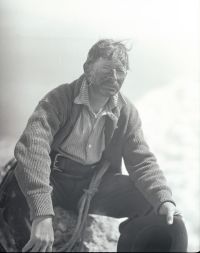 Dallas Lore Sharp,
The Spring of the Year
“ The old apple tree yonder between the woods and the meadow is as central, as [Pg 15] hospitable, and, if animals talk with one another, just as full of neighborhood news as was grandfather’s roof-tree.Of course you would never suspect it, passing by. But then, no lover of wild things passes by—never without first stopping, and especially before an old tree all full of holes. Whenever you see a hole in a tree, in a sand-bank, in a hillside, under a rail-pile—anywhere out of doors, stop! ”
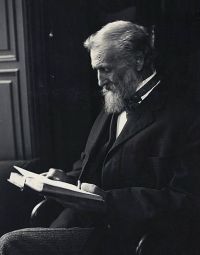 John Muir,
The Mountains of California
“ First the elastic tops of the arches begin to appear, then one branch after another, each springing loose with a gentle rustling sound, and at length the whole tree, with the assistance of the winds, gradually unbends and rises and settles back into its place in the warm air, as dry and feathery and fresh as young ferns just out of the coil. ”
 Charles Kingsley,
Prose Idylls, New and Old
“ But the trees which remain, whether in forest or in homestead, are sadly mangled. The winters are sharp in these high uplands, and firing scarce; and the country method of obtaining it is to send a woman up a tree, where she hacks off, with feeble arms and feeble tools, boughs halfway out from the stem, disfiguring, and in time destroying by letting the wet enter, splendid southern oaks, chestnuts, and walnuts. ”
 K. Langloh Parker,
The Euahlayi Tribe: A Study of Aboriginal Life in Australia
“ A low, overhanging branch of a tree is chosen, and as many as it will bear, old and young, men and women, straddle it; and, holding on to the higher overhanging branches, they swing up and down with as much spring as they can get out of the branch they are on. ”
John Muir,
Steep Trails — Chapter XVIII: The Forests of Washington
(1918)
“ For so large a tree it is astonishing how many find nourishment and space to grow on any given area. The magnificent shafts push their spires into the sky close together with as regular a growth as that of a well-tilled field of grain. And no ground has been better tilled for the growth of trees than that on which these forests are growing. ”
Henry Abbott, Camps and Trails
“ A tree lying on the ground in the shade, absorbs and retains moisture and it soon decays and is unfit for use for any purpose. Thus, while conserving live forest trees, one may obtain material better suited to his purpose than if he had used green timber having a market value. ”
Henry H. Gibson, American Forest Trees
“ It thrives in hot and cold climates, and high and low elevations; in regions of much rain, and in those with little. That fact has been turned to account by tree planters, particularly in the years when the western plains were being settled by homesteaders. The box elder was the chief tree on many a timber claim where the letter of the law rather than the spirit was carried out. ”
E. T. Cook, Trees and Shrubs for English Gardens
“ In this case the middle row of trees should not be quite evenly continuous, but perhaps five or six trees and then a gap, formed by leaving out one tree, in order to allow the traffic to move from side to side of the road. In many a town where a street runs north-east and south-west, a row of trees on its south-western side only might be an inestimable boon. ”
J. A. Warder, American Pomology. Apples
“ The holes are the deep furrows, and tree stations are the spaces beside the stakes, always maintaining the same relative position throughout the orchard; the northern side is to be preferred, on account of the partial shade of the stake. By adopting this plan, there need be no trouble, as is often experienced, in sighting the trees to have them straight, for if the stakes have been correctly placed, the trees will also be right, and will range in every direction, when planted. ”
John Muir,
The Yosemite — The Big Trees
(1912)
“ In the northern groves there are comparatively few young trees or saplings. But here for every old storm-beaten giant there are many in their prime and for each of these a crowd of hopeful young trees and saplings, growing vigorously on moraines, rocky edges, along water courses and meadows. But though the area occupied by the big tree increases so greatly from north to south, here is no marked increase in the size of the trees. ”
Cyclopedia of illustrations for public speakers
“ But don’t say now that because the average on this rocky soil and these storm-swept peaks is six inches, that the great tree in the valley is abnormal. On the mountain side, with the thin soil, roots that cling to rocks, snows that bite, winds breaking the boughs, thunderbolts that burn and blacken, the average tree is small. ”
Charles Lathrop Pack, The School Book of Forestry
“ In some parts of the United States forestry experts can tell where they are by the local tree growth. For example, in the extreme northern districts the spruce and the balsam fir are native. As one travels farther south these give way to little Jack pine and aspen trees. Next come the stately forests of white and Norway pine. Sometimes a few slow-growing hemlock trees appear in the colder sections. If one continues his journey toward the equator he will next pass through forests of broad-leaved trees. They will include oak, maple, beech, chestnut, hickory, and sycamore. ”
William Noyes, Wood and Forest
“ Even the trees most tolerant of shade in youth, like spruce, must have light later or perish, and hence in a forest there is the constant upward reach. This produces the characteristic "long-bodied" trunk of the forest tree, Fig. 71, in contrast to the "short-bodied" tree of the open, where the branches reach out in all directions, Fig. 72. In this constant struggle for existence is involved the persistent attempt of scattered seeds to sprout whenever there is an opening. The result is that a typical forest is one in which all sizes and ages of trees grow together. ”
 Julian Street,
Mysterious Japan
“ But in some places the pocket of soil is small; wherefore the roots of the pine cannot spread, and the tree becomes a dwarf, gnarled and picturesque. Again, on the hillsides the rich soil makes great trees grow, with rich shrubbery and verdure beneath them. The torrent completes the landscape effect by sculpturing the rocks into fascinating forms. In that combination you have every element required. Reproduce it in miniature, and your garden is made. ”
Henry H. Gibson, American Forest Trees
“ Of the countless thousands of such crosses a few, at long intervals of time, may develop characteristics which enable them to maintain their existence and to spread into new territory. If that occurs, a new kind of tree has appeared on earth and is ready to take its place among the established forests of the region. ”
 Juliana Horatia Ewing,
Miscellanea
“ They are not made of dwarf trees. There are little woods, as well as big woods, of oak, elm, ash, pine, willow, birch, beech, and larch. In some cases the little woods are composed of the growth which shoots up when the principal trunk of the tree has been cut down, but they are generally little merely because they are young, and are cut down for use before they have time to grow into forest-trees. ”
 John Evelyn,
Sylva; Or, A Discourse of Forest Trees…
“ Some commend the strewing a few oats at the bottom of the fosses or pits in which you transplant the naked roots, for a great promotement of their taking, and that it will cause them to shoot more in one year than in three: But to this I have already spoken. Other kinds not so rigid, nor the bark, leaf, cone and nuts so large, are those call’d the mountain-pine, a very large stately tree: There is likewise the wild, or bastard-pine, and tea, clad with thin long leaves, and bearing a turbinated cone: Abundance of excellent rosin comes from this tree. ”
Various, The National Geographic Magazine…
“ But whatever the form of the tree trunks may be, the shallow soil upon the hills and the marshy soil in the lowlands, has taught them that there is greater safety and stability in a broad foundation than in a deeply penetrating one, and so almost without exception the tree roots spread out widely, on, or near, the surface. Beneath the protecting shelter of these patriarchs, as completely protected from scorching sun and rushing wind as if in a conservatory, grow innumerable varieties of palms, young trees destined some day to be giants themselves, and others which never attain great size. ”
Eleanor Colby, Seeing America First, with the Berry Brothers
“ It seems dreadful to cut down trees which have been growing so long, yet occasionally one is made into lumber. After standing for a thousand years or more in the forest, it must seem strange to be cut into sections, loaded on flat cars, and started on a journey to some distant place to be made into ship masts or furniture or some other thing of which the tree never dreamed when it stood in its home on the slope of the Sierras. ”
Julia Ellen Rogers, Trees Every Child Should Know: Easy Tree Studies for All Seasons of the Year
“ The shortleaf pine will reforest the old areas, and spread over a widening territory, if only it is given a chance. One hundred years is enough time to restore a forest,—to grow a crop of these trees. Young ones spring from the roots of old trees, a habit not at all common among pines. Let us hope that before the Southwestern forests are gone, new ones east of the Mississippi River will take their places, so that the shortleaf shall not disappear from the lumber markets as the white pine of the Northeastern states has done. ”
Related terms
Authors who wrote about “tree line”
Robert TyasCharles Lathrop PackG. Frederick SchwarzJulia Ellen RogersAnnie Oakes HuntingtonHarold W. FairbanksEleanor ColbyJohn MuirVariousHenry H. Gibson Henry David ThoreauWilliam Noyes
 John RuskinPatrick MatthewRobert Sterling YardA. Maud Moreland
 Thomas MannGordon HomeOlive Thorne MillerDallas Lore Sharp
John MuirVariousHenry H. GibsonHenry David ThoreauWilliam NoyesJohn RuskinPatrick MatthewRobert Sterling YardA. Maud MorelandThomas MannGordon HomeOlive Thorne MillerDallas Lore Sharp