Verity
Definition and stakes
Verity, often synonymous with truth or reality, has long been a cornerstone of philosophical and literary discourse. From George Eliot’s assertion that “one soweth, and another reapeth” applies to both good and evil, to Nietzsche’s interrogation of the “Will to Truth,” authors have grappled with its implications.
Religious thinkers like Brigham Young and John Wesley framed truth as a moral and divine imperative, while philosophers such as Josiah Royce and M. Valentine explored its existential and ethical weight. These diverse perspectives converge on truth as a universal standard, bridging human experience and absolute reality.
Quotes about “verity”
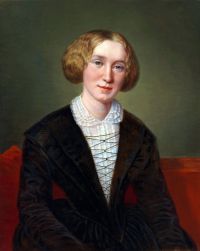
Jr. James Weir, Religion and Lust
“ He may not live to see these propositions accepted, yet he believes that, in the future, perhaps, in worthier and more able hands, they will be so weightily and forcibly elaborated and advanced that their verity will be universally acknowledged. ”
 Brigham Young,
Journal of Discourses — Volume 13…
Brigham Young,
Journal of Discourses — Volume 13…
“ I want to say to my friends that we believe in all good. If you can find a truth in heaven, earth or hell, it belongs to our doctrine. We believe it; it is ours; we claim it. Is that right? If you find an error here, I ask you to leave it, pass it by, let it alone; do not embrace it in your faith, do not practice it in your lives. I say to all, to my brethren and sisters and to strangers, if we teach anything that is good, receive it, I beseech you. ”
 Laurence Sterne,
The Life and Opinions of Tristram Shandy…
(1765)
Laurence Sterne,
The Life and Opinions of Tristram Shandy…
(1765)
“ So that if you would form a just judgment of what is of infinite importance to you not to be misled in,—namely, in what degree of real merit you stand either as an honest man, an useful citizen, a faithful subject to your king, or a good servant to your God,—call in religion and morality.—Look,—What is written in the law of God?—How readest thou?— Consult calm reason and the unchangeable obligations of justice and truth;- -what say they? ”
 Josiah Royce,
The Religious Aspect of Philosophy
(1885)
Josiah Royce,
The Religious Aspect of Philosophy
(1885)
“ You and I and all of us, all good, all evil, all truth, all falsehood, all things actual and possible, exist as they exist, and are known for what they are, in and to the absolute thought; are therefore all judged as to their real character at this everlasting throne of judgment. ”
M. Valentine, Theoretical Ethics
“ If the qualities of right and wrong be not in very truth real, if they be not verities of conduct in the constituted relations of human life, if the ideas answer not to a true distinction set before us for our recognition and conformity, then virtue is a dream, obligation an illusion, and conscience a fraud. ”
“ Brave words! with which we have the deepest sympathy; for if they are the utterance of a truly sincere heart, they evidence belief, and not unbelief; they assume that there is an order and government in the universe, which is on the side of truth, and that we may therefore, at all hazards, discover what is true, and cling to it in the full assurance of faith,—that ultimately the right and true are in harmony with all that is worth loving and worth living for. ”
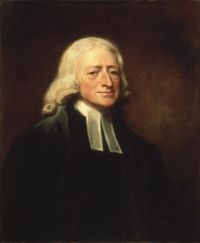 John Wesley,
The works of the Rev. John Wesley…
(1771)
John Wesley,
The works of the Rev. John Wesley…
(1771)
“ Let truth and plainness be the only ornament of your language, and study nothing but how to think of all things as they deserve, to chuse every thing that is best, to live according to reason, and to act in every part of your life in conformity to the will of God. ”
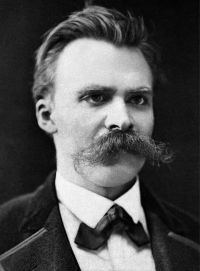 Friedrich Wilhelm Nietzsche,
Beyond Good and Evil
Friedrich Wilhelm Nietzsche,
Beyond Good and Evil
“ The Will to Truth, which is to tempt us to many a hazardous enterprise, the famous Truthfulness of which all philosophers have hitherto spoken with respect, what questions has this Will to Truth not laid before us! ”
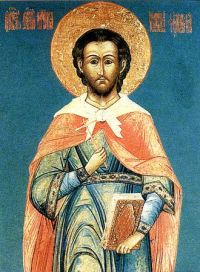 Justin Martyr,
Ante-Nicene Fathers — On the Resurrection…
(1885)
Justin Martyr,
Ante-Nicene Fathers — On the Resurrection…
(1885)
“ As then we bring those things which reason hunts after, to sense, and by it judge what kind of things they are, whether the things spoken be true or false, and then sit in judgment no longer, giving full credit to its decision; so also we refer all that is said regarding men and the world to the truth, and by it judge whether it be worthless or no. ”
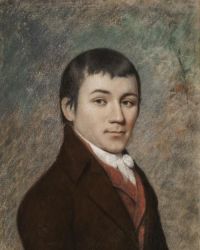 Charles Brockden Brown,
Memoirs of Carwin the Biloquist…
Charles Brockden Brown,
Memoirs of Carwin the Biloquist…
“ To detect its imperfections was no easy task; to lay the foundations of virtue in utility, and to limit, by that scale, the operation of general principles; to see that the value of sincerity, like that of every other mode of action, consisted in its tendency to good, and that, therefore the obligation to speak truth was not paramount or intrinsical: that my duty is modelled on a knowledge and foresight of the conduct of others ”
Durant Drake, Problems of Conduct: An Introductory Survey of Ethics
“ But truth and right, founded in the eternal and, is what every man can judge of, when laid before him. 'T is necessarily one and the same to every man's understanding, just as light is the same, to every man's eyes. ”
 Ralph Waldo Emerson,
Literary Ethics
(1838)
Ralph Waldo Emerson,
Literary Ethics
(1838)
“ You will hear, that the first duty is to get land and money, place and name. 'What is this Truth you seek? what is this Beauty?' men will ask, with derision. If, nevertheless, God have called any of you to explore truth and beauty, be bold, be firm, be true. ”
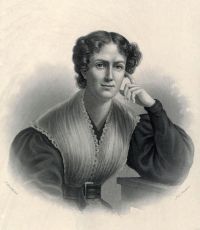 Frances Wright,
A few days in Athens
(1850)
Frances Wright,
A few days in Athens
(1850)
“ I understand you to say, that to enter upon the discussion of certain opinions, which you consider as sacred truths, would appear to argue a doubt of those truths, and that a doubt would here constitute a crime. Now as I think such a belief inconsistent with candor and charity—two feelings, indispensable both for the enjoyment of happiness ourselves, and for its distribution to others, I shall challenge its investigation. If the 162doubt of any truth shall constitute a crime, then the belief of the same truth should constitute a virtue. ”
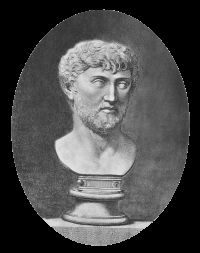 Titus Lucretius Carus,
On the Nature of Things
Titus Lucretius Carus,
On the Nature of Things
“ Thou'lt find That from the senses first hath been create Concept of truth, nor can the senses be Rebutted. For criterion must be found Worthy of greater trust, which shall defeat Through own authority the false by true; What, then, than these our senses must there be Worthy a greater trust? Shall reason, sprung From some false sense, prevail to contradict Those senses, sprung as reason wholly is From out the senses?—For lest these be true, All reason also then is falsified. Or shall the ears have power to blame the eyes, Or yet the touch the ears? ”
 William Edward Hartpole Lecky,
The Map of Life
William Edward Hartpole Lecky,
The Map of Life
“ To cultivate sincere love of truth and clear and definite conceptions, and divest ourselves as much as possible from prejudices, fanaticisms, superstitions, and exaggeration; to take wide, sound, tolerant, many-sided views of life, stands in his eyes in the forefront of ethics. ”
Paul Jones, Hidden from the Prudent (1921)
“ Truth for the sake of right living, not truth for the truth's sake or truth for God's sake, is the divine valuation. The wisdom and patient study of the ages have gone into the search for the [9] knowledge of God and His will, but to what purpose is it, when today as ever the mysteries of the kingdom are revealed to the hearts of the child-like? ”
 James Hutchins Baker,
Education and life
(1900)
James Hutchins Baker,
Education and life
(1900)
“ Are not our fancies and our facts, our errors in the search of truth and our truths, our doubts and our faith, our life and activity and being, proofs of a Universal Existence—the revealer of truth, the source of truth, and the Truth? ”
Charles J. Callan, Moral Theology
“ The Virtue of Truthfulness.—Having treated the virtues of gratitude and vengeance, which deal with moral obligations caused by an act of the one owed, we now pass on to truthfulness, which is a moral obligation arising from the acts of the one owing in which he communicates with others. For he who speaks, writes, or otherwise manifests his mind to others puts himself under a duty of not deceiving. Truthfulness or veracity is defined as “a moral virtue that inclines one duly and faithfully to express what is in one’s mind.” ”
Various, Popular Science Monthly (1898)
“ Philosophical Veracity.—This may be defined as the most abstract and disinterested form of truthfulness—the simple love of truth for its own sake. The conditions of its development are complete emancipation from prejudice and party contentiousness, freedom from the disturbing influences of passion, tradition, personal and other kinds of bias, the cultivation of a calm and judicious spirit in all matters of controversy, and that steadiness of mental vision which enables us to envisage without wavering the hardest and most disagreeable facts. ”
Friedrich Wilhelm Nietzsche,
The Twilight of the Idols; or, How to Philosophize with the Hammer…
“ Every inch of truth has been conquered only after a struggle, almost everything to which our heart, our love and our trust in life cleaves, has had to be sacrificed for it Greatness of soul is necessary for this: the service of truth is the hardest of all services.—What then is meant by honesty in things intellectual? ”
 James Frederick Ferrier,
Blackwood's Magazine
(1838)
James Frederick Ferrier,
Blackwood's Magazine
(1838)
“ And spread over the surface of common life, there is a moral mirage analogous to this, and equally attractive to the philosopher thirsting after truth. In pursuing it we may be often disappointed and at fault, but let us follow it in faithful hope, and it will lead us on and on unto the true and living waters at last. ”
 Georgiana Fullerton,
The Life of St. Frances of Rome…
Georgiana Fullerton,
The Life of St. Frances of Rome…
“ If you profess to believe in their truth, how do you reconcile their character with the universal aspect of human life, as it appears to us and to our friends? And finally, if you claim for them the assent to which proved facts have a right from every candid mind, to what extent of detail do you profess to believe in their authenticity? ”
 Friedrich Schiller,
Aesthetical Essays of Friedrich Schiller
Friedrich Schiller,
Aesthetical Essays of Friedrich Schiller
“ If you confess the truth because it is the truth, and if you practise justice because it is justice, you have made of a particular case the law of all possible cases, and treated one moment of your life as eternity. ”
Fred S. Lincoln, An Indiana Girl — Chapter 7 (1901)
“ But I am afraid that in many cases their wider understanding of people and things allows them to handle the truth in a manner to convert it to their own needs; in a measure leading you to believe an omission in themselves a virtue by comparison, while another's virtue may be distorted to appear as folly or even sin. ”
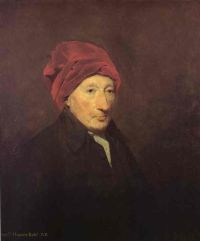 Thomas Reid,
An Inquiry into the Human Mind…
Thomas Reid,
An Inquiry into the Human Mind…
“ There may, indeed, be temptations to falsehood, which would be too strong for the natural principle of veracity, unaided by principles of honour or virtue; but where there is no such temptation, we speak truth by instinct ”
Roger Williams, The Bloudy Tenent of Persecution for Cause of Conscience Discussed and Mr…
“ For the clearing of which let the word of truth be rightly divided, and a right distinction of things applied, there will appear nothing contradictory, but clear and satisfactory to each man’s conscience. ”
 Theodore Dreiser,
Hey Rub-a-dub-dub: A Book of the Mystery and Wonder and Terror of Life
(1920)
Theodore Dreiser,
Hey Rub-a-dub-dub: A Book of the Mystery and Wonder and Terror of Life
(1920)
“ Is there anywhere in this to be found that universal right, truth, justice, mercy, as we have hitherto deemed it or them to be or exist? Perhaps not, but it is all of so-called right, truth, mercy or justice, universal or otherwise, that we will ever know, all of it that is involved with life. ”
The Best of the World's Classics…
“ Since therefore the knowledge and survey of vice is in this world so necessary to the constituting of human virtue, and the scanning of error to the [142] confirmation of truth, how can we more safely, and with less danger, scout into the regions of sin and falsity than by reading all manner of tractates and hearing all manner of reason? ”

“ In the vast majority of cases, where we make statements involving any of the terms ‘virtue,’ ‘vice,’ ‘duty,’ ‘right,’ ‘ought,’ ‘good,’ ‘bad,’ we are making ethical judgments; and if we wish to discuss their truth, we shall be discussing a point of Ethics. ”
 William Kingdon Clifford,
The Scientific Basis of Morals
(1884)
William Kingdon Clifford,
The Scientific Basis of Morals
(1884)
“ The duty of private judgment, of searching after truth, the sacredness of belief which ought not to be misused on unproved statements, follow only on showing of the enormous importance to society of a true knowledge of things. ”
Brigham Young,
Journal of Discourses — Volume 8…
“ Let truth bear sway, and true integrity shed a charm around your whole being. Rise up for the right in the strength of your own ability. God has bestowed upon you the power to reject the evil and receive the truth ”
 John Taylor,
Journal of Discourses — Volume 5…
John Taylor,
Journal of Discourses — Volume 5…
“ It is the principles of truth which cement us together and make us act in union and strength: it is those principles that buoy up our feelings, animate our souls, and make us feel joyous and jubilant under all circumstances. It is light, it is truth, it is intelligence, it comes from and leads to God, exaltation, and celestial glory. ”
Matthew Henry, Commentary on the Whole Bible… (1700s)
“ They are a people who know righteousness, who not only have the means of knowledge, and to whom righteousness is made known, but who improve those means, and are able to form a right judgment of truth and falsehood, good and evil. ”
 William Graham Sumner,
Earth-Hunger and Other Essays
(1913)
William Graham Sumner,
Earth-Hunger and Other Essays
(1913)
“ It is, on the contrary, a doctrine of the first moral and sociological importance that truth, wisdom, and righteousness come only by painstaking, study, and striving. These things are so hard that it is only the few who attain to them. ”
Thomas Ridgley, A Body of Divinity, Vol. 1 (of 4…
“ He who has marked the differences between truth and error, good and evil, made them discoverable, and formed human minds susceptible of their impressions, thereby discovers his will that we should attend to them, and has made it our duty to do so. ”
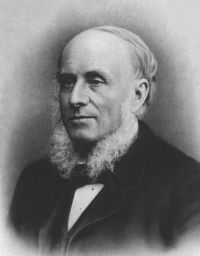 Alexander Bain,
Moral Science; a Compendium of Ethics
Alexander Bain,
Moral Science; a Compendium of Ethics
“ TRUTH, the law of Speech in connexion with its purpose; PURITY, the control of the Bodily Appetites; and ORDER (obedience to the Laws) , which engages the Reason in the consideration of Rules and Laws for defining Virtue and Vice. Thus the five leading branches of virtue have a certain parallelism to the five chief classes of motives—Bodily Appetites, Mental Desires, Love and its opposite, the need of a Mutual Understanding, and Reason. ”
 Benjamin Fiske Barrett,
The New View of Hell
(1872)
Benjamin Fiske Barrett,
The New View of Hell
(1872)
“ Let us scrupulously guard against such presumption. Let us reverently acknowledge that the infinitely wise One knows what truth, or what measure of truth, is adapted to human wants, and what is the proper time to reveal it. ”
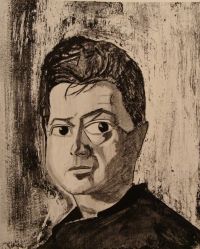 Francis Bacon,
Bacon's Essays, and Wisdom of the Ancients
Francis Bacon,
Bacon's Essays, and Wisdom of the Ancients
“ But howsoever these things are thus in men’s depraved judgments and affections, yet truth, which only doth judge itself, teacheth that the inquiry of truth, 59which is the love-making, or wooing of it, the knowledge of truth, which is the presence of it, and the belief of truth, which is the enjoying of it, is the sovereign good of human nature. ”
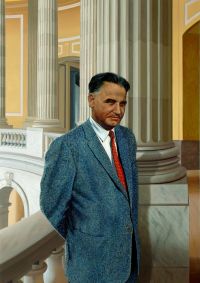 Dalip Singh Saund,
My mother India
(1930)
Dalip Singh Saund,
My mother India
(1930)
“ Until he has realized the absolute Truth, he must hold on to the relative truth as he sees it, which is accomplished through the exercise of such virtues as universal love, faith, devotion, self-sacrifice, and renunciation. ”
George Henry Dole, Divine Selection or The Survival of the Useful (1903)
“ The many grades of right and wrong and of good and evil appearing in the complexity of social relations may give the appearance that good and bad, true and false are merely relative terms, originating in human fancy, while a more searching mind will see that goodness and truth are fixed in the eternal substance and form of God's Divine Humanity. ”
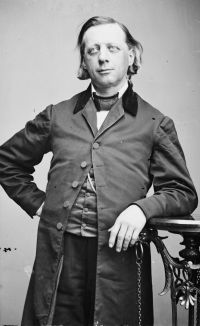 Henry Ward Beecher,
Popular Science Monthly
(1872)
Henry Ward Beecher,
Popular Science Monthly
(1872)
“ We must be more industrious in investigation, more honest in deduction, and more willing to take the truth in its new fulness; and we must be imbued with that simplicity in faith and truth which we inculcate in our people. ”
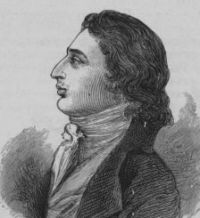 Robert Southey,
The doctor, &c., vol. 7 (of 7)
(1834)
Robert Southey,
The doctor, &c., vol. 7 (of 7)
(1834)
“ Yea they shall be verba veritatis,—“words of truth, which will not deceive or misguide those that yield up themselves to the direction of them: a truth which is sanctifying and saving, and in these respects most worthy of our attention and belief.” ”
John Wesley,
The works of the Rev. John Wesley…
(1771)
“ Think yourself therefore incapable of judging rightly, or acting virtuously, till these two tempers have the government of your heart. Then every truth will meet you; no hurtful error can get entrance into your heart; but you will have a better knowledge of all divine matters, than all human learning can help you to. ”
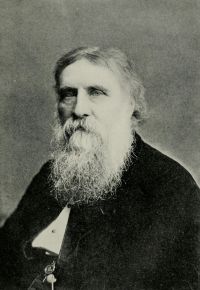 George MacDonald,
Unspoken Sermons, Series I., II.…
George MacDonald,
Unspoken Sermons, Series I., II.…
“ By seeing in them what corresponds to the plainest truth he speaks, and commends itself to the power that is working in you to make of you a true man; by their appeal to your power of judging what is true; by their rousing of your conscience. If they do not seem to you true, either they are not the words of the Master, or you are not true enough to understand them. ”
Richard M. Weaver, The ethics of rhetoric (1953)
“ The vigor of this passage arises from a continuing series of contrasts, comprising the following: error and custom with truth and solid wisdom; God with man; prudent and religious [154] counsels with encroachments and also with inveterate blots and obscurities; subtle insinuating of error and custom with industry of free reasoning; and womb of teeming truth with unchewed notions and suppositions. ”
