“ There was a hazy recollection of copter-cabs and surface-cabs, of smiling, vapid faces and other smiling faces, not vapid, when the video-cast appeared on a television screen in one of the bars and there he was, squinting against the flash-camera glare, the rain seeping through the roof of umbrellas and rolling down his long, gaunt face and off the thin, long, drooping nose. ”
Video
Definition and stakes
Video, as a medium, includes both the technical capture of moving images and its deep cultural significance. From Mihai Nadin’s examination of video’s role in democratizing media creation—transforming individuals into “private Hollywood studios”—to Alessandra Pioselli’s analysis of video’s electronic signal as a means of artistic critique, the theme reveals a range of viewpoints.
Legal structures, such as those found in U.S. copyright law, emphasize its regulatory complexities, while scholars like Mark Turin warn against the assumed neutrality of video recordings. These differing perspectives highlight video’s dual character as both a technological advancement and a contested arena for expression, influencing how societies preserve, interpret, and regulate visual stories.
Quotes about “video”
Mihai Nadin, The Civilization of Illiteracy
“ The video camera and the video cassette recorder, especially in its digital version, make each of us own not only the receivers of the language of images and sounds, but also emitters, the sources, the private Hollywood studios. That is, they make us live the language of TV, and substitute it for literacy. ”
Mark Turin, Claire Wheeler and Eleanor Wilkinson, Oral Literature in the Digital Age…
“ On giving voice Scholars know that the use of video cameras may affect the performance and the context in which they operate. Moreover, the apparent objectivity of video images risks obfuscating perspectives, aims, audiences, and selection processes conveyed by the images. ”
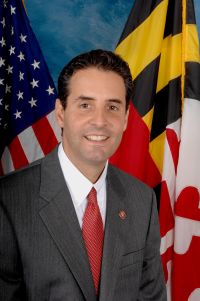 John Sarbanes,
H.R. 1 Division B, Title IV, Subtitle E
(2021)
John Sarbanes,
H.R. 1 Division B, Title IV, Subtitle E
(2021)
“ The image or audio or video recording would cause a reasonable person to have a fundamentally different understanding or impression of the expressive content of the image or audio or video recording than that person would have if the person were hearing or seeing the unaltered, original version of the image or audio or video recording.”. ”
Alessandra Pioselli, Simonetta Fadda Reality Show (2005)
“ The deconstruction of the video language, by working on the electronic signal and on the inner possibilities of the medium—with the consequent production of images compositions, rather than real stories—, is one of her starting points in her choice of low resolution as a standard, along with the consideration of imperfection as an expressive, as well as a critical possibility. ”
by the United States House of Representatives, Copyright Law Revision (House Report No… (1976)
“ The exclusive right of public performance is expanded to include not only motion pictures, including works recorded on film, video tape, and video disks, but also audiovisual, works such as filmstrips and sets of slides. ”
Mihai Nadin, The Civilization of Illiteracy
“ As a matter of fact, televised images are already manipulated and r-written. DVD-three letters standing for Digital Video Data- yet to make it into the everyday jargon reflecting our involvement with new media, will probably replace the majority of televised images. With the advent of digital video delivered via the familiar compact disk format, a tool as powerful as any TV production facility will support artistic innovation that we still associate with high budgets and glamorous Hollywood events. ”
John Sarbanes,
H.R. 1 Division B, Title IV, Subtitle D
(2021)
“ COMMUNICATIONS TRANSMITTED IN VIDEO FORMAT.—In the case of a communication to which this subsection applies which is transmitted in a video format, the information required under paragraph (1) — “ (i) shall appear in writing at the end of the communication or in a crawl along the bottom of the communication in a clear and conspicuous manner, with a reasonable degree of color contrast between the background and the printed statement, for a period of at least 6 seconds ”
Marc John Randazza, The Fuck Brief (2006-08-24)
“ Entertainment, instruction, and commentary of an erotic/sexual nature, created by and for adults only, presented in images, recorded audio, recorded video, transmitted over the internet a website with access limited to adult viewers, excluding any use of the Mark other than in media or venues where erotic and adult-oriented content is provided. ”
Mihai Nadin, The Civilization of Illiteracy
“ Other images are imposed on the adult generations by demands connected to their professions, their health, their hobbies, and by advertisement. After image-recording and playing equipment became widely available, the focus on TV and video expanded. In addition to the ability to bring home films of one's choice, to buy and rent videotapes, laser discs, and CD-ROMs on a variety of subjects, we are also able to produce a video archive for family, school, community, or professional purposes. We can even avail ourselves of cable TV to generate programs of local interest. ”
Cori E. Dauber, YouTube War — Iraqi Innovation… (2009)
“ One company is marketing today a piece of equipment that they are calling “basically a live TV truck in a backpack.”57 Now, with “minimal training, anyone who can operate a computer can use it to broadcast professional-quality live video over the internet or on television.”58 It is clear that neither the manufacturers nor the technology reviewers are considering possible downsides to the way technology opens up broadcast-quality access to almost anyone with any kind of agenda. ”
by the United States House of Representatives, Copyright Law Revision (House Report No… (1976)
“ Coupled with the basic requirements of original authorship and fixation in tangible form, this definition encompasses a wide range of cinematographic works embodied in films, tapes, video disks, and other media. However, it would not include: (1) unauthorized fixations of live performances or telecasts, (2) live telecasts that are not fixed simultaneously. with their transmission, or (3) filmstrips and slidesets which, although consisting of a series of images intended to be shown in succession, are not capable of conveying an impression of motion. ”
Reg Bailey, Letting Children be Children — Theme 1 (2011)
“ Serious concerns have been raised with us about what is seen as the ease of access to age-restricted and adult material on the internet and through video—on—demand services, some of which allow unchallenged free access to pornography. ”
Susanna Spinsante, Ennio Gambi, Lorenzo Ciccarelli, Andrea Lorenzo Vitali, Jorge Sastre Martínez, Paul Salama, Advances in Video Coding for Broadcast Applications… (2009)
“ Video encoders' configuration must be tailored to the target devices and services, that range from high definition, for powerful high-performance home receivers, to video coding for mobile handheld devices. ”
Judith Aston and Paul Matthews, Oral Literature in the Digital Age… (2013)
“ They show a girl making music with holes in the ground at the start of the rainy season. The slides are accompanied by sound and video narration to provide further context and an immersive experience.Figure 9. Screenshot of HTML5 prototype. Image by Judith Aston Paul Matthews, 2012. We have begun incorporating narrative video fragments applied to specific recordings and to comparative clusters, which are based on themes. The next phase of work will seek to provide longer introductions to James’ intermittent engagement with the Uduk since the mid-1960s. ”
Mihai Nadin, The Civilization of Illiteracy
“ In the context of mediation and task distribution, new levels of dependencies are established and reflected in the work. Video art, photography, film, computer-based installations, and much of the computer music, interactive multimedia, and virtual art experiences are examples of such dependencies. Simultaneously they are examples of the new forms of conflict and tension that mark the artistic experience. Artistic freedom and self- determination are only apparent. The limits of the many elements involved in an artistic experience affect choice and artistic integrity. ”
Kenneth V. Lanning, Investigator's guide to allegations of 'ritual' child abuse (1992)
“ Through the defense mechanism of dissociation, the victim may escape the horrors of reality by inaccurately processing that reality. In a dissociative state, a young child who ordinarily would know the difference might misinterpret a film or video as reality. ”
Mark Turin, Claire Wheeler and Eleanor Wilkinson, Oral Literature in the Digital Age…
“ But it is presented as real/scientific, as knowledge that has to be believed as being truthful and that contends with scientific knowledge for defining and understanding the field of reality. This is the reason why we need to present it in a cautious way when we produce a video documentation intended not only for scholars but also for students and a large public.Ethical problems The ethical problem is directly linked to what has been discussed before. We intend to respect our interviewee’s discourse, but cannot propose his narrative as such. ”
Parliament of Singapore, Protection from Harassment Act 2014… (2014)
“ Y surreptitiously plants a camera in X's apartment. Unknown to X, the camera continuously transmits live videos of X in X's apartment and Y watches the videos continually over several days. Y's conduct is protracted. ”
Reg Bailey, Letting Children be Children — Theme 1 (2011)
“ In our research (Goldstone 8- Slesenger, 20 70) 700 per cent of adults surveyed felt that potentially harmful content in videos, including music videos, which are presently exempt from classification, ought to be classified, and the classification decision enforced. Content freely availably to children and shown to respondents included topless lap dancing; strip tease routines; other sexualised breast nudity; and sexualised violence." BBFC, Call for Evidence response 34. ”
Laura Lee Hope, The Moving Picture Girls; Or, First Appearances in Photo Dramas
“ Turning a handle on the outside of the camera operates it. So that when the scene is ready to be photographed the actors, whether men or animals, begin to move. The handle turns, and the unexposed film is wound from one reel to the other, inside the camera, passing behind the lens, so that the picture falls on it in a flash, just as you take one snapshot. But, as I have said, the moving picture camera takes snapshot after snapshot—sixteen a second—until many thousands are taken, so that when the pictures are shown afterward they give the effect of continuous motion. ”
Robert Emmet Welsh, A-B-C of motion pictures
“ In the same manner a person can be brought suddenly on the scene, appearing to spring from the air. Trick effects may also be secured by running the film through the camera backward, and reversing the actions of the players, that is, making them “do things backward.” When the film is run through the projection-machine correctly, and shown on the screen, you see the player perform such miraculous feats as jumping from the middle of a river clear up a steep bank, when in reality to take the picture he leaped backward from the bank to the river—but the film was reversed. ”
Mihai Nadin, The Civilization of Illiteracy
“ Between recording the movement and viewing it, time is used for processing and duplication.Television is structurally different, capturing movement and everything else belonging to what we call reality, in order to make it immediately available to the viewer. Electronic mediation is much more elaborate, has many more layers than cinematography, and as a result is much more efficient. Film mapped from the selected world of movement, in a studio, on the street, or in a laboratory, to a limited viewership: public in a movie theater. ”
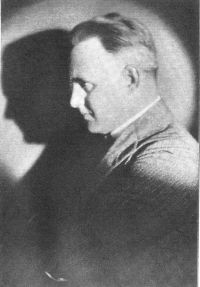 Clarence G. Badger,
The Point of Attack, or, How to Start the Photoplay
(1920)
Clarence G. Badger,
The Point of Attack, or, How to Start the Photoplay
(1920)
“ Proceeding upon the assumption that a photoplay is a screen drama which must be unrolled before an audience within a specified time limit, it is clearly necessary to give concentrated attention to the important matter of beginning the story. We are dealing with a situation—a dramatic crisis or a correlated series of situations or dramatic crises. The start must not be too far in advance of the climax, for in that case there will not be sufficient time or film footage to logically and consecutively arrive at such climax. ”
Laura Lee Hope, The Moving Picture Girls; Or, First Appearances in Photo Dramas
“ When the reel of film has all been exposed, it is taken to the dark room, and there developed, just as a small roll from your camera would be. This film is called the negative. From it any number of positives can be made, all depending on the popularity of the subject.To make positives, the negative film is laid on another strip of sensitive celluloid of the same size. The two films are placed in a suitable machine, and then set in front of a bright light. ”
Mihai Nadin, The Civilization of Illiteracy
“ Television maps from many cameras to the entire world, and all can simultaneously partake in its images. Television is distributed and introduces simultaneity in that several events from several locations can be broadcast on the TV screen. By comparison, cinematography is centralized. Filming is limited to the location where it is being carried on. Cinematography is intrinsically sequential in that it follows the narrative structure and constitutes a closed entity. Once edited for showing, the film cannot be interrupted to insert anything new. ”
Harry E. Maule, The Boy's Book of New Inventions
“ You can see as the crank turns that the sprockets pull the film out and guide it along its course, and the little fingers jerk it down the space of one picture, or three quarters of an inch, at each jump. When the fingers are jerking the negative down, the shutter must be closed, and when the fingers are making their back trip to take a new hold on another length of film the strip must be as still as the Washington Monument, for the shutter to open, let in the light and transfer the image before the lens to the negative. ”
Robert Emmet Welsh, A-B-C of motion pictures
“ After a rehearsal or two the camera-man will time the scene for the director so that he can tell how much film it will use, and if it is not in agreement with the estimate allowed in the scenario, make the necessary changes. The camera-man will lay out the boundary-lines of the stage for you and advise you on the distance from the camera to station the players. ”
Robert Emmet Welsh, A-B-C of motion pictures
“ The camera’s eye may roam the world for subjects; its range equals that of the newspaper or magazine. The stage and literature, travel, science, news and advertising, all are open to the motion picture. The photoplay, presenting a visualized story, is the most popular form, for the public heeds quickest the call of entertainment. But serious students of the motion picture believe that, in time, its purely amusement features will be dwarfed by the development along lines that may be roughly grouped under the heading “educational.” ”
Laura Lee Hope, The Moving Picture Girls Snowbound
“ DeVere. "Better use the subway all you can. Even the elevated will have trouble with all this sleet. Good-bye," and he kissed them as he hurried out.The girls made short shrift of the housework, and then left for the place where the moving pictures were made.As I have described in the first book of this series how moving pictures are taken, I will not repeat it here, except to say that in a special camera, made for the purpose, there is a long narrow strip of celluloid film, of the same nature as in the ordinary camera. ”
Laura Lee Hope, The Moving Picture Girls; Or, First Appearances in Photo Dramas
“ In the first place there has to be a play to be "filmed," or taken. It may be a parlor drama an outdoor scene—anything from a burning building to a flood. With the play decided on, the actors and actresses for the different parts are selected and carefully rehearsed. This is necessary as the camera is instantaneous and one false move or gestures may spoil the film.Next comes the selection of the location for the various scenes. Indoor ones are comparatively easy, for the scenic artist can build almost anything. ”
Ernest A. Dench, Advertising by motion pictures (1916)
“ The logical follow-up medium for your film is the motion-picture publication field, for every fan takes regularly at least one publication devoted to photoplays, and the cover of national magazine or periodical you have in mind may only catch his eye at the news-stand. ”
Mihai Nadin, The Civilization of Illiteracy
“ Conventions of film, as a medium with its own characteristics, started to be experienced relatively recently, in the broader context of a human praxis in the process of freeing itself from the constraints of literacy. Films are an appropriate medium for integration of the visual, the aural, and motion. People can record on film some of their most intricate experiences, and afterwards submit the record to fast, slow, entire, or partial evaluation. The experience of filming is an experience with space and time in their interrelationship. ”
Henry Albert Phillips, The photodrama (1914)
“ A full reel consists of 1,000 feet of film and occupies approximately twenty minutes to display its contents upon the screen. By contents, we mean to include everything that is projected: trade-mark frame of manufacturer, including title of play and name of the author; cast of characters, with Board of Censorship notice at the end. The foregoing take approximately two minutes of valuable time and are merely incidental to the play. They concern the writer only in so far as they act as limitations. The essential photodrama itself includes portrayal of dramatic action of the characters ”
Mihai Nadin, The Civilization of Illiteracy
“ Imaging technologies make drawing available to everyone, exactly as writing was available to those processed as literates. The photographic camera-drawing with light on film-the electronic camera, the television camera, the scanner, and the digitizer are, effectively, means for drawing and for processing the image in full control of all its components. A sound level can easily be added, and indeed sound augments the expressive power of images. ”
