Summary

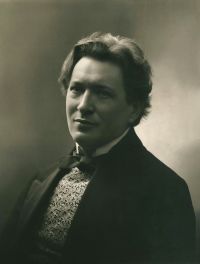
Portrait of Ferruccio Busoni Ferruccio Busoni Sketch of a New Esthetic of Music

MUSIC, AND SIGNS FOR MUSIC
What we now call our Tonal System is nothing more than a set of “signs”; an ingenious device to grasp somewhat of that eternal harmony; a meagre pocket-edition of that encyclopedic work; artificial light instead of the sun.—Have you ever noticed how people gaze open-mouthed at the brilliant illumination of a hall? They never do so at the millionfold brighter sunshine of noonday.—
And so, in music, the signs have assumed greater consequence than that which they ought to stand for, and can only suggest.
How important, indeed, are “Third,” “Fifth,” and “Octave”!
Source: Gutenberg

Portrait of Ferruccio Busoni Ferruccio Busoni Sketch of a New Esthetic of Music

In a picture, the illustration of a sunset ends with the frame; the limitless natural phenomenon is enclosed in quadrilateral bounds; the cloud-form chosen for depiction remains unchanging for ever. Music can grow brighter or darker, shift hither or yon, and finally fade away like the sunset glow itself; and instinct leads the creative musician to employ the tones that press the same key within the human breast, and awaken the same response, as the processes in Nature.
Source: Gutenberg

Portrait of Ferruccio Busoni Ferruccio Busoni Sketch of a New Esthetic of Music

Music was born free; and to win freedom is its destiny. It will become the most complete of all reflexes of Nature by reason of its untrammeled immateriality. Even the poetic word ranks lower in point of incorporealness. It can gather together and disperse, can be motionless repose or wildest tempestuosity; it has the extremest heights perceptible to man—what other art has these?—and its emotion seizes the human heart with that intensity which is independent of the “idea.”
It realizes a temperament, without describing it, with the mobility of the soul, with the swiftness of consecutive moments
Source: Gutenberg

Get perspective with Kwize: daily news enlightened by great literature